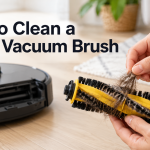
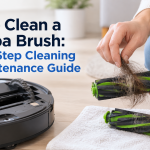






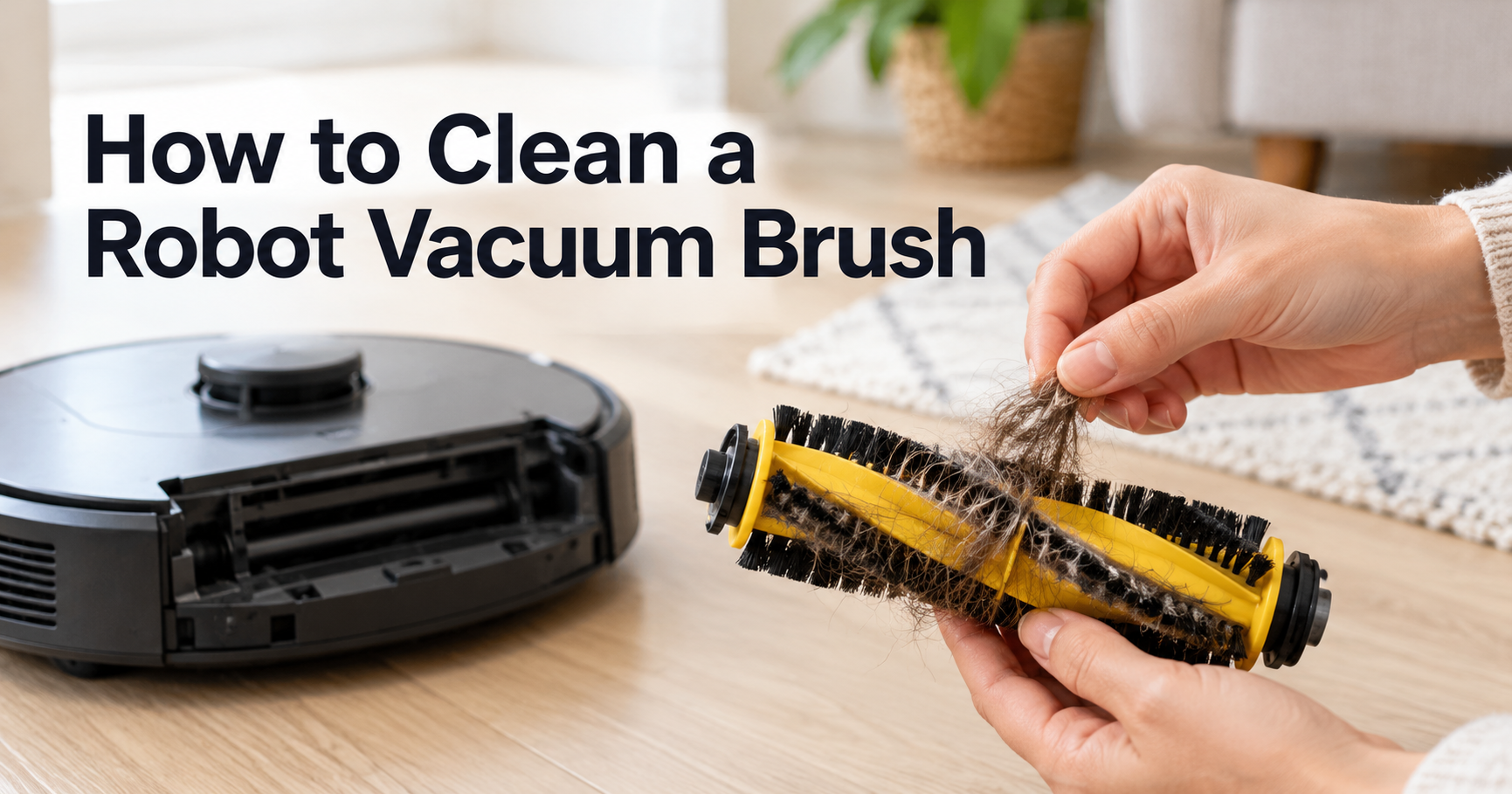
A robot vacuum does the boring work for you, until the day it starts leaving crumbs behind, sounds like it is struggling, or stops with a “main brush stuck” alert. In most cases the culprit is the same: a brush roll wrapped in hair, string and fluff. The good news is that cleaning a robot vacuum brush is quick, cheap and needs no special skills.
In this guide you will learn exactly how to clean a robot vacuum brush, how often to do it, what to avoid, and how to stop hair from tangling so quickly in the first place. Follow the steps below and your robot will pick up debris like it did on day one.
Quick answer
Switch the robot off, flip it over, take out the brush roll, cut and pull away the tangled hair, wipe the bristles, bearings and brush bay, let everything dry, then reinstall the brush. The whole job takes about 5 to 10 minutes. Do it once a week, or twice a week if you have pets or long hair at home.
Why Cleaning Your Robot Vacuum Brush Matters
The brush roll is the part that actually loosens dirt from your floor and flicks it toward the suction opening. When it is clogged, the whole machine suffers. Regular cleaning gives you several benefits:
- Better pickup. Clean bristles or rubber fins make full contact with the floor, so more dust, crumbs and pet hair end up in the bin.
- Less strain on the motor. A brush that has to fight through a thick mat of hair draws more power, which can shorten battery runtime and wear out the brush motor.
- Quieter operation. Hair that works its way into the end caps and bearings often causes squeaking or grinding noises.
- Fewer error messages. Many robot vacuums stop and report a stuck brush when the roller cannot spin freely.
- Longer product life. A well-maintained brush, bearing and motor assembly lasts noticeably longer, so you replace parts less often.
- Cleaner floors. A tangled brush can drag debris across the floor instead of lifting it, leaving visible trails on hard floors.
Signs Your Robot Vacuum Brush Needs Cleaning
You do not have to wait for a failure. Watch for these common warning signs:
- The brush spins slowly, unevenly or not at all.
- You can see hair or thread wrapped around the roller or the end caps.
- The robot leaves lines of dust or crumbs behind it.
- The machine sounds louder than usual, or you hear squeaking and grinding.
- The app or the robot itself reports a brush error.
- Battery life seems shorter than it used to be.
- The robot smells musty or stale after a run.
What You Need to Clean a Robot Vacuum Brush
Most people already own everything required. You only need a few basic items:
- Scissors or the cleaning tool that came with your robot. Many models include a small blade or comb made for cutting hair off the roller.
- A small brush. An old, clean toothbrush is ideal for bearings, corners and the brush bay.
- A microfiber cloth. Use it to wipe the roller, the housing and the sensors.
- A screwdriver (if needed). Some models secure the brush cover with a small screw.
- A soft towel. Place it on the floor or table so the robot does not get scratched when you flip it.
- Optional extras: a handheld vacuum for loose fluff and a trash bag for the hair.
How to Clean a Robot Vacuum Brush: Step by Step
Step 1: Switch Off the Robot and Flip It Over
Press the power button until the robot turns fully off, and remove it from the charging dock. Lay a soft towel on a table or the floor and gently turn the robot upside down. This protects the shell and the wheels, and it keeps the robot steady while you work.
Step 2: Remove the Brush Roll
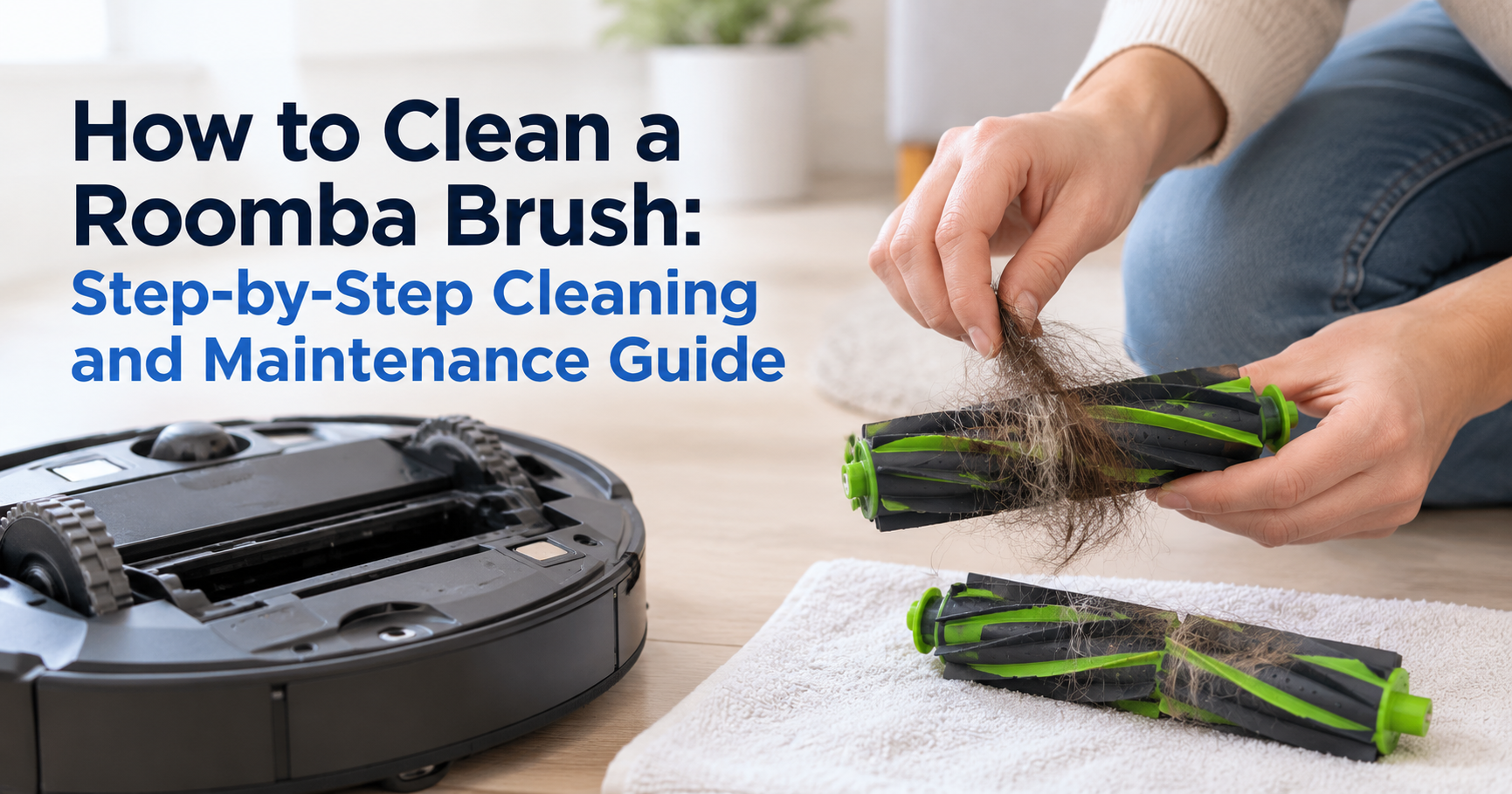
Locate the brush cover on the underside. Most covers are released with a pair of clips or a single latch, and a few use screws. Open the cover, then lift the brush roll straight out. Pull off the plastic end caps or bearing covers if your model has them. Take a quick photo before you start if you are worried about reassembly.
Step 3: Cut and Remove the Tangled Hair
Find the groove or channel that runs along the roller. Slide the tip of your scissors or the cleaning blade into it and cut through the wrapped hair. Then unwind and pull the loose strands away with your fingers. Work slowly so you do not nick the bristles or the rubber fins.
Pro tip: Cut across the hair in a few places rather than trying to unwind one long strand. Short pieces come off the roller much faster and you are less likely to damage the bristles.
Step 4: Brush and Wipe the Bearings and Brush Bay
Hair often sneaks beneath the end caps and around the axle, which is where squeaking comes from. Pull out any hidden strands with tweezers or a small brush. Then use your toothbrush to loosen dust inside the brush bay and wipe the area with a microfiber cloth. A handheld vacuum is useful here for picking up loose fluff.
Step 5: Wipe or Rinse the Brush (If Allowed)
For most brushes, a dry or slightly damp microfiber cloth is enough. Some rubber and silicone rollers are washable, but this depends on the model, so check your manual first. If rinsing is allowed, use lukewarm water and a drop of mild dish soap, then shake off the excess.
Important: Never submerge the robot itself, the brush motor or any part with electronics or metal contacts. Always let a washed brush air-dry completely, usually several hours or overnight, before putting it back. A damp brush can cause odors, mold and even damage inside the machine.
Step 6: Reinstall the Brush and Run a Test
Fit the brush roll back into place, making sure the end caps sit firmly and the roller spins freely by hand. Close the cover until it clicks, flip the robot upright and run a short test cycle. Listen for unusual noises and check that the brush rotates smoothly. If it does, you are done.
Cleaning Different Types of Robot Vacuum Brushes
Not all brushes are the same. The best method depends on the design of your roller.
| Brush type | Strengths | Cleaning tips |
|---|---|---|
| Bristle brush | Great at agitating carpet and sweeping fine dust. | Hair wraps around bristles quickly. Cut along the groove, then comb the bristles with a brush. |
| Rubber or silicone roller | Resists tangles and works well on hard floors and pet hair. | Wipe with a damp cloth, or rinse if the manual allows. Check for tears in the fins. |
| Combination (bristle and rubber) | Balances carpet performance with less tangling. | Remove hair from both sections and check the gap where they meet. |
| Side brush | Sweeps debris from edges and corners into the path of the main brush. | Pull it off or unscrew it, unwind wrapped hair, and check that the bristles are not bent. |
How Often Should You Clean a Robot Vacuum Brush?
For an average home, plan to clean the main brush roll about once a week. The ideal schedule depends on your living situation:
- Pets or long hair: clean the brush two or three times a week.
- Lots of carpet or rugs: clean it weekly, since carpet fibers shed fluff that wraps around the roller.
- Hard floors and a small household: every two weeks is usually enough.
- Daily cleaning cycles: check the brush more often, because heavy use means faster buildup.
The schedule above is a general guide. Your manufacturer may recommend different intervals for filters and replacement parts, so check your user manual.
Common Mistakes to Avoid
- Soaking the whole brush assembly. Water and electronics do not mix, and not every brush is washable.
- Putting the brush back while it is still wet. Moisture leads to odor, mold and corrosion.
- Using sharp tools carelessly. Slipping with a knife can damage the bristles, the rubber fins and the roller itself.
- Ignoring the side brush. A tangled side brush stops pushing debris into the main path.
- Forgetting the bearings. Hair hidden in the end caps is a top cause of noise and brush failure.
- Skipping the dustbin and filter. A clean brush cannot help if the filter is clogged.
- Waiting until it stops working. Short, regular cleaning is much easier than removing a solid mat of hair.
How to Stop Hair from Tangling So Quickly
You can reduce tangling with a few simple habits:
- Pick up cords, socks, hair ties, ribbons and loose threads before every run.
- Use no-go zones in the app to keep the robot away from fringe rugs, curtains with tassels and charging cables.
- Groom pets regularly so less loose hair ends up on the floor.
- Run the robot more often. Frequent short runs collect hair before it builds up.
- Trim long fringes on rugs and carpets.
- Consider a model with a rubber or anti-tangle roller if your home is full of long hair or pet fur.
When Should You Replace the Brush Roll?
Even a well-cared-for brush eventually wears out. As a general rule, many manufacturers suggest replacing the main brush roughly every 6 to 12 months, and sooner with heavy use. Replace it if you notice any of these signs:
- Bristles are bent, flattened or missing in patches.
- Rubber fins are torn, cracked or worn down.
- The roller still does not spin freely after a thorough cleaning.
- The brush makes grinding or squeaking noises even with clean bearings.
- Cleaning results are clearly worse than before.
Always choose a replacement that matches your exact robot vacuum model. A genuine or well-reviewed compatible brush will fit properly and spin smoothly.
Useful Accessories for Robot Vacuum Maintenance
A few inexpensive accessories make upkeep easier and keep your robot at its best:
- Replacement brush roll: keep a spare on hand so you can swap it in the moment the old one wears out.
- Side brush multipacks: side brushes bend and wear quickly, so a multipack is usually good value.
- Replacement filters: fresh filters keep suction strong and air cleaner.
- Cleaning tool or mini comb: a dedicated hair cutter makes brush cleaning faster and safer than scissors.
- Handheld mini vacuum: helpful for clearing dust from the brush bay and bin.
- Charging dock mat or floor protector: keeps the area around the dock tidy.
Before buying any part, double-check that it is compatible with your model number, since brushes and filters are rarely universal.
Frequently Asked Questions
How do I clean a robot vacuum brush with hair wrapped around it?
Remove the brush roll, cut through the wrapped hair along the groove with scissors or the included cleaning tool, then pull the loose strands away. Finish by wiping the roller and cleaning the bearings and brush bay.
Can I wash a robot vacuum brush with water?
It depends on the model. Some rubber or silicone rollers can be rinsed with lukewarm water, while others should only be wiped. Check your manual, never wet the electronic parts, and let the brush dry fully before reinstalling it.
Why does my robot vacuum brush keep getting tangled?
Long hair, pet fur, carpet fringe, cords and threads are the main causes. Bristle brushes tangle faster than rubber ones. Picking up small items and cleaning the brush more often will help a lot.
Why is my robot vacuum brush not spinning after cleaning?
Check that the brush is seated correctly, the end caps are firmly in place and no hair remains under the caps or around the axle. Also make sure the cover is closed properly. If the brush still will not spin, it may be worn out or the motor may need service.
Is it safe to use scissors on the brush roll?
Yes, if you are careful. Slide the blade into the groove and cut only the hair, not the bristles. If your robot came with a cleaning tool, use that, since it is designed to protect the roller.
How long does it take to clean a robot vacuum brush?
About 5 to 10 minutes for a routine clean. If the brush is badly tangled, allow a little extra time, and add drying time if you rinse it.
Can I use a regular vacuum cleaner to clean the brush?
A handheld or regular vacuum is useful for loose fluff and dust in the brush bay, but it will not remove wrapped hair. You still need to cut and pull the hair away first.
Final Thoughts
Learning how to clean a robot vacuum brush is one of the simplest ways to protect your investment. A few minutes each week removes tangled hair, keeps the brush spinning freely, restores suction power and prevents the noisy, underperforming robot that so many owners complain about.
Switch the robot off, take out the brush, cut away the hair, clean the bearings and bay, let it dry and put it back. Add a few preventive habits and replace worn parts on time, and your robot vacuum will keep your floors clean for years.