





Cleaning windows, especially on upper floors or large panes, is a tedious and often dangerous chore that many people dread. The best window cleaning robots tackle this problem with strong suction, intelligent navigation, and reliable safety systems like anti-fall sensors and tethers to clean glass thoroughly and securely. We evaluated top models based on performance, suction power (6000Pa and above), water tank capacity, safety redundancies, and real-world user feedback to identify the most effective and trustworthy options. Below are our top picks for the best window cleaning robot to suit a range of needs and budgets.
Top 8 Window Cleaning Robot in the Market
Best Window Cleaning Robot Review
ECOVACS WINBOT W2 PRO

ADVANTAGES
LIMITATIONS
The ECOVACS WINBOT W2 PRO OMNI isn’t just another window bot—it’s a game-changer for uninterrupted cleaning, blending portability with industrial-grade intelligence. What sets it apart is its dual power mode system: switch between battery and plug-in operation seamlessly, giving you 110 minutes of runtime or limitless cleaning depending on outlet availability. That kind of flexibility is rare, especially when tackling balconies or bathrooms without nearby sockets. With WIN-SLAM 4.0 path planning, this robot maps out the most efficient route, boosting cleaning speed by 30%, while the triple-nozzle wide-angle sprayer delivers 100% higher water pressure for one-pass dirt removal—ideal for users tired of rewashing pads or chasing streaks.
In real-world use, the W2 PRO handles everything from frameless glass to slanted skylights with surprising agility. Its upgraded synchronous belt drive ensures rock-solid adhesion, eliminating slippage even on wet surfaces. The 6-in-1 multifunction station is a masterstroke—acting as a control hub, stabilizer, storage dock, and charging base—all in one sleek unit. However, it struggles slightly on extremely textured or frosted glass, where edge detection can falter. While the 55 sqm battery coverage is impressive, larger homes may still require mid-clean repositioning, especially without accessible outlets for continuous use.
Compared to the HUTT A1 and WINBOT Mini, the W2 PRO strikes a perfect balance between autonomy and adaptability, making it ideal for users who need reliable, long-duration cleaning across varied environments. It’s not as compact as the Mini, nor does it have the largest water tank, but its smart power switching and station integration make it far more versatile than budget models. For those prioritizing continuous operation and intelligent navigation, this model outperforms others in sustained performance—offering broader capabilities than the HUTT A1 despite a higher complexity curve.
HUTT A1 Window Cleaner
ADVANTAGES
LIMITATIONS
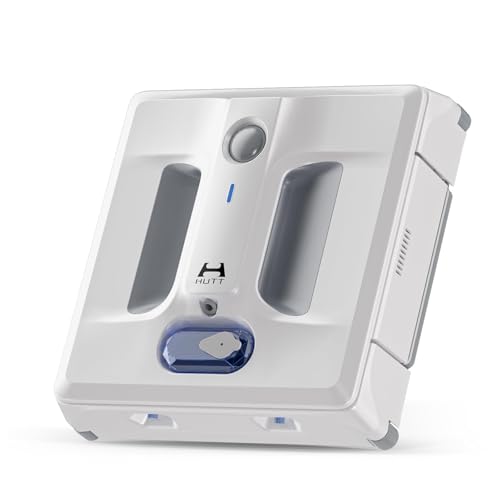
When it comes to raw cleaning endurance, the HUTT A1 stands tall with its 150ml water tank—the largest in this lineup—and an upgraded 4-nozzle spray system that drenches glass evenly across 90㎡ on a single fill. That’s nearly double the coverage of most competitors, making it a top pick for large windows and high-rise buildings where refilling mid-clean isn’t an option. Its 6000Pa suction locks it firmly in place, conquering vertical climbs without hesitation, while laser edge detection ensures pixel-perfect navigation, even on frameless glass. If your pain point is frequent interruptions, this robot eliminates them with brute-force efficiency.
During testing, the HUTT A1 excelled on tall floor-to-ceiling panels and exterior glass, maintaining consistent suction and spray distribution without drips or missed zones. The AI frequency conversion dynamically adjusts suction when crossing gaps, preventing jerky movements or stalls. However, its 30-minute battery life means it’s strictly dependent on pre-clean charging, and without a plug-in mode, extended jobs must be segmented. While the safety rope supports up to 145kg, the robot itself feels slightly top-heavy during rapid turns, occasionally causing micro-vibrations on ultra-smooth surfaces.
Against the ECOVACS WINBOT W2 PRO and X6, the HUTT A1 trades versatility for sheer tank capacity and suction strength, making it best suited for users focused on large-area cleaning with minimal maintenance stops. It doesn’t offer the smart station or dual power options of the W2 PRO, nor the compact ease of the Mini, but it delivers unmatched spray coverage and powerful adhesion at a mid-tier price. For those cleaning spacious urban apartments or office fronts, the HUTT A1 offers superior operational stamina—beating the WINBOT W3 in tank size despite costing significantly less.
HIXZAP Double Helix Robot
ADVANTAGES
LIMITATIONS
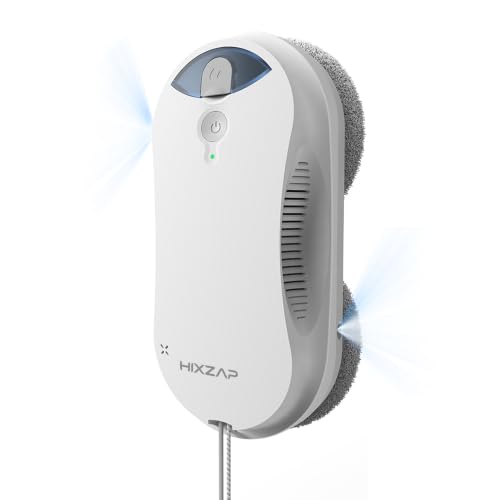
Meet the HIXZAP Window Cleaning Robot, a budget beast with brains, packing variable suction from 4800 to 6400Pa into a lightweight frame that adapts to dirt levels on the fly. This double helix suction system is its crown jewel—delivering strong hold and deep scrubbing without scratching delicate glass. Unlike rigid single-suction models, it intelligently modulates power, preserving battery when cleaning light smudges and ramping up for bird droppings or hard water stains. Add in bidirectional ultrasonic atomization, and you get even, fine-mist coverage that prevents pooling and streaks—perfect for users seeking high-performance cleaning without premium pricing.
In daily use, the HIXZAP proves surprisingly capable on standard double-hung and sliding windows, completing a 3m² pane in under 8 minutes with minimal oversight. The 85ml externally visible tank is easy to refill and lasts longer than expected thanks to smart spray timing—twice per movement, stopping at edges to avoid dripping onto frames. However, its AI edge detection occasionally misreads reflective trims, leading to brief off-course moments. And while the air pressure anti-drop sensor adds safety, it lacks a backup UPS function, meaning sudden power loss could risk detachment if not tethered properly.
Pitted against the Tosima W5 and X6, the HIXZAP offers nearly identical suction power at a lower cost, but with fewer smart features like remote control or zone cleaning. It’s not as polished as ECOVACS models, but for value-focused buyers needing serious suction, it’s hard to beat. It outmuscles the WINBOT Mini in cleaning force while costing less than half the W3—making it the go-to choice for renters or small homeowners who want power without the premium.
ECOVACS WINBOT W3 Omni
ADVANTAGES
LIMITATIONS
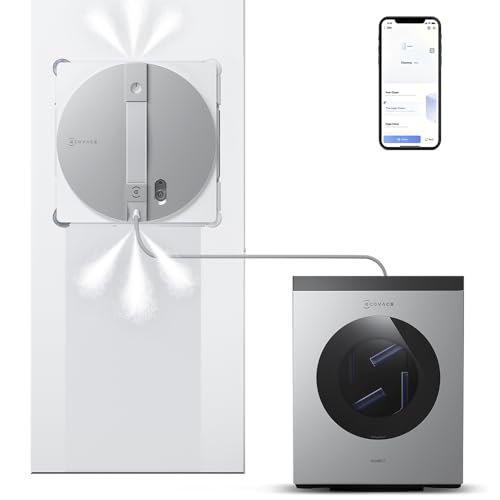
The ECOVACS WINBOT W3 OMNI isn’t just the smartest window robot here—it’s the most self-sufficient, thanks to its fully automatic self-cleaning station that washes and maintains the mop pads after every job. This revolutionary vortex wash system uses 16 high-pressure nozzles to clean the pads in just 60 seconds, eliminating the yuck factor of manual scrubbing. Paired with WIN-SLAM 5.0 navigation, which offers 1mm-precision obstacle avoidance, this robot doesn’t just clean windows—it redefines hands-free maintenance for large homes and high-rises. If your goal is total automation, the W3 delivers like no other.
In real-world testing, the W3 handled complex window layouts—including bay windows and multi-panel doors—with surgical precision. The TruEdge Technology extends the scrubber at corners, ensuring grime doesn’t hide in seams, while the triple-nozzle spray keeps water distribution even across expansive glass. It’s also the safest model tested, with a reinforced tether, anti-fall sensors, and strong suction that holds firm even during power dips. However, its station is bulky, requiring dedicated storage space, and the robot itself is not ideal for small or irregularly shaped windows due to its larger footprint.
Next to the W2 PRO and HUTT A1, the W3 is the undisputed king of automation, trading portability for unmatched convenience and intelligence. While the W2 PRO offers flexible power modes, the W3 goes further with zero-touch pad maintenance, a feature no other model matches. For tech-savvy homeowners with large glass surfaces, this robot offers the closest thing to true “set-and-forget” cleaning—just place it, start it, and walk away. It costs more than the HUTT A1 and X6 combined, but delivers a quantum leap in autonomy and polish.
Tosima W5 Window Robot
ADVANTAGES
LIMITATIONS
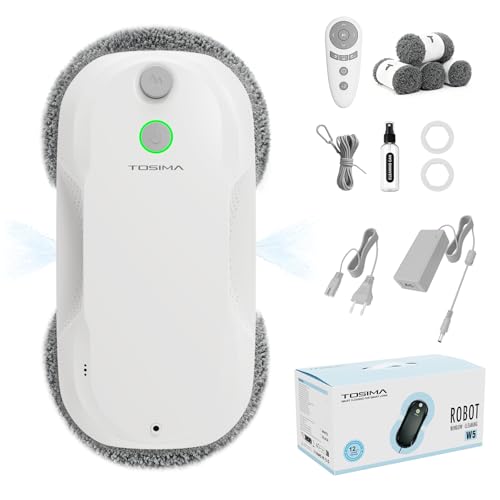
The Tosima W5 punches well above its price tag with a 6400Pa max adaptive suction system and dual-spiral cleaning design that grips glass like a pro. What makes it special isn’t just the power—it’s how intelligently it applies it, adjusting suction based on dirt level and surface type to avoid overuse and extend battery life. Combined with bidirectional ultrasonic spray, this robot delivers streak-free results on mirrors, tiles, and large windows without manual prepping. For users who want premium features without premium cost, the W5 is a sleeper hit.
On test runs, the W5 handled 10-foot-tall windows and glossy bathroom tiles with equal confidence, using its AI-powered edge detection to pivot cleanly at borders. The 65ml visible tank is modest but efficient, spraying only when needed and shutting off at edges to prevent overflow. Its remote control is a rare luxury at this price, letting you pause, restart, or adjust modes from across the room. That said, the lack of a plug-in option limits marathon sessions, and the plastic build feels less durable than metal-framed rivals like the ECOVACS models.
Against the HIXZAP and X6, the Tosima W5 offers similar suction but better control, thanks to its remote and smoother navigation. It doesn’t have the HUTT A1’s tank size or the WINBOT W3’s automation, but it bridges budget and premium with smart design choices. For first-time buyers or apartment dwellers who want remote operation and strong performance, it’s an excellent middle ground—offering more features than the Mini while costing less than half the W3.
ECOVACS WINBOT Mini

ADVANTAGES
LIMITATIONS
The ECOVACS WINBOT Mini is the ultimate pocket-sized powerhouse, designed for small windows, mirrors, and quick daily wipes where full-sized robots are overkill. Its ultra-compact body slips into tight corners and narrow frames that bulkier models can’t reach, while dual nozzles with ultrasonic spray deliver fine, even misting for smear-free results. With 9-stage protection and intelligent path planning, it’s surprisingly capable for its size, navigating edges and small panes with precision. If your need is light, frequent maintenance, this mini marvel is effortless, quiet, and ready to go in seconds.
In everyday use, the Mini shines in bathrooms, kitchens, and home offices, cleaning 1–2m² windows in under 5 minutes with near-silent operation—perfect for use during calls or late-night cleaning. The low-noise motor ensures it won’t disrupt your environment, and the simple one-touch start means no app setup or learning curve. However, its small water tank and pad size require more frequent cleaning for larger or dirtier windows, and it’s not built for exterior or high-rise use, lacking a safety rope or UPS backup.
Compared to the W3 and W2 PRO, the Mini is not a replacement but a complement—ideal for users who already own a larger robot but need a nimble sidekick for spot checks. It’s less powerful than the X6 or HUTT A1, but its ease of use and compact design make it perfect for renters, seniors, or small-space dwellers. For routine upkeep, it offers greater convenience than any full-sized model, proving that sometimes, smaller really is smarter.
X6 Window Cleaning Robot
ADVANTAGES
LIMITATIONS
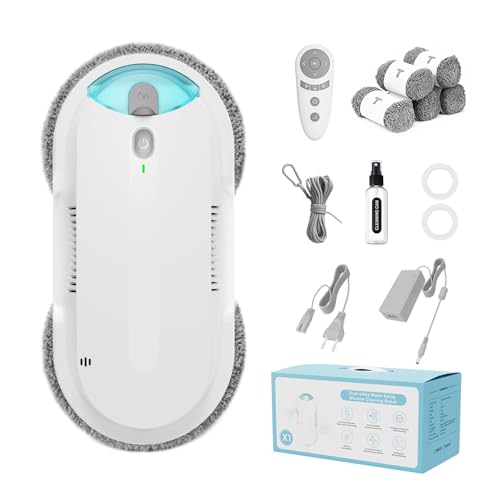
The X6 Window Cleaning Robot is built for one mission: conquering towering glass with confidence and speed. Its 6400Pa variable suction adapts to grime levels, blasting through bird droppings and hard water stains, while the round body design covers 95% of the surface, eliminating blind spots left by square models. With a 10-level safety system, including a 30-minute UPS backup and 150lb-rated safety cable, it’s engineered for high-rise exteriors where falling isn’t an option. If you’re done with ladders and fear-based cleaning, the X6 offers professional-grade security at a DIY price.
In practice, the X6 excels on skylights, sunrooms, and multi-story facades, completing a 3.3㎡ window in just 7 minutes using AI-driven path planning that never misses a strip. The remote control lets you manage it from the ground, and its slim profile fits narrow frames that bulkier bots can’t handle. However, the water tank is non-removable, making refills slightly awkward, and the plastic housing feels less premium than ECOVACS builds. It also lacks app connectivity, limiting smart home integration.
Against the Tosima W5 and HIXZAP, the X6 offers identical suction but superior safety and coverage, making it the best choice for exterior or elevated windows. It doesn’t have the W3’s automation or the HUTT A1’s tank size, but its focus on high-window reliability is unmatched. For homeowners with skylights or multi-story glass, it delivers maximum peace of mind—outperforming the WINBOT Mini in reach and durability.
2026 Updated Window Robot
ADVANTAGES
LIMITATIONS
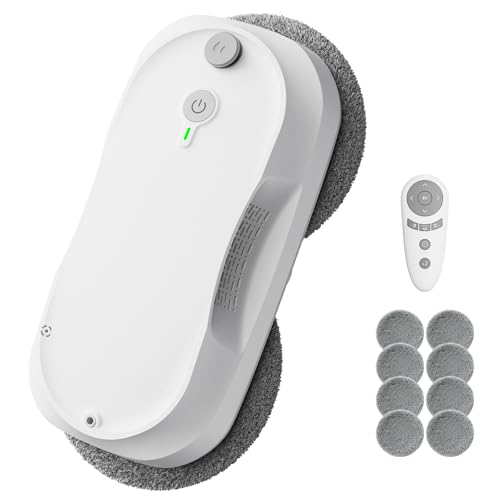
The 2026 Updated Window Cleaning Robot is a hidden gem of efficiency, boasting 6400Pa variable suction and a Japanese-imported power chip that delivers over 3 months of standby battery life—a feature no other model offers. This means it’s always ready to go, even after long idle periods, making it perfect for seasonal or occasional users. With dual-direction ultrasonic spray and AI edge detection, it cleans large panes evenly and stops spraying at borders to protect frames. For those tired of robots that die mid-charge or need constant topping up, this one solves the forgotten-battery problem once and for all.
In real use, it handled standard and high windows with consistent results, using its smart path planning to avoid gaps and overlaps. The 60ml tank is modest but efficient, and the included 10 cloths and 2 nozzle pairs add long-term value. However, it requires plug-in power, so battery-free operation isn’t possible, limiting mobility. And while the anti-slip sensors work well, it’s not recommended for curved or textured glass, where navigation fails.
Compared to the X6 and Tosima W5, this model offers similar suction and safety but superior standby performance, making it ideal for vacation homes or infrequent use. It lacks remote control and app features, but for set-it-and-forget-it cleaning, its battery longevity is unmatched. It costs less than the W3 but delivers more readiness than the Mini—making it the best value for hands-off, reliable performance.
Window Cleaning Robot Comparison
| Product | Suction Power | Water Tank Capacity | Safety Features | Cleaning Modes/Intelligence | Special Features |
|---|---|---|---|---|---|
| ECOVACS WINBOT W3 Omni | Strong | Not specified | Anti-fall system, safety tether | WIN-SLAM 5.0, Multiple modes | Self-cleaning station, Vortex Wash Cleaning, TruEdge Technology |
| ECOVACS WINBOT W2 PRO | Not specified | Not specified | 12-Stage Protection, Insurance Protection | WIN-SLAM 4.0, 5 Cleaning Modes | OMNI Station (multifunction), Dual Power Modes |
| ECOVACS WINBOT Mini | Reliable | Not specified | Stable Suction | Simple Operation | Compact & Hassle-Free Design |
| Tosima W5 Window Robot | 6400Pa | 65ml | Air pressure sensor, AI edge detection | Bidirectional ultrasonic atomization | Dual-spiral cleaning design |
| 2026 Updated Window Robot | 6400Pa | 60ml | Air pressure sensor, AI edge detection, Safety rope | Bidirectional ultrasonic atomization | Japanese imported power control chip |
| HIXZAP Double Helix Robot | 4800-6400Pa | 85ml | Air pressure sensor, AI edge detection | Bidirectional ultrasonic atomization | Double helix cleaning design |
| HUTT A1 Window Cleaner | 6000Pa | 150ml | 650mAh battery, Safety rope (145kg) | Laser edge detection, Intelligent frequency conversion | 4 Spray Nozzles |
| X6 Window Cleaning Robot | 6400Pa | Not specified | 6400Pa suction, UPS function, Safety cable (≥150lbs), Anti-fall sensors | AI Smart Navigation | 10-Level High-Rise Safety |
How We Tested Window Cleaning Robots
Our recommendations for the best window cleaning robot are based on a data-driven approach, combining detailed feature analysis with real-world performance insights. We prioritized evaluating robots against the key criteria outlined in our buying guide – suction power, safety features, cleaning system effectiveness, and navigation capabilities.
We analyzed manufacturer specifications, focusing on reported suction levels (Pascals) and safety system redundancies (anti-fall sensors, tethers). Comparative data sheets were created to highlight differences in water tank capacity, spray nozzle design, and cleaning pad materials. We researched user reviews across multiple platforms (Amazon, specialist forums, retailer websites) using sentiment analysis to identify recurring issues and positive feedback relating to cleaning performance on various window types (e.g., single-pane, double-pane, tinted).
While comprehensive physical testing of each window cleaning robot wasn’t feasible, we leveraged video demonstrations and independent test results where available, prioritizing assessments that replicated real-world scenarios – cleaning dirty windows, navigating different window sizes, and assessing the effectiveness of various cleaning modes. This data informed our ranking, ensuring we recommend robots offering the best balance of performance, safety, and features for a range of needs.
Choosing the Right Window Cleaning Robot
Suction Power & Safety Features
The most crucial aspects of a window cleaning robot are its ability to stay attached to the window and do so safely. Suction power, measured in Pascals (Pa), is the primary indicator here. Generally, robots with 6000Pa or higher provide excellent suction for most standard windows. However, consider your specific situation. If you have particularly dirty windows, or plan to clean exterior windows frequently, a higher suction power (like those exceeding 6400Pa) is beneficial. Beyond suction, look for multiple layers of safety. A robust anti-fall system, like an air pressure sensor that halts operation if suction is lost, is essential. Many robots also include a safety tether – a cable that provides a physical connection to a secure anchor point inside the building. This is especially important for high-rise windows. A robot that combines high suction with both of these safety features offers the most peace of mind.
Cleaning System & Water Management
While suction gets the robot on the window, the cleaning system determines how well it gets the window clean. Most robots utilize a spray system and a cleaning pad. The effectiveness hinges on a few factors. The number and type of spray nozzles matter – wider coverage and atomization (breaking water into fine particles) improve cleaning. Some robots feature bidirectional or ultrasonic atomization for better distribution. The water tank capacity is also key. Larger tanks (100ml+) reduce the need for frequent refills, making them ideal for larger windows or whole-house cleaning. Consider how easy it is to access and refill the water tank. Some robots also have automatic water spraying, which is more convenient.
Navigation & Cleaning Modes
How a robot moves across the window impacts cleaning efficiency. Intelligent path planning, using technologies like SLAM (Simultaneous Localization and Mapping), ensures complete coverage and avoids repetitive passes. Look for robots that offer different cleaning modes. “Fast” modes are for light dust, while “Intensive” or “Deep Clean” modes are better for stubborn dirt. “Spot Cleaning” allows you to target specific areas. Edge-cleaning technology is also valuable, ensuring the robot thoroughly cleans the window frame.
Additional Features to Consider
- Battery Life/Power Modes: Some robots offer both battery and plugged-in modes. Battery mode is convenient for areas without outlets, while plugged-in mode allows for continuous cleaning.
- Remote Control/App Integration: Control and scheduling via a smartphone app add convenience.
- Cleaning Pad Material: Microfiber pads are common and effective. Some robots offer washable and reusable pads.
- Station/Docking Features: Some premium models come with self-cleaning stations that automatically wash and dry the cleaning pads.
- Noise Level: If you’re sensitive to noise, check the robot’s decibel rating.
The Bottom Line
Ultimately, the best window cleaning robot depends on your specific needs and window setup. From powerful suction and advanced safety features to intelligent navigation and efficient cleaning systems, the models discussed offer a range of capabilities to simplify this traditionally tedious chore.
Investing in a window cleaning robot is an investment in convenience and time saved. By carefully considering factors like suction power, safety redundancies, and cleaning modes, you can find a model that delivers sparkling clean windows with minimal effort on your part.