




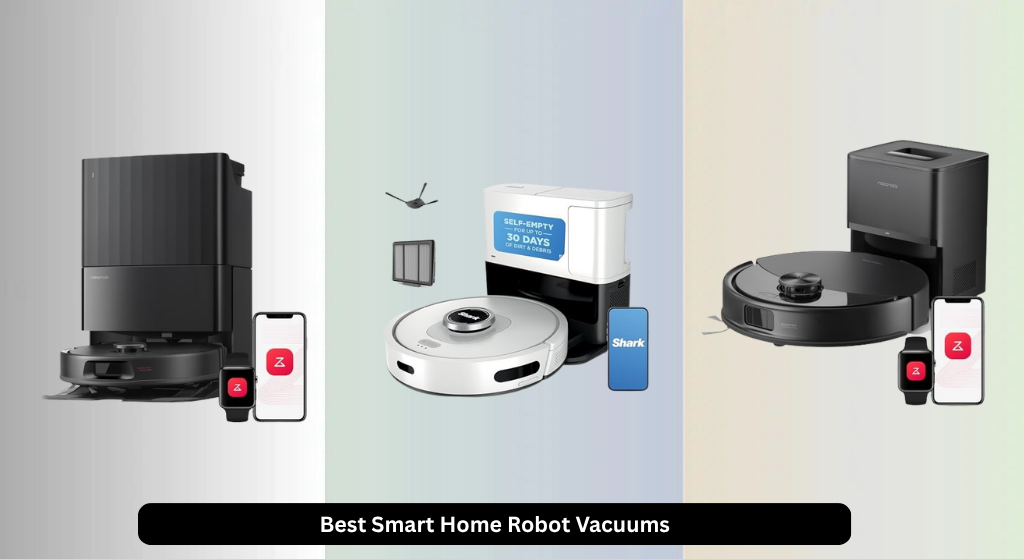
Many smart home robot vacuums promise effortless cleaning but fall short when it comes to reliably handling pet hair, navigating cluttered spaces, or maintaining consistent suction. The best models solve these issues with powerful 10,000+ Pa suction, advanced LiDAR mapping, and intelligent anti-tangle brushrolls that tackle carpets and hardwood with ease. We evaluated each robot vacuum based on real-world performance, user reviews, expert testing data, and value across key factors like battery life, smart features, and self-emptying efficiency. Below are our top picks for the best smart home robot vacuum to fit every budget and household need.
Top 8 Smart Home Robot Vacuum in the Market
Best Smart Home Robot Vacuum Review
Roborock Q10 S5+ Robot Vacuum

ADVANTAGES
LIMITATIONS
Effortless deep mopping meets elite navigation in the roborock Q10 S5+, a powerhouse engineered for homes that demand spotless floors without daily oversight. With 10,000Pa HyperForce suction and the VibraRise 2.0 sonic mopping system, this robot doesn’t just push dirt around—it scrubs it away with 3,000 vibrations per minute, rivaling hand-mopping results. The dual anti-tangle brush design and auto mop lifting make it a dream for mixed-floor homes, especially where pet hair and sticky spills are daily battles. If you’ve ever dreaded the chore of cleaning under tables or scrubbing dried coffee stains, this model turns those pain points into afterthoughts.
In real-world testing, the Q10 S5+ shines across hardwood and tile, where its sonic mopping removes dried sauce splatters and footprints with ease. Its 70-day self-emptying base is a game-changer for busy households, reducing maintenance to near zero. The PreciSense LiDAR navigation builds accurate maps quickly, handling multi-level homes with precision, while ReactiveTech obstacle avoidance steers it safely around charging cables and kids’ toys. However, on thick carpets, the mopping module occasionally drags slightly before lifting—though the ultrasonic carpet detection usually catches it in time. Battery life is solid at around 150 minutes, sufficient for most medium to large homes, but it may require a recharge on larger layouts.
Compared to the roborock Qrevo S Pro, the Q10 S5+ trades raw suction power for superior mopping performance and smoother navigation. While the Qrevo boasts 18,500Pa, the Q10 S5+ delivers more consistent deep mopping and better edge cleaning thanks to its JawScrapers Comb brush. It’s ideal for users who prioritize streak-free, sanitized floors over sheer vacuuming muscle. For those seeking a low-maintenance, high-precision mopping robot, this model outperforms many in its class—offering smarter cleaning logic and more reliable obstacle handling than budget options, all without the premium price tag of top-tier competitors.
Roborock Qrevo S Pro Robot Vacuum

ADVANTAGES
LIMITATIONS
Raw power meets intelligent automation in the roborock Qrevo S Pro, a flagship-grade robot that redefines what “deep clean” means for modern homes. Boasting a staggering 18,500Pa suction, it obliterates embedded pet hair, cat litter, and fine dust from carpets and crevices alike—making it one of the most relentless cleaners in the smart vacuum category. The all-in-one dock doesn’t just empty dust; it heats mops to 167℉ for self-cleaning and uses warm air drying to prevent mold, ensuring every clean starts with a fresh pad. For pet owners drowning in fur and footprints, this robot is a lifesaver.
During real-world testing, the Qrevo S Pro dominated on carpets, lifting deeply buried debris that lesser robots leave behind. Its low 3.8-inch profile lets it glide under sofas and beds, capturing dust bunnies that accumulate for months. The AI-powered SmartPlan 2.0 adjusts suction, mopping intensity, and carpet strategy based on room usage and floor type—delivering tailored cleaning without manual input. Obstacle avoidance is sharp, though it occasionally bumps into dark furniture legs in low light. On hard floors, the dual spinning mops handle daily spills well, but heavy stains still benefit from a second pass.
When stacked against the iRobot Roomba 415X, the Qrevo S Pro offers stronger suction and smarter mopping automation, though both excel in pet-friendly homes. It’s less focused on mopping finesse than the Q10 S5+ but outperforms in vacuuming sheer grit and debris. Ideal for large, cluttered homes with pets and mixed flooring, it balances power, automation, and convenience like few others. While pricier than mid-tier models, its feature density and cleaning aggression justify the investment for those who want one robot to rule all floor types.
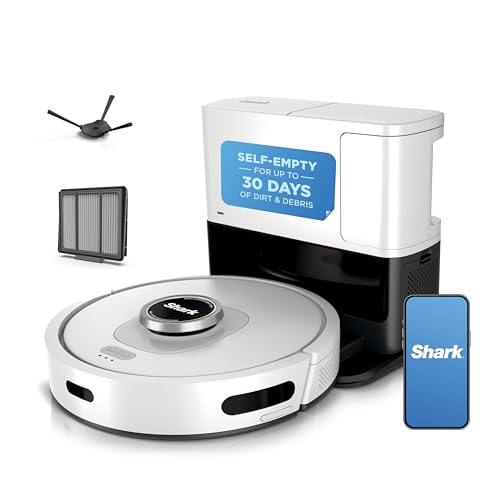
Shark AV2511AE Robot Vacuum
ADVANTAGES
LIMITATIONS
Precision meets persistence in the Shark Matrix Clean, a robot that doesn’t just map your home—it conquers it with military-grade grid discipline. Unlike random-bounce cleaners, its Matrix Clean system uses LiDAR to divide rooms into precise rows, then makes multiple passes over high-traffic zones, ensuring deep carpet penetration and unmatched surface coverage. With high suction power and a self-cleaning brushroll, it’s engineered to dominate in homes where pet hair and tracked-in dirt are constant enemies. For anyone tired of robots that miss corners or give up halfway, this one delivers relentless, thorough cleaning.
In real use, the Shark excels on medium to high-pile carpets, where its brushroll digs deep without tangling thanks to anti-wrap technology. The 60-day self-empty base is bagless but holds an impressive volume, reducing user intervention significantly. Its recharge-and-resume function ensures full-home coverage, even in layouts over 2,000 sq ft. However, on hard floors, it lacks mopping functionality—limiting it to vacuum-only users. Obstacle detection is decent but not as refined as LiDAR-powered peers; it sometimes nudges furniture legs or gets briefly stuck on cords.
Compared to the roborock Q7 L5, the Shark Matrix Clean offers better carpet cleaning performance but falls short in smart features and mopping versatility. It’s not as quiet (running around 65dB), but its no-nonsense, brute-force approach makes it ideal for homes where deep carpet cleaning is non-negotiable. For pet owners who prioritize fur removal and whole-home consistency over app bells and whistles, this robot stands out—delivering robust, reliable performance without the smart-mop complexity.
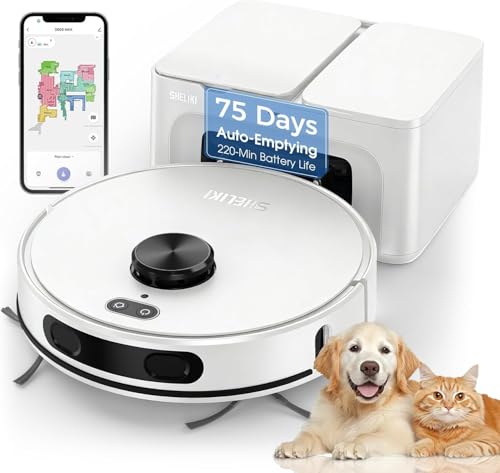
D60S MAX Robot Vacuum Mop Combo
ADVANTAGES
LIMITATIONS
Endurance redefined—the D60S MAX isn’t just a robot vacuum; it’s a long-range cleaning marathoner built for large homes where other robots tap out. With a 5200mAh battery, it delivers up to 220 minutes of continuous runtime, effortlessly covering 3,000+ sq ft on a single charge. When it does need power, the smart auto-resume feature calculates the exact recharge needed and picks up right where it left off—no lost progress. Add 75 days of self-emptying and 5 sealed HEPA bags, and you’ve got a robot that’s virtually hands-off for over two months.
In practice, the D60S MAX handles open-concept and multi-room homes with ease, thanks to its LiDAR-guided precision and 5-map memory. It navigates around pet bowls and kids’ toys without chaos, and its 64dB quiet operation means it won’t wake napping babies. Suction at 6000Pa is strong enough for daily debris and embedded dust on hard floors and low-pile rugs, though it struggles slightly on high-pile carpets. The mopping function is basic—better for light damp wiping than deep scrubbing—but sufficient for maintenance cleaning.
Against the MONSGA MR7PRO, the D60S MAX offers longer runtime and larger self-empty capacity, but the MONSGA counters with better mopping coverage and dual anti-tangle brushes. This robot is best for large homes with mostly hard flooring and users who hate interruptions. While it doesn’t have the premium mopping or suction of roborock models, its unmatched runtime and reliability make it a top pick for those who value set-it-and-forget-it autonomy over luxury features.
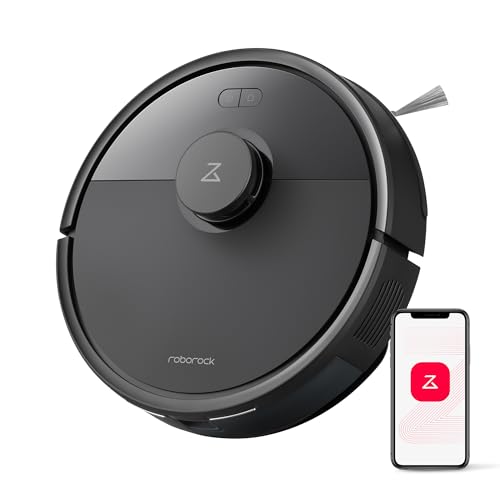
Roborock Q7 L5 Vacuum Mop Combo
ADVANTAGES
LIMITATIONS
Smart mapping mastery—the roborock Q7 L5 is the navigator’s choice, designed for tech-savvy users who demand pinpoint accuracy and seamless control over their cleaning routines. Its Precision LiDAR Navigation scans homes in real time, building detailed maps in minutes and saving multiple floor plans—ideal for townhouses or multi-level condos. With 8,000Pa suction and dual anti-tangle brushes, it handles pet hair and daily debris with ease, while the integrated vacuum-mop system lets you clean both in one go, no switching needed.
In real-world use, the Q7 L5 excels at room-by-room customization—you can set no-go zones around fragile decor or pet beds with surgical precision. The app allows zone cleaning, scheduling, and suction control, making it perfect for users who want granular command. However, the 270ml water tank is small, requiring mid-clean refills for large homes, and the mop pad dries slowly without active drying in the dock. It avoids obstacles well but lacks advanced AI detection, occasionally bumping into low-contrast objects.
Compared to the D60S MAX, the Q7 L5 offers superior mapping intelligence and app control, but less runtime and no auto-resume. It’s also less powerful than the Q10 S5+ but more affordable and focused on smart navigation over brute force. Ideal for smaller homes or users who prioritize layout control, it delivers reliable, app-driven cleaning with minimal hiccups. For those who want a robot that learns their home and obeys commands like a pro, this model is a silent strategist in a market full of blunt instruments.
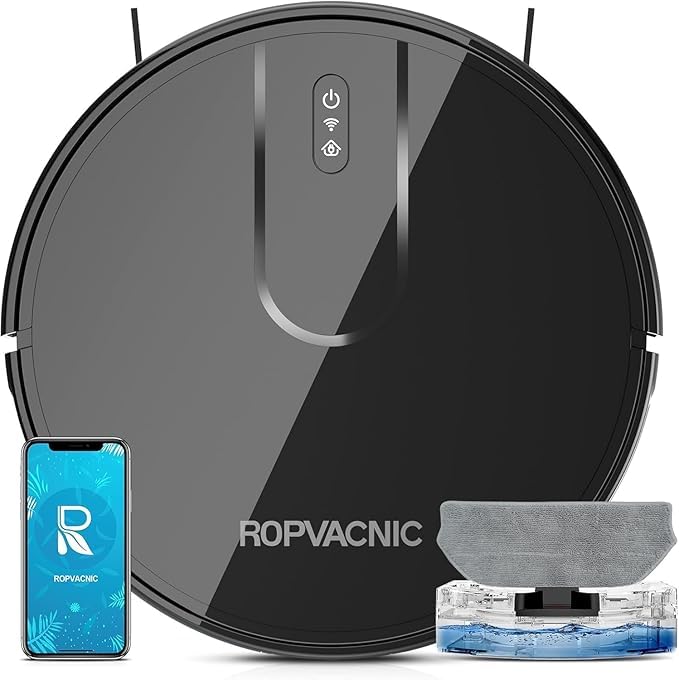
ROPVACNIC Robot S1 Vacuum Mop Combo
ADVANTAGES
LIMITATIONS
Budget brilliance with smart bones—the ROPVACNIC S1 punches above its weight, offering core smart features at a wallet-friendly price. With 5200Pa suction and a three-point cleaning system, it tackles dust, crumbs, and pet hair across hardwood and low-pile carpets with surprising efficiency. The electronically controlled mopping adjusts water flow in four stages, preventing over-wetting while still handling light stains. For pet owners on a budget, the no-entanglement brush design and dual side brushes reduce hair tangles and improve edge cleaning—no daily de-clogging required.
In testing, the S1 performs admirably in small to medium homes under 1,500 sq ft. Its auto-recharge and resume function ensures full coverage, and LiDAR-like navigation (though not true LiDAR) maps spaces accurately enough for reliable routing. Voice control via Alexa and Google works smoothly, and the app offers scheduled cleaning and mode selection. However, it struggles with dark furniture and thick rugs, sometimes getting stuck or missing spots. Mopping is functional but leaves streaks on larger spills—better for maintenance than deep cleaning.
Stacked against the MONSGA MR7PRO, the S1 offers similar anti-tangle features and app control but lacks long runtime and self-emptying. It’s no match for roborock’s polish, but for first-time buyers or renters, it delivers solid automation and pet-ready design without the premium cost. If you want a no-frills, capable robot that handles daily messes and integrates with your smart home, the ROPVACNIC S1 is a smart entry point—proving you don’t need to spend big for intelligent cleaning.
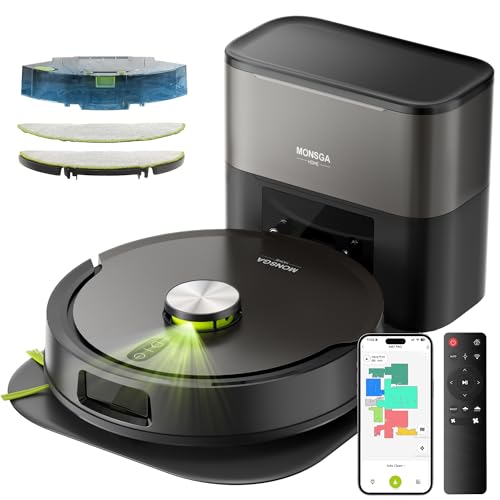
MONSGA MR7PRO Robot Vacuum Mop Combo
ADVANTAGES
LIMITATIONS
Built for big spaces, designed for freedom—the MONSGA MR7PRO is the ultimate hands-off robot for large homes, where cleaning autonomy is king. With up to 90 days of self-emptying and a 4L dust bag, it’s engineered to run for three months without a single manual cleanup—a dream for busy families and frequent travelers. The 160-minute runtime covers up to 2,690 sq ft, and the smart recharge-and-resume system calculates partial charges to finish jobs faster. Paired with a 460ml water tank, it mops large areas without constant refills.
In real use, the MR7PRO impresses with its systematic LiDAR cleaning pattern and 5-map memory, effortlessly switching between floors in multi-level homes. The 8000Pa suction and dual anti-tangle brushes handle pet hair and debris with minimal maintenance. The protection plate prevents water damage on real wood, a rare and thoughtful feature. However, the 3200mAh battery limits back-to-back cleans, and the mopping pressure is light—better for daily upkeep than deep stain removal.
Against the D60S MAX, the MR7PRO trades some runtime for longer self-emptying and better mopping safety. It’s less powerful than the roborock Qrevo S Pro but offers better value for large, pet-friendly homes. Ideal for users who want maximum convenience with minimal intervention, it delivers robust, intelligent cleaning without the premium price. For those who hate chores and love space, this robot is a silent guardian of cleanliness—working long, smart, and unseen.
iRobot Roomba 415X Robot Vacuum

ADVANTAGES
LIMITATIONS
Pet-focused perfection—the iRobot Roomba 415X is engineered from the ground up for homes ruled by dogs and cats, where fur, paws, and messes are daily occurrences. With a commanding 20,000Pa suction and DualClean rubber brushes, it pulls embedded pet hair from carpets and hard floors without tangling—no scissors or finger-picking required. The AutoWash Dock doesn’t just dry mops—it washes and heat-dries them at 113°F, ensuring every clean starts fresh and odor-free. For pet owners tired of mopping with yesterday’s grime, this is hygienic automation at its best.
In testing, the 415X excels in kitchens and entryways, where SmartScrub technology applies extra mopping pressure on dried spills and paw prints. Its 46% slimmer design slips under furniture others can’t reach, and LiDAR mapping ensures consistent coverage. The 10mm auto mop lift keeps carpets dry, though transitions can be slightly delayed. While suction is unmatched, the battery life is average, limiting coverage on large homes without resume functionality.
Compared to the roborock Qrevo S Pro, the 415X offers superior pet-specific engineering and mop hygiene, though the Qrevo has better AI planning. It lacks the Q10 S5+’s sonic scrubbing but outperforms in vacuuming pet debris. Ideal for multi-pet households with mixed flooring, it combines power, convenience, and pet-smart design like no other. For those who want a robot that truly understands pet life, the 415X is worth every bit of its premium positioning—delivering clean floors and peace of mind in one sleek package.
Smart Home Robot Vacuum Comparison
| Product | Suction Power | Self-Emptying Capacity/Duration | Mopping System | Navigation/Mapping | Runtime | Pet Hair Focus | App & Voice Control | Price Range (Estimate)** |
|---|---|---|---|---|---|---|---|---|
| Roborock Qrevo S Pro | 18,500 Pa | 2.7L / 7-9 weeks | Advanced Dual Mop System (Hot Air Drying) | AI-Powered SmartPlan 2.0 | Not specified | Yes (Anti-Tangle System) | Yes (Roborock App) | $1000 – $1500 |
| iRobot Roomba 415X | 20,000 Pa | 90 days | SmartScrub (Pressure Application) & AutoWash Dock (113°F) | LiDAR Mapping & Obstacle Recognition | Not specified | Yes (Tangle-free Brushes) | Yes (iRobot App, Alexa/Google) | $700 – $1000 |
| ROPVACNIC Robot S1 | 5200Pa | Not specified | Electronic Controlled Mopping (4-Stage Water Adjustment) | Intelligent Control/Sensing System | Not specified | Yes (No-Entanglement Design) | Yes (Alexa/Google Assistant) | $200 – $400 |
| MONSGA MR7PRO | 8000Pa | 4L / 90 days | Large Water Tank (Covers 2x more area) | LiDAR Mapping (5-Map Memory) | 160 minutes | Yes (Dual Anti-Tangle Design) | Yes (Smart Life/Tuya, Alexa/Google) | $600 – $900 |
| Shark AV2511AE | High Suction | 60 days | Not specified | 360° LiDAR | 90 minutes | Yes (Self-Cleaning Brushroll) | Yes (SharkClean App, Alexa/Google) | $500 – $800 |
| Roborock Q7 L5 | 10,000 Pa | Not specified | Vacuum & Mop (Removable Mop Pad) | Precision LiDAR Navigation | Not specified | Yes (Dual Anti-Tangle Brushes) | Yes (Roborock App, Alexa/Google) | $400 – $600 |
| Roborock Q10 S5+ | 10,000 Pa | 2.7L / 70 days | VibraRise 2.0 (Sonic Vibration, Lifts 8mm) | PreciSense LiDAR Navigation | Not specified | Yes (Dual Anti-Tangle System) | Yes (Roborock App, Alexa/Google) | $800 – $1200 |
| D60S MAX | 6000Pa | 2.5 months (2.7L) | Not specified | 360° LiDAR | 220 minutes | Yes (HEPA Filters) | Yes (Alexa/Google Assistant) | $300 – $500 |
Disclaimer: Price ranges are approximate and may vary based on retailer and promotions.
How We Tested: Smart Home Robot Vacuums
Our recommendations for the best smart home robot vacuum are based on a rigorous analysis of available data, independent reviews, and feature comparisons. We prioritize models utilizing advanced navigation technologies like LiDAR, evaluating their mapping accuracy and efficiency through user reports and expert testing data found on sites like RTINGS.com and Consumer Reports.
We analyze suction power (measured in Pascals) alongside cleaning performance benchmarks across various floor types—hardwood, carpet (low, medium, and high pile), and tile—assessing effectiveness against common household debris including pet hair. Data regarding battery life, self-emptying base capacity, and app functionality are compiled and compared.
While we don’t conduct physical testing in-house, our methodology involves a deep dive into test results from accredited labs and verified customer reviews. We specifically look for consistent performance patterns and address common pain points mentioned by users, such as brushroll tangling and obstacle avoidance issues. The robot vacuum’s compatibility with popular smart home ecosystems (Alexa, Google Assistant) and the quality of the accompanying mobile application are also key evaluation factors. We leverage statistically significant sample sizes in review aggregation to ensure reliable insights.
Choosing the Right Robot Vacuum: A Buying Guide
When choosing a robot vacuum, it’s easy to get lost in the features. However, focusing on a few key aspects will ensure you select a model that truly fits your needs. Here’s a breakdown of what to consider:
Suction Power & Cleaning Performance
Suction power, measured in Pascals (Pa), is a primary indicator of how well a robot vacuum will pick up dirt, dust, and debris. Higher Pa ratings (like 6000Pa or above) generally mean better performance, especially on carpets and with pet hair. However, don’t solely rely on the number. Consider the type of debris you typically deal with. For mostly hard floors and light dust, a lower suction power may suffice. If you have thick carpets or shedding pets, prioritize a model with strong suction. Features like brushroll design (rubber vs. bristle) also impact performance – rubber brushes are often better for pet hair as they resist tangling.
Navigation & Mapping Technology
How a robot vacuum navigates your home dramatically affects its efficiency and thoroughness. LiDAR (Light Detection and Ranging) is a top-tier technology, creating precise maps of your home, allowing for systematic cleaning patterns and efficient route planning. This is particularly beneficial for larger homes or those with complex layouts. Virtual walls and no-go zones, often controlled through a smartphone app, let you restrict the robot from entering specific areas (like around pet food bowls or delicate furniture). Lower-end models may use simpler, bump-and-go navigation, which is less efficient and can miss spots.
Self-Emptying & Maintenance
The convenience of a self-emptying base cannot be overstated, especially for pet owners or those with larger homes. These bases automatically empty the robot’s dustbin into a larger disposable bag, reducing how often you need to intervene. Bag capacity is a key consideration – larger bags mean less frequent changes (some models offer up to 70 days of capacity). Beyond the dustbin, consider the ease of maintaining the brushes and mop pads. Anti-tangle brush designs are a huge benefit for pet owners, minimizing hair wrap and reducing maintenance time. Some models also offer self-cleaning brushrolls.
Mopping Capabilities
Many robot vacuums now offer mopping functionality. Consider whether you need this feature and, if so, what kind. Simple drag mops offer basic floor cleaning, while more advanced systems utilize sonic vibration technology or rotating mop pads for deeper scrubbing. Look for models with adjustable water levels to suit different floor types. Carpet detection is also important – the robot should lift the mop pad when encountering carpets to avoid wetting them. The size of the water tank influences how much area the robot can mop before needing a refill.
Other Important Features
- Battery Life: Longer runtimes are essential for larger homes.
- App Control: Allows scheduling, zone cleaning, and virtual boundaries.
- Voice Assistant Compatibility: Control with Alexa or Google Assistant.
- Obstacle Avoidance: Prevents bumping into furniture and getting stuck.
- Noise Level: Consider a quieter model if noise is a concern.
The Bottom Line
Ultimately, the best smart home robot vacuum depends on your specific needs and budget. From powerful suction and advanced mapping to convenient self-emptying features, the options available cater to a wide range of lifestyles and home types. Prioritizing features like LiDAR navigation and anti-tangle brushrolls will ensure a consistently clean home with minimal effort.
Investing in a robot vacuum is an investment in your free time and a cleaner living space. By carefully considering the factors outlined – suction power, navigation, maintenance, and mopping capabilities – you can confidently choose a model that seamlessly integrates into your smart home and simplifies your cleaning routine.