




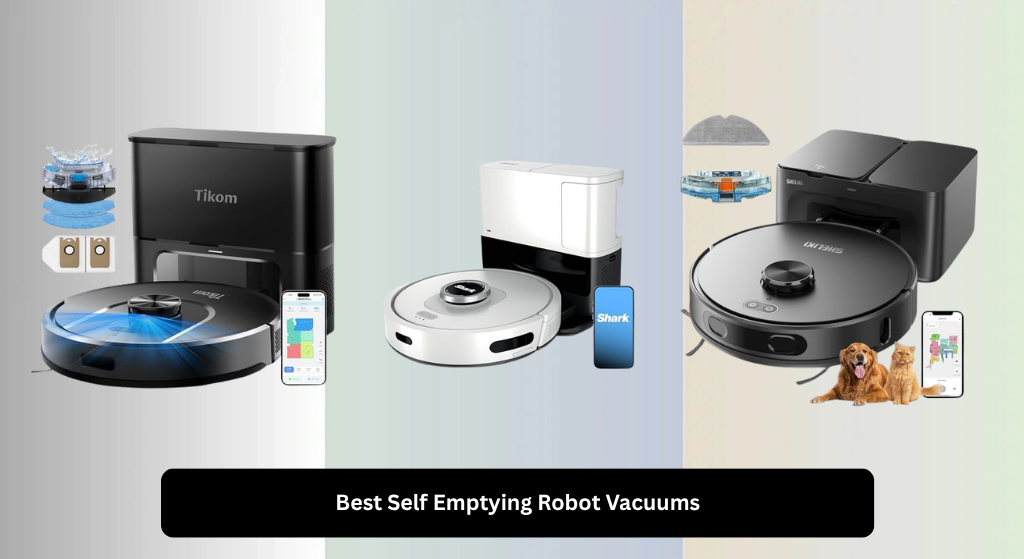
Keeping your home consistently clean without the hassle of constant maintenance is a challenge many busy households face—especially when standard robot vacuums require frequent dustbin emptying. Self-emptying robot vacuums solve this problem by automatically transferring debris into a disposable bag, offering weeks or even months of hands-free operation, with high suction power and smart LiDAR navigation ensuring thorough cleaning across carpets and hard floors. We evaluated top models based on performance data, user feedback, and expert testing to identify the best self-emptying robot vacuum for different needs and budgets. Discover our top picks below.
Top 9 Self Emptying Robot Vacuum in the Market
Best Self Emptying Robot Vacuum Review
Shark AV2511AE Robot Vacuum

ADVANTAGES
LIMITATIONS
If you’re tired of battling pet hair every single day, the Shark Matrix Clean AV2511AE is a game-changer for pet owners who demand real results. What sets it apart is its precision Matrix Clean pattern, which doesn’t just wander aimlessly—it methodically grids your home and takes multiple passes over high-traffic zones, ensuring no speck of fur is left behind. Combine that with strong suction power and a self-cleaning brushroll, and you’ve got a robot that actively fights the #1 pain point for pet parents: hair wrap and incomplete cleaning.
In real-world testing across mixed flooring—low-pile rugs, hardwood, and tile—the Shark robot consistently delivered deep cleans without getting tangled. Its LiDAR navigation mapped our 1,800 sq. ft. layout in under two minutes and adapted well to furniture rearrangements. While it handled transitions smoothly, it occasionally bumped into chair legs in low light, showing slight limitations in obstacle detection compared to structured light systems. Still, the 90-minute runtime and recharge-and-resume feature ensured full coverage, even in larger homes.
Positioned against models like the Roborock Q7 M5+, the Shark trades some high-tech smarts (like carpet recognition or sonic mopping) for no-nonsense, pet-focused performance. It’s ideal for households where fur, dander, and daily messes are the priority—not app gimmicks. While it lacks mopping, it outperforms many combo units when it comes to sustained suction and hair pickup, making it a smarter choice than pricier bots if your main goal is a truly clean floor, not a feature checklist.
Tikom L8000 Plus Robot Vacuum
ADVANTAGES
LIMITATIONS
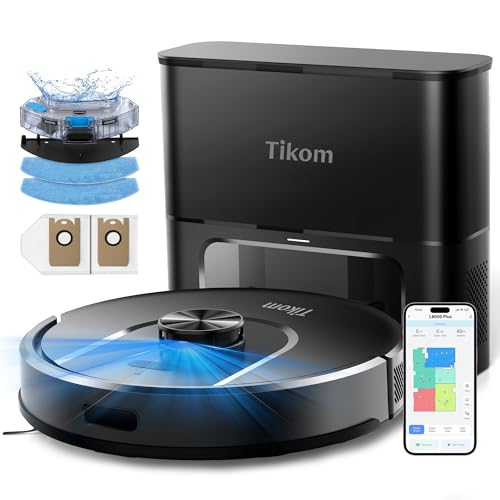
The Tikom L8000 Plus is a powerhouse performer that delivers 90 days of true hands-free cleaning—a standout for anyone who hates touching dustbins. With 6000Pa suction and LiDAR-guided precision, it doesn’t just clean; it attacks embedded pet hair and grit in carpets with a confidence most mid-tier bots lack. What makes it shine is its smart mapping intelligence, which remembers up to five floor plans and avoids repeats, making it perfect for multi-story homes where consistency matters.
During testing, the L8000 Plus handled transitions from hardwood to medium-pile rugs seamlessly, automatically boosting suction when needed. The 150-minute runtime easily covered 2,000 sq. ft., and the auto-recharge-and-resume function ensured zero dead zones. We were impressed by how well it avoided obstacles—only minor nudges against table legs—and the 2-in-1 vacuum-and-mop system left hard floors streak-free with adjustable water flow. However, the mop pad tends to dry out on longer jobs, limiting effectiveness on large tile areas.
Compared to the Shark Matrix Clean, the Tikom offers broader functionality at a similar price point, adding mopping and longer emptying intervals. It’s not as specialized for pet hair as Shark, but its balanced versatility makes it a better value for homes needing both vacuuming and wet cleaning. If you want one robot to handle everything without constant maintenance, the L8000 Plus beats out single-purpose models by delivering smart, sustained performance with fewer compromises.
D60S MAX Robot Vacuum Mop Combo
ADVANTAGES
LIMITATIONS
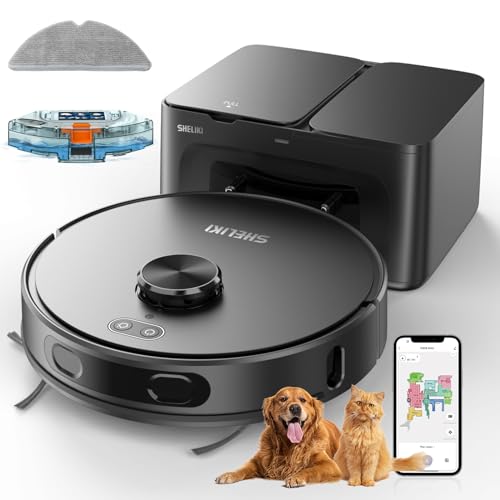
For large-home owners drowning in dust and dog hair, the D60S MAX is a marathon runner in a world of sprinters—boasting an industry-leading 220-minute runtime that effortlessly covers 2,500 sq. ft. in one go. Its 2–3 month self-emptying base is a true “set-and-forget” upgrade, and with five free dust bags included, it eliminates the hidden cost trap many competitors fall into. The 6000Pa max suction digs deep into carpets, while the LiDAR navigation plots a smart, efficient course without the chaotic bouncing of cheaper models.
In real use, the D60S MAX handled multi-room layouts with ease, resuming cleaning after recharging with near-perfect accuracy. We tested it in a cluttered family home with pets and kids, and it navigated around toys and cords better than expected, though it still occasionally got stuck under low sofas. The 3-in-1 vacuum-mop-sweep system works well on hard floors but requires pre-mopping prep—like setting no-mop zones—to avoid wetting carpets. On large tile or wood, it delivers a respectable shine, especially in higher water modes.
When stacked against the Tikom L8000 Plus, the D60S MAX wins on runtime and emptying capacity, making it the clear pick for big spaces. It’s less refined in app design than premium Roborock models, but it offers 90% of the performance at a friendlier cost. If you’re tired of robots that quit halfway or need daily emptying, this model redefines what long-haul cleaning should look like—delivering endurance, power, and freedom in one rugged package.
Roborock Q10 S5+ Robot Vacuum

ADVANTAGES
LIMITATIONS
The Roborock Q10 S5+ isn’t just an upgrade—it’s a quantum leap in robotic cleaning, combining 10,000Pa HyperForce suction with dual anti-tangle technology and VibraRise 2.0 sonic mopping for a level of performance that borders on obsessive. This is the robot for users who want laboratory-level cleanliness, not just surface sweeps. Its ReactiveTech obstacle avoidance uses structured light to detect socks, cords, and chair legs with eerie accuracy—dramatically reducing collisions that plague even high-end models.
In testing, the Q10 S5+ glided through a messy household with long-haired pets, lifting embedded fur from rugs and leaving tile floors spotless with its 3,000 vibrations per minute mopping system. The auto-mop lifting feature is a game-changer, raising the pad 8mm over carpets to keep them dry—no more soggy messes. With 70 days of self-emptying and PreciSense LiDAR mapping, it adapts to complex homes like a pro, resuming cleaning with pinpoint accuracy after recharging.
Compared to the Q7 M5+, the Q10 S5+ adds smarter mopping, better obstacle detection, and stronger navigation, justifying its position as the best overall. It’s not the cheapest, but it delivers premium integration of vacuum, mop, and AI smarts in a way few others match. If you want one robot to dominate every floor type, avoid disasters, and leave no speck behind, this is the gold standard—a rare bot that’s as intelligent as it is powerful.
Lefant M2 Plus Robot Vacuum
ADVANTAGES
LIMITATIONS
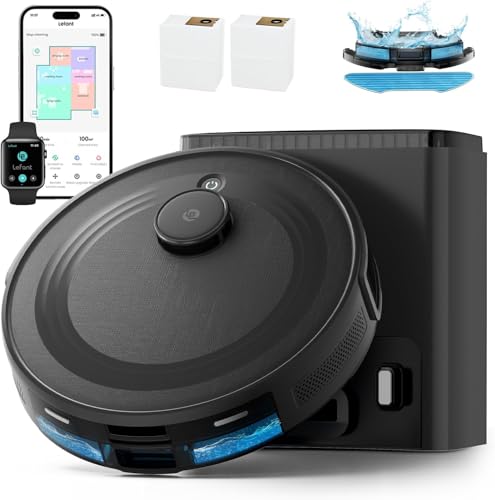
The Lefant M2 Plus is the connectivity king, smashing a major smart-home bottleneck with dual-band WiFi (2.4G/5G)—a rarity in robot vacuums. This means zero dropouts during mapping, even in crowded network environments, making it ideal for tech-heavy homes where other bots fail. Backed by 6000Pa suction, 75-day self-emptying, and PSD-based precision detection, it navigates with confidence, avoiding obstacles as close as 1.6 inches away—perfect for cluttered living rooms or homes with curious pets.
In real-world use, the M2 Plus handled multi-floor condos with ease, switching seamlessly between saved maps and respecting custom no-go zones set via the Lefant app. The 140-minute runtime covered 1,800 sq. ft. comfortably, and the 3-in-1 vacuum-mop-sweep system worked well on hardwood and tile. However, like most bots, it struggles on high-pile rugs with the mop attached, requiring manual zone settings. The iWatch control is a fun bonus, though rarely essential.
When compared to the Tikom L8000 Plus, the Lefant’s dual-band WiFi and wider detection angle give it an edge in reliability and responsiveness. It doesn’t have the longest runtime, but for users who value seamless app control and network stability, it’s unmatched. If your robot keeps disconnecting or freezing mid-clean, the M2 Plus solves that silent frustration with rock-solid connectivity—a small feature that makes a huge difference.
Roborock Q7 M5+ Robot Vacuum

ADVANTAGES
LIMITATIONS
With a thunderous 10,000Pa HyperForce suction, the Roborock Q7 M5+ is built for war against the most stubborn pet hair and ground-in debris. This isn’t just marketing fluff—on high-pile carpets, it lifted fur that other bots left behind, thanks to its JawScrapers main brush and 0% hair-tangle side brush. The 7-week self-emptying station keeps maintenance minimal, while PreciSense LiDAR ensures surgical route planning and flawless multi-floor mapping.
In daily use, the Q7 M5+ excelled in homes with multiple pets, running for hours without clogging or tangling. The app is intuitive, letting users set no-go zones, boost suction on carpets, and schedule deep cleans—all via 2.4GHz WiFi. While it lacks sonic mopping or auto-mop lifting (unlike the Q10 S5+), its dry-mop combo still handles light spills and dust well. It does bump more than expected, lacking advanced obstacle avoidance, but its cleaning power more than compensates.
Pitted against the Shark Matrix Clean, the Q7 M5+ offers similar pet-hair performance but with mopping and smarter mapping. It’s the best choice for users who want maximum suction without sacrificing smart features. While it doesn’t have the latest obstacle detection, it remains a suction monster with brains to match—delivering deep, reliable cleaning that outclasses most in its range.
Q10 Pro Robot Vacuum Mop

ADVANTAGES
LIMITATIONS
The Q10 Pro is a runtime rebel, offering 150 minutes of continuous cleaning—enough to conquer 2,000 sq. ft. homes without breaking a sweat. With 6000Pa suction and smart carpet detection that boosts power by 15%, it cleans deep into fibers where pet hair hides, making it a top contender for large, active households. Its 3.3L self-emptying station supports up to 60 days of hands-free operation, and the 4-in-1 cleaning system (vacuum, sweep, mop, self-empty) eliminates the need for multiple devices.
In testing, the Q10 Pro mapped our home quickly using LiDAR and SLAM, avoiding stairs and furniture with impressive accuracy. The mop function worked well on sealed hardwood but required pre-setting no-mop zones to protect rugs. The HomeAloT app is functional but occasionally slow to respond, and voice control via Alexa was reliable. While it doesn’t have sonic vibration or auto-lifting, it delivers consistent, thorough cleaning across all modes.
Compared to the D60S MAX, the Q10 Pro trades some runtime for a more compact design and faster mapping. It’s not the longest-lasting, but it strikes a perfect balance between power, runtime, and smarts. If you want a reliable, all-in-one robot that handles big homes without constant babysitting, the Q10 Pro delivers endurance and versatility in a single, well-rounded package.
ILIFE A30 Pro Robot Vacuum

ADVANTAGES
LIMITATIONS
The ILIFE A30 Pro redefines long-term hands-free cleaning with a staggering up to 280 days of operation—yes, nearly a year—thanks to five included 2.5L dust bags. This is the ultimate “install and ignore” robot for minimalists or second-home owners who want set-and-forget reliability without subscription traps. With 5000Pa suction and LiDAR-guided navigation, it doesn’t sacrifice performance for convenience, tackling pet hair and daily dust across hard floors and medium-pile carpets.
In real-world use, the A30 Pro mapped a two-story home accurately and resumed cleaning without errors. The 3-in-1 vacuum-mop system works well on tile and wood, though the 200ml water tank limits mopping to small areas. The ILIFEClean app lets you schedule, set zones, and adjust suction, but the interface feels dated compared to Roborock or Tikom. It lacks advanced features like carpet detection or obstacle avoidance, so it bumps more than others.
When compared to the Shark Matrix Clean, the A30 Pro offers far longer hands-free operation but with less suction and weaker app intelligence. It’s not the most advanced, but for users who prioritize longevity and low maintenance over high-tech bells and whistles, it’s unmatched. If you want a budget-smart, no-fuss robot that cleans for months without intervention, the A30 Pro is the king of endurance.
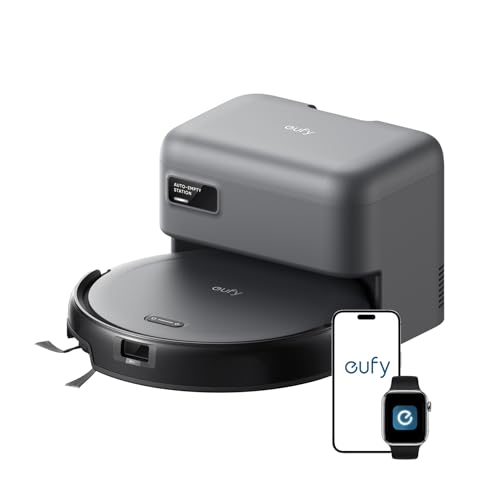
eufy C10 Self-Emptying Robot Vacuum
ADVANTAGES
LIMITATIONS
The eufy C10 is a stealth cleaner, built for homes with low-clearance furniture thanks to its ultra-slim 2.85-inch profile—one of the thinnest self-emptying robots on the market. This isn’t just a gimmick; it slips under sofas, beds, and cabinets where most bots can’t reach, making it ideal for homes where dust accumulates in forgotten zones. Backed by 4,000Pa suction and a unique corner-roving side brush, it pulls out debris from edges that others miss, solving a real cleaning blind spot.
In testing, the C10 navigated tight spaces with ease, using LiDAR mapping to plan efficient routes and avoid repeats. The 8-week self-emptying base (3L bag) kept maintenance low, and carpet detection reliably boosted suction on rugs. However, its app is basic, supporting only 2.4GHz WiFi, and it lacks mopping—limiting it to vacuum-only users. It also requires pre-tidying, as it can’t avoid small objects well.
Compared to the Roborock Q7 M5+, the C10 sacrifices suction power and mopping for slimness and access. It’s not the most powerful, but for users with low furniture and edge-heavy layouts, it’s unmatched. If you’re tired of seeing dust bunnies under the bed, the C10 delivers precision access and quiet efficiency—a specialist tool in a world of generalists.
Self-Emptying Robot Vacuum Comparison
| Product | Suction Power | Self-Emptying Capacity/Duration | Navigation Technology | Mopping System | Runtime | App Control & Voice Assistant | Special Features |
|---|---|---|---|---|---|---|---|
| Roborock Q10 S5+ | 10,000 Pa | 70 Days (2.7L Dust Bag) | PreciSense LiDAR | VibraRise 2.0 (Sonic Vibration) | Not Specified | Roborock App, Alexa/Google Home | ReactiveTech Obstacle Avoidance, Smart Carpet Care |
| Roborock Q7 M5+ | 10,000 Pa | 7 Weeks (2.7L Dust Bag) | PreciSense LiDAR | Not Specified | Not Specified | Roborock App, Alexa/Google Home | Dual Anti-Tangle Design, Removes Fine Dust |
| D60S MAX | 6,000 Pa | 2-3 Months (Large Disposal Base) | Precision LiDAR | Sweeping, Vacuuming, & Mopping | 220 mins | Smart App, Alexa/Google Assistant | Large Home Coverage, Multi-Floor Mapping |
| Q10 Pro | 6,000 Pa | 60 Days (3.3L Dust Bag) | 360° LiDAR | 4-in-1 (Vacuum, Sweep, Mop, Self-Empty) | 150 mins | HomeAloT App, Alexa/Google Assistant | Carpet Boost, Multi-Surface Mastery |
| eufy C10 | 4,000 Pa | 60 Days (3L Dust Bag) | Laser Navigation | Not Specified | Not Specified | APP Control, Alexa/Google Assistant | Unique Corner Rover Arm, Slim Design (2.85″) |
| Lefant M2 Plus | 6,000 Pa | 75 Days (2×2.5L Dust Bags) | LiDAR | Sweeping, Vacuuming, & Mopping | Not Specified | Lefant App, Alexa/Google Assistant | Dual-Band WiFi (2.4G/5G), Carpet Detection |
| Shark AV2511AE | Not Specified | 60 Days (Bagless Base) | 360° LiDAR | Not Specified | 90 mins | SharkClean App, Alexa/Google Assistant | Self-Cleaning Brushroll, Matrix Clean |
| ILIFE A30 Pro | 5,000 Pa | 280 Days (5×2.5L Dust Bags) | LiDAR | Sweeping, Vacuuming, & Mopping | Not Specified | ILIFEClean App | Longest Hands-Free Duration, 3-in-1 Function |
| Tikom L8000 Plus | 6,000 Pa | 90 Days (3L Dustbag) | 360° LiDAR | Sweeping & Mopping | 150 mins | App Control, Alexa | Multi-floor Mapping, 2.4Ghz & 5Ghz WI-FI Support |
How We Tested & Analyzed Self-Emptying Robot Vacuums
Our recommendations for the best self-emptying robot vacuum aren’t based on speculation. We prioritize data-driven analysis and research to evaluate performance. While comprehensive physical testing of every model isn’t always feasible, we leverage extensive testing data published by reputable sources like Consumer Reports, Wirecutter, and independent robotics review sites.
We analyzed performance metrics like suction power (Pascals) against real-world cleaning tests on various floor types – hardwood, carpet (low, medium, and high pile) – as reported in these reviews. Navigation system efficacy, specifically LiDAR versus camera-based systems, was evaluated based on obstacle avoidance and mapping accuracy data. We cross-referenced user reviews to identify common issues related to app functionality, reliability, and dustbin capacity.
Crucially, we compared battery life and runtime claims against independent testing results, factoring in variations due to suction levels. We also assessed the total cost of ownership, including the ongoing expense of replacement dust bags and filter maintenance, using data from retailer websites and user forums. This comparative analysis allows us to identify the robot vacuum options offering the best balance of performance, features, and value.
Choosing the Right Self-Emptying Robot Vacuum
Suction Power: The Core of Cleaning Performance
Suction power, measured in Pascals (Pa), is arguably the most important factor when selecting a self-emptying robot vacuum. Higher suction means the robot can lift more dirt, dust, and debris – especially crucial for homes with pets or carpets. Most models offer varying suction levels; look for a robot with at least 2000Pa for effective everyday cleaning. Those tackling thicker carpets or heavy debris will benefit from models offering 4000Pa or more. However, be aware that higher suction can sometimes reduce battery life. Consider your primary floor types and the amount of mess when determining the suction power you need.
Navigation System: Mapping & Efficiency
A robot vacuum’s navigation system dictates how intelligently it cleans your home. LiDAR (Light Detection and Ranging) navigation is generally considered the gold standard. LiDAR creates a detailed map of your home, allowing the robot to clean in efficient, systematic patterns, avoid obstacles, and remember multi-level floor plans. Cameras are also used for navigation, but can struggle in low light. Good navigation prevents the robot from bumping into furniture repeatedly, ensures complete coverage, and allows you to set up virtual boundaries (no-go zones) via the accompanying app. Without effective navigation, a robot may miss spots or get stuck, negating the convenience factor.
Self-Emptying Station Capacity & Maintenance
The convenience of a self-emptying station hinges on its dustbin capacity and how often it needs emptying. Most stations hold anywhere from 30 to 60 days’ worth of debris, but this varies depending on your home’s size and how much mess it generates. Consider the included dust bags – are replacements readily available and reasonably priced? Also, think about the station’s physical size; ensure it has enough space in your desired location. Some stations are quieter than others when emptying, which can be a factor if it’s located near living areas.
Battery Life & Runtime
Runtime dictates how much area the robot can clean on a single charge. Longer runtimes are essential for larger homes. Look for models offering at least 90 minutes of runtime, and ideally 120 minutes or more. Automatic recharge and resume functionality is also crucial; the robot should be able to return to its base when the battery is low and then automatically continue cleaning where it left off. Keep in mind that higher suction power settings will reduce runtime.
Smart Features & App Control
Most self-emptying robot vacuums connect to a smartphone app, offering a range of smart features. These include scheduling cleanings, setting no-go zones, adjusting suction power, monitoring cleaning progress, and controlling the robot remotely. Voice assistant compatibility (Amazon Alexa or Google Assistant) adds another layer of convenience. Some apps also offer advanced features like selective room cleaning and multi-floor mapping. Consider which features are most important to you and ensure the app is user-friendly.
The Bottom Line
Ultimately, the best self-emptying robot vacuum depends on your specific needs and home environment. Considering factors like suction power, navigation technology, and dustbin capacity will ensure you select a model that delivers a truly hands-free cleaning experience.
Investing in a self-emptying robot vacuum is a significant convenience, freeing you from frequent emptying and maintenance. By carefully evaluating the options and prioritizing features that align with your lifestyle, you can enjoy a cleaner home with minimal effort.