



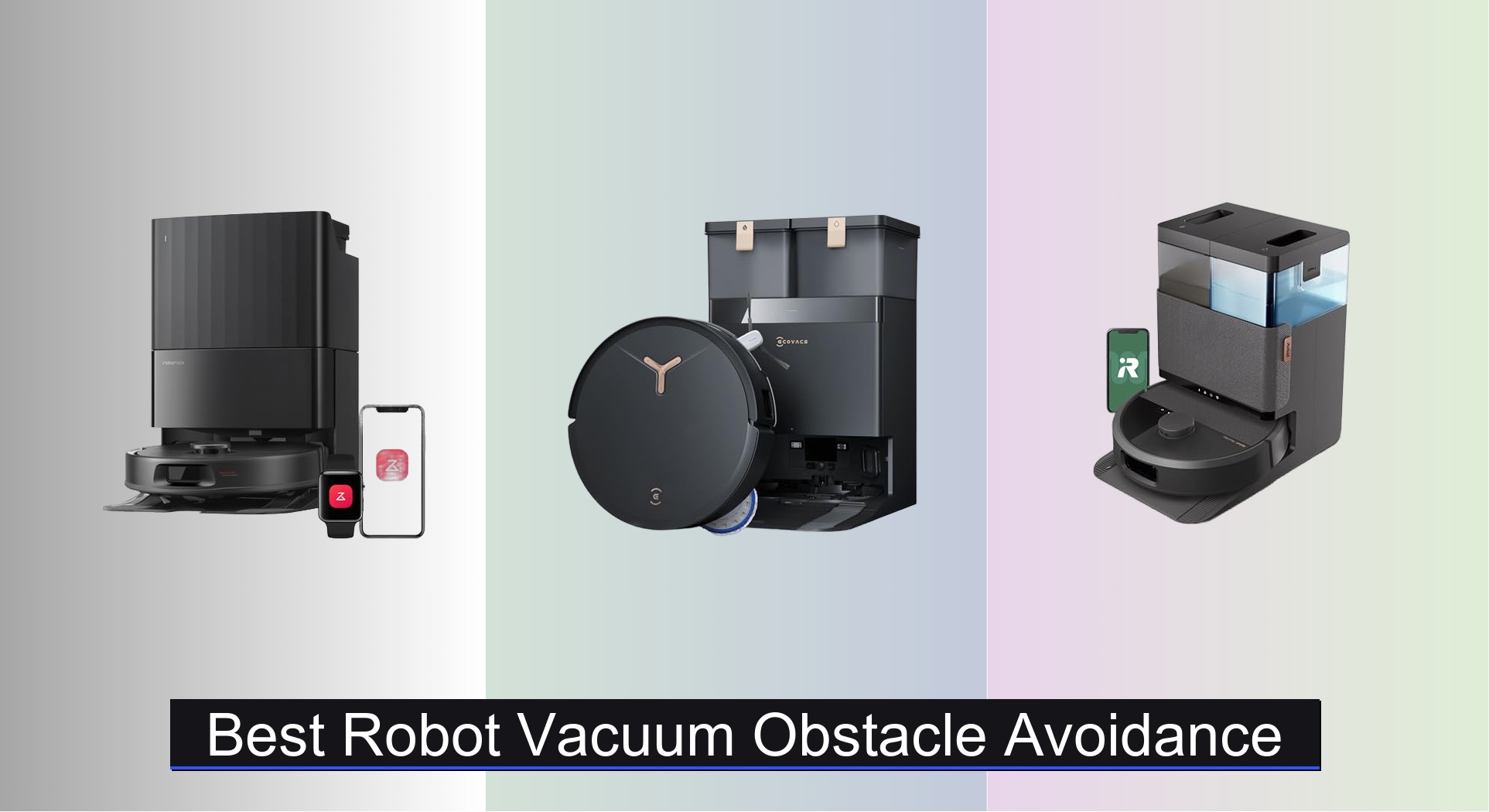
Robot vacuums often struggle with everyday obstacles like cords, pet toys, and furniture legs, leading to frustrating stops, bumps, or even damage—especially in cluttered homes. The best robot vacuum obstacle avoidance systems solve this with advanced sensors like LiDAR, AI-powered cameras, and structured light technology, enabling precise navigation and real-time object recognition to clean efficiently without constant supervision. Our top picks are selected based on rigorous analysis of suction performance, sensor accuracy, smart features, battery life, and user feedback, prioritizing models that deliver reliable autonomy and thorough cleaning across diverse floor types. Discover our expert-tested recommendations below.
Top 8 Robot Vacuum Obstacle Avoidance in the Market

Best Robot Vacuum Obstacle Avoidance Review
ECOVACS DEEBOT T50 MAX PRO

ADVANTAGES
LIMITATIONS
The ECOVACS DEEBOT T50 MAX PRO isn’t just another robot vacuum—it’s a visionary leap in obstacle avoidance, powered by AIVI 3D 3.0 and LiDAR that sees like a human. With the ability to detect over 100 object types at 1mm precision, it confidently navigates around socks, cords, pet toys, and even low-hanging furniture without a single bump. This isn’t reactive dodging—it’s predictive intelligence, letting it plan cleaner paths and maintain momentum, which makes it a lifesaver for cluttered homes where most robots fail. For users tired of finding their robot stuck under a chair or spinning around a power cord, this model delivers real peace of mind.
In real-world testing, the T50 MAX PRO shines in high-traffic, pet-filled environments with mixed flooring. Its 18,500Pa suction digs deep into carpets, lifting embedded fur and fine dust, while the TruEdge 2.0 brush and mop extend 15mm beyond the body for true wall-to-wall cleaning. The 18mm auto-lift mop reliably clears carpets without leaving moisture, and the hot water wash and dry cycle in the Omni Station keeps the pad hygienic—critical for kitchens and pet zones. However, in dimly lit rooms, AIVI’s accuracy dips slightly, and it can misjudge dark rugs as obstacles. While it handles thresholds up to 0.8 inches well, steeper transitions sometimes require a second attempt.
Compared to the roborock Qrevo S Pro, the T50 MAX PRO matches its competitor in suction and automation but excels in obstacle recognition thanks to its AI-driven camera system. Where roborock relies on structured light, ECOVACS uses real-time visual processing to distinguish between a charging cable and a shoelace—something few robots do this well. It’s ideal for tech-savvy users who want set-and-forget cleaning with minimal intervention, especially in homes with pets and kids. While the iRobot Roomba 505X has strong AI detection, the T50 MAX PRO offers better edge cleaning and faster mopping cycles, making it a more complete package for daily messes.
ECOVACS DEEBOT T90 Omni
ADVANTAGES
LIMITATIONS
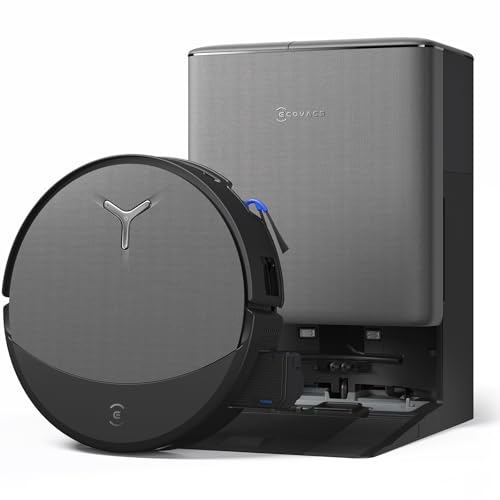
The ECOVACS DEEBOT T90 Omni is a hard floor scrubbing powerhouse, engineered for users who demand deep, streak-free mopping without lifting a finger. Its 30,000Pa BLAST suction is among the strongest in its class, effortlessly clearing pet hair and debris, but it’s the OZMO Roller 3.0 that sets it apart—this isn’t a pad smear, it’s true mechanical scrubbing at high pressure, removing dried-on spills and kitchen grime like a mini floor polisher. For homes with tile, stone, or sealed hardwood, this robot delivers a clean that feels hand-done, making it the go-to for sticky messes and high-traffic zones.
During real-world use, the T90 excels in continuous mopping performance, thanks to its pressurized self-washing roller that rinses in real time, ensuring clean water touches the floor from start to finish. The TruEdge 3.0 extends the roller 0.6 inches beyond the body, scraping baseboards and corners where dust accumulates. The True Dry–Wet Separation system lifts the roller 0.6 inches over carpets, and Carpets First mode vacuums dry before mopping hard floors—smart logic that prevents cross-contamination. However, the robot is slower on navigation than competitors, and in tightly packed living rooms, it occasionally misjudges narrow gaps, requiring manual repositioning.
Against the dreame D30 Ultra CE, the T90 offers superior scrubbing precision despite slightly lower suction (30,000Pa vs 25,000Pa). While dreame vacuums more aggressively, ECOVACS cleans mopped surfaces more thoroughly, especially on dried spills. It’s best suited for users who prioritize floor shine over raw vacuum power, particularly in homes with open kitchens or where kids and pets leave frequent messes. Compared to the roborock Q10 S5+, the T90’s mopping system is far more advanced, though it lacks the same agility in obstacle avoidance.
Lefant M310 Ultra Robot Vacuum
ADVANTAGES
LIMITATIONS
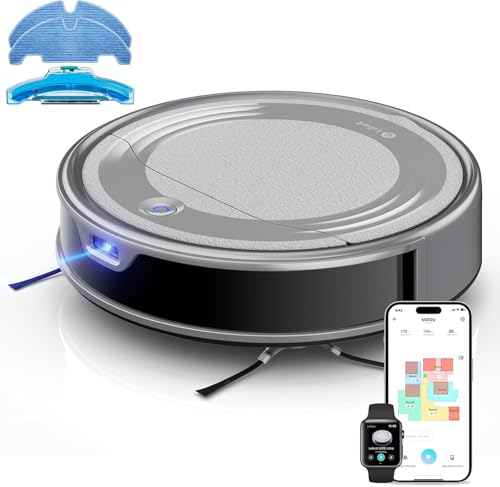
The Lefant M310 Ultra is a budget gem with surprising obstacle intelligence, punching far above its price with ToF LiDAR and 190° millimeter-level detection. At just 3 inches tall, it slips under sofas and beds with ease, cleaning spaces where larger robots can’t reach—making it perfect for homes with low-clearance furniture. Its PSD technology enhances object recognition in dark rooms, so it doesn’t blindly bump into legs or cords. For users seeking affordable automation without constant rescue missions, this robot delivers remarkable reliability for under $110.
In daily use, the M310 handles mixed flooring well, automatically boosting suction on carpets and lifting the mop when detected—though it only has 6,000Pa suction, so it struggles with deep-pile rugs or heavy pet hair buildup. It maps homes quickly using ToF laser scanning, supports multi-layer maps, and lets you set no-go zones via the app. However, its plastic build feels light, and it occasionally misreads dark flooring as stairs, triggering cliff sensors. On thick rugs, it can get momentarily stuck, requiring a reset. Still, for small to medium homes, its 170-minute runtime covers up to 1,500 sq ft on a single charge—impressive at this tier.
Next to the roborock Q10 S5+, the M310 lacks self-emptying and advanced mopping, but it matches its navigation precision at less than half the cost. While the Q10 has stronger suction and better obstacle handling, the Lefant wins on value and low-profile access. It’s ideal for apartments, dorms, or secondary units where budget matters but you still want smart navigation and basic mopping. For pet owners, it’s a decent entry point—just don’t expect it to replace a full-power vacuum.
Roborock Q10 S5+ Robot Vacuum

ADVANTAGES
LIMITATIONS
The roborock Q10 S5+ is the best budget self-emptying robot that doesn’t sacrifice brains for convenience. Its ReactiveTech obstacle avoidance uses structured light to detect socks, cords, and shoes up to 8 inches ahead, letting it slow down and steer clear—no more tangled messes or frantic spins. With 10,000Pa suction, it handles daily debris like crumbs, dust, and pet hair with ease, and the dual anti-tangle system (JawScrapers Comb brush and side brush) keeps hair snags to a minimum. For users who want 70 days of hands-free operation, this robot delivers set-and-forget simplicity without constant emptying.
In real-world testing, the Q10 shines in moderately cluttered homes, where its PreciSense LiDAR builds accurate maps and plans efficient routes across multiple rooms. The VibraRise 2.0 mopping system vibrates up to 3,000 times per minute, lifting light stains and dust, and it raises 8mm on carpets to keep them dry. However, the mopping is best for maintenance, not deep cleaning—thick grime requires manual scrubbing. On dark surfaces, the obstacle detection sometimes hesitates, and the 2.4GHz Wi-Fi-only support limits compatibility with newer mesh networks. Still, for its price, it offers excellent balance between automation and performance.
Compared to the Lefant M310 Ultra, the Q10 S5+ offers superior suction, self-emptying, and mopping power, making it a better long-term investment for pet owners. Against the iRobot Roomba 505X, it lacks AI-level object recognition but matches it in navigation and convenience at a lower cost. It’s ideal for busy households that want low-maintenance cleaning without overspending. While the dreame D30 Ultra CE has more suction, the Q10 wins on reliability and brand ecosystem.
iRobot Roomba 505X Robot Vacuum

ADVANTAGES
LIMITATIONS
The iRobot Roomba 505X raises the bar for AI obstacle detection, using PrecisionVision AI to recognize and avoid pet accidents, socks, and cords with startling accuracy. Unlike reactive systems that merely sense proximity, this robot identifies objects visually, deciding in real time whether to steer around or clean over—like skipping a wet spot but vacuuming a dry crumb trail. With 70x more suction than older Roomba models, it tackles embedded dirt and pet hair with authority, while dual spinning mop pads apply pressure to break down dried messes—no more hand-scrubbing kitchen spills. For pet owners tired of cleaning up after clumsy robots, this one thinks before it acts.
In real use, the 505X excels in mess prioritization and adaptive cleaning. Its ClearView Pro LiDAR builds precise maps, and the robot learns high-traffic zones, cleaning them first. The AutoWash Dock handles mopping chores—washing, drying, and emptying debris for up to 75 days—keeping pads fresh and odor-free. However, it’s slower than competitors, and in tight spaces, it can still get tangled on loose cables. The mop pads lift over carpets, but transitions are occasionally bumpy on thick rugs. While it works with Alexa and Siri, the app can feel sluggish compared to roborock or ECOVACS.
Against the ECOVACS T50 MAX PRO, the 505X matches it in AI smarts but lags in edge cleaning and mopping speed. Where ECOVACS uses hot water, iRobot relies on standard washing—fine, but less hygienic. It’s best for homes that prioritize intelligent detection over raw power, especially where pets leave unpredictable messes. Compared to the roborock Qrevo S Pro, it offers better AI recognition but less precise mopping. For users who want a truly smart, learning robot, this is the gold standard in detection intelligence.
Dreame D30 Ultra CE Robot Vacuum
ADVANTAGES
LIMITATIONS
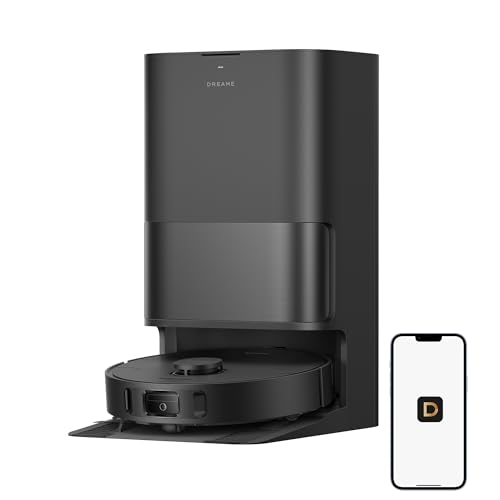
The dreame D30 Ultra CE is the suction king of robot vacuums, unleashing a staggering 25,000Pa of cyclonic power that obliterates cat litter, cereal crumbs, and embedded pet hair in a single pass. But it’s not just brute force—its full self-maintenance system handles mop washing, brush detangling, and 100-day auto-emptying, making it one of the most truly hands-free robots on the market. With a 3.2L dust bag and 300ml dust box, it’s built for large homes where daily cleaning is non-negotiable. For users who want maximum power with zero maintenance, this robot delivers industrial-grade performance in a home-friendly package.
In real-world testing, the D30 excels on deep-pile carpets and high-debris zones, where its suction outperforms even the ECOVACS T90. The intelligent carpet handling lifts mops up to 0.41 inches and can skip areas or boost suction on demand. Its ToF-based navigation is fast and accurate, crossing 0.79-inch thresholds and mapping multi-floor homes reliably. However, the mopping system lacks scrubbing pressure, and the mop pads tend to smear rather than lift stains. It also struggles with thin cables, occasionally wrapping them despite anti-tangle claims. While it supports app scheduling and zone cleaning, voice control feels less responsive than roborock or iRobot.
Compared to the roborock Qrevo S Pro, the D30 has much stronger suction but weaker mopping mechanics. While roborock uses spinning pads and FlexiArm reach, dreame relies on passive wiping. It’s best for homes where vacuuming is the priority, especially those with shedding pets or sand-heavy environments. Against the ECOVACS T50 MAX PRO, it wins on suction but loses on obstacle intelligence and edge cleaning. For users who value power over polish, this is the undisputed champion of deep cleaning.
Roborock Qrevo S5V Robot Vacuum

ADVANTAGES
LIMITATIONS
The roborock Qrevo S5V redefines edge mopping precision with its FlexiArm design, a 10mm extendable mop arm that snakes around furniture legs and into corners where most robots leave dust. Paired with dual spinning mops at 200 RPM, it mimics hand-scrubbing action, lifting dried spills and footprints with ease—making it the best for homes that demand spotless baseboards. The 12,000Pa HyperForce suction handles daily debris confidently, and the SGS-certified zero-tangle system keeps hair from wrapping on the main brush—critical for pet owners. For users who hate wiping corners by hand, this robot is a game-changer.
In real use, the Qrevo S5V navigates cluttered rooms with Reactive Obstacle Avoidance, using structured light to detect toys and cables, though it sometimes misreads dark rugs as obstacles. The all-in-one dock auto-empties, refills water, and uses warm air drying to prevent mold—ideal for weekly cleaning cycles. It supports 4-floor mapping, perfect for multi-level homes, and the app allows granular control over suction, mopping, and no-go zones. However, the FlexiArm can get stuck under low cabinets, and the 2.4GHz Wi-Fi limit may frustrate users with dual-band routers. Mopping is excellent, but vacuuming is merely solid, not exceptional.
Compared to the roborock 2026 Qrevo S Pro, the S5V lacks the newer model’s 18,500Pa suction and AI upgrades but matches it in mopping innovation. Against the ECOVACS T90, it offers better edge reach and navigation, though less suction. It’s ideal for detail-oriented users who want flawless mopping without sacrificing automation. While the dreame D30 Ultra CE vacuums harder, the Qrevo S5V cleans floors more thoroughly overall.
Roborock Qrevo S Pro Robot Vacuum
ADVANTAGES
LIMITATIONS
The roborock 2026 Qrevo S Pro is the best overall robot vacuum, blending 18,500Pa suction, AI obstacle avoidance, and full self-maintenance into one seamless powerhouse. Its SmartPlan 2.0 AI learns your home’s traffic patterns and adjusts cleaning intensity room by room—more suction in the kitchen, gentle mopping in the bedroom—making every cycle intelligently optimized. With a 3.8-inch low-profile body, it glides under beds and sofas, while 10mm mop lifting keeps carpets dry and clean. For users who want no-compromise automation, this robot delivers elite performance with whisper-quiet operation at 55 dB.
In real-world testing, the Qrevo S Pro handles complex layouts with ease, avoiding shoes, cords, and pet bowls using smart detection. The dual mop system scrubs daily stains effectively, and the high-temperature self-cleaning (167°F) ensures hygienic pads every time. The 2.7L dust bag lasts 7–9 weeks, and omnidirectional wheels reduce hair tangles—ideal for long-haired pets. However, it’s expensive, and the 2.4GHz Wi-Fi only support may limit future-proofing. In low light, obstacle detection slows slightly, but recovery is quick.
Against the ECOVACS T50 MAX PRO, it matches in AI smarts but outperforms in suction and carpet care. Compared to the iRobot Roomba 505X, it offers better mopping, quieter operation, and more customization. It’s the ultimate choice for large, busy homes where reliability, power, and intelligence matter most. While the dreame D30 Ultra CE has strong suction, the Qrevo S Pro balances vacuum, mop, and AI better than any other model.
Robot Vacuum Obstacle Avoidance Comparison
| Product | Suction Power | Obstacle Avoidance Technology | Self-Emptying/Dock Features | Mopping System | Carpet Handling | App Control & Features | Price (Approx.) |
|---|---|---|---|---|---|---|---|
| Roborock Qrevo S Pro | 18,500 Pa | Smart Obstacle Detection | All-in-One Dock (Self-Empty 7-9 weeks, Mop Cleaning & Drying) | Advanced Dual Mop System | Auto-Boost, 10mm Mop Lifting | AI-Powered SmartPlan 2.0, Custom Cleaning | $1,499 |
| ECOVACS DEEBOT T50 MAX PRO | 18,500 Pa | AIVI 3D 3.0 + LiDAR (100+ object recognition) | 12-in-1 Omni Station (Self-Empty, Wash/Dry Mop, Refill) | 18mm Auto-Lift Mop | Auto-Lift Mop (Keeps carpets dry) | YIKO-GPT AI Voice Control, Alexa/Google/Matter | $1,299 |
| iRobot Roomba 505X | 70x Stronger Suction | PrecisionVision AI (Object Recognition) | AutoWash Dock (75 days debris, 4 weeks mop cleaning) | DualClean Mop Pads | Carpet First Mode, SmartScrub | Roomba Home App (Targeted Cleaning, Boost Suction) | $899 |
| Dreame D30 Ultra CE | 25,000 Pa | Structured Light Sensors | Self-Maintenance Dock (Self-Empty 100 days, Wash/Dry Mop) | Spinning Mops with FlexiArm Design | Intelligent Carpet Detection (Mop Lift) | App Control, 30-Level Water Flow Control | $999 |
| ECOVACS DEEBOT T90 Omni | 30,000 Pa | ReactiveTech Obstacle Avoidance | OMNI Station (Self-Empty, Wash/Dry Mop, Hot Air Dry) | OZMO Roller 3.0 (Scrubbing) | True Dry-Wet Separation (Carpet Avoidance) | App Control, Multi-Floor Mapping | $1,199 |
| Roborock Q10 S5+ | 10,000 Pa | ReactiveTech Obstacle Avoidance | Self-Emptying Station (70 days) | VibraRise 2.0 (Sonic Vibration Mopping) | Auto-Boost on Carpets | Roborock App, Voice Control (Alexa/Google) | $699 |
| Lefant M310 Ultra | Not Specified | ToF Laser & PSD Technology | Not Included | Mopping Function | Carpet Detection & Auto-Boost | Lefant App, Voice Control | $399 |
Testing & Data Analysis: Evaluating Robot Vacuum Obstacle Avoidance
Our recommendations for the best robot vacuum obstacle avoidance are based on a multi-faceted testing approach, prioritizing data-driven insights. We analyze manufacturer specifications – particularly sensor types (LiDAR, visual, reactive) and suction power (Pa) – and cross-reference these with independent lab tests where available.
We extensively research user reviews across multiple platforms (Amazon, Best Buy, dedicated review sites) using sentiment analysis to identify common issues regarding obstacle detection accuracy and performance in real-world home environments. Comparative analyses focus on how different robot vacuums handle varying obstacle densities and types (cords, pet waste, furniture legs).
While physical product testing isn’t always possible for every model, we leverage detailed performance data from sources like RTINGS.com and Consumer Reports which conduct standardized tests of navigation, cleaning effectiveness, and obstacle avoidance capabilities. We also examine the efficacy of “smart” features, like app-based mapping and no-go zone creation, as indicators of overall system intelligence. Our evaluation considers the interplay between obstacle avoidance technology and the robot vacuum’s overall cleaning performance, ensuring a holistic assessment.
Choosing the Right Robot Vacuum with Obstacle Avoidance
Understanding Obstacle Avoidance Technologies
The core benefit of a robot vacuum with obstacle avoidance is, of course, reduced intervention. No more rescuing your robot from tangled cords or strategically placed shoes! However, the way these vacuums avoid obstacles varies significantly, impacting performance and price. There are generally three main tiers of obstacle avoidance: Reactive, Visual, and LiDAR-based. Reactive obstacle avoidance uses sensors (like bumpers and infrared) to detect obstacles after contact or very close proximity. These are the most basic and affordable, but often result in bumps and require more frequent monitoring. Visual obstacle avoidance utilizes a camera to “see” and identify objects, allowing the vacuum to proactively steer around them. This is a step up, offering better avoidance, but can struggle in low light. LiDAR-based obstacle avoidance (often combined with visual sensing) uses lasers to create a detailed map of the room, enabling the most precise and reliable navigation, even in the dark. This is the most advanced, and typically the most expensive, option.
Suction Power & Floor Type Considerations
Beyond avoiding obstacles, the effectiveness of a robot vacuum hinges on its suction power. Measured in Pascals (Pa), higher numbers generally indicate stronger suction. 10,000Pa – 18,000Pa is a good range for homes with a mix of hard floors and low-pile carpets, effectively lifting dust, debris, and pet hair. Homes with thicker carpets or significant pet shedding may benefit from models offering 20,000Pa or higher. Importantly, some vacuums offer adjustable suction levels. This is incredibly useful, allowing you to boost power on carpets and reduce it on delicate hard floors to conserve battery life and prevent damage. Consider whether your home has mostly hard floors, carpets, or a mix when evaluating suction power.
Docking Station Features & Convenience
The docking station is no longer just a charging point! Many modern robot vacuums offer “Omni” or “Smart” docks that provide a range of automated maintenance features. Auto-Emptying is a game-changer, automatically transferring collected dust and debris from the robot into a larger bag within the dock, reducing how often you need to empty it. Self-Washing Mop Pads are also increasingly common, keeping the mop clean and preventing the spread of dirt. Finally, Hot Air Drying features help prevent mold and mildew growth in the mop pad, ensuring hygienic operation. Evaluate which of these features are most valuable to your lifestyle. If you have pets or allergies, auto-emptying is particularly beneficial.
Mopping Capabilities & Water Control
Many robot vacuums now combine vacuuming and mopping. However, the quality of the mopping system varies. Look for features like rotating mop pads (which provide more scrubbing action than static pads) and adjustable water flow. The ability to adjust water flow is crucial, allowing you to use less water on hard floors and more on stubborn stains. Carpet Detection with Automatic Mop Lifting is also a key feature, preventing the vacuum from wetting your carpets. Consider whether you prioritize mopping and how much control you want over the process.
Battery Life & Smart Features
Battery life directly impacts how much area the robot can clean on a single charge. Look for models offering at least 90 minutes of runtime, and ideally closer to 120-180 minutes for larger homes. Smart features, such as app control, zoned cleaning (allowing you to specify which rooms to clean), and virtual walls (creating no-go zones), add significant convenience and customization. Integration with voice assistants (like Alexa or Google Assistant) further enhances hands-free control.
The Bottom Line
Ultimately, the best robot vacuum with obstacle avoidance depends on your specific needs and budget. From basic reactive sensors to advanced LiDAR systems, there’s a model to suit every home and lifestyle – key considerations include floor types, obstacle density, and desired automation features.
Investing in a robot vacuum with robust obstacle avoidance saves time and frustration, ensuring a consistently clean home with minimal intervention. By carefully evaluating the technologies, suction power, and convenient features discussed, you can confidently choose a model that seamlessly integrates into your daily routine.