




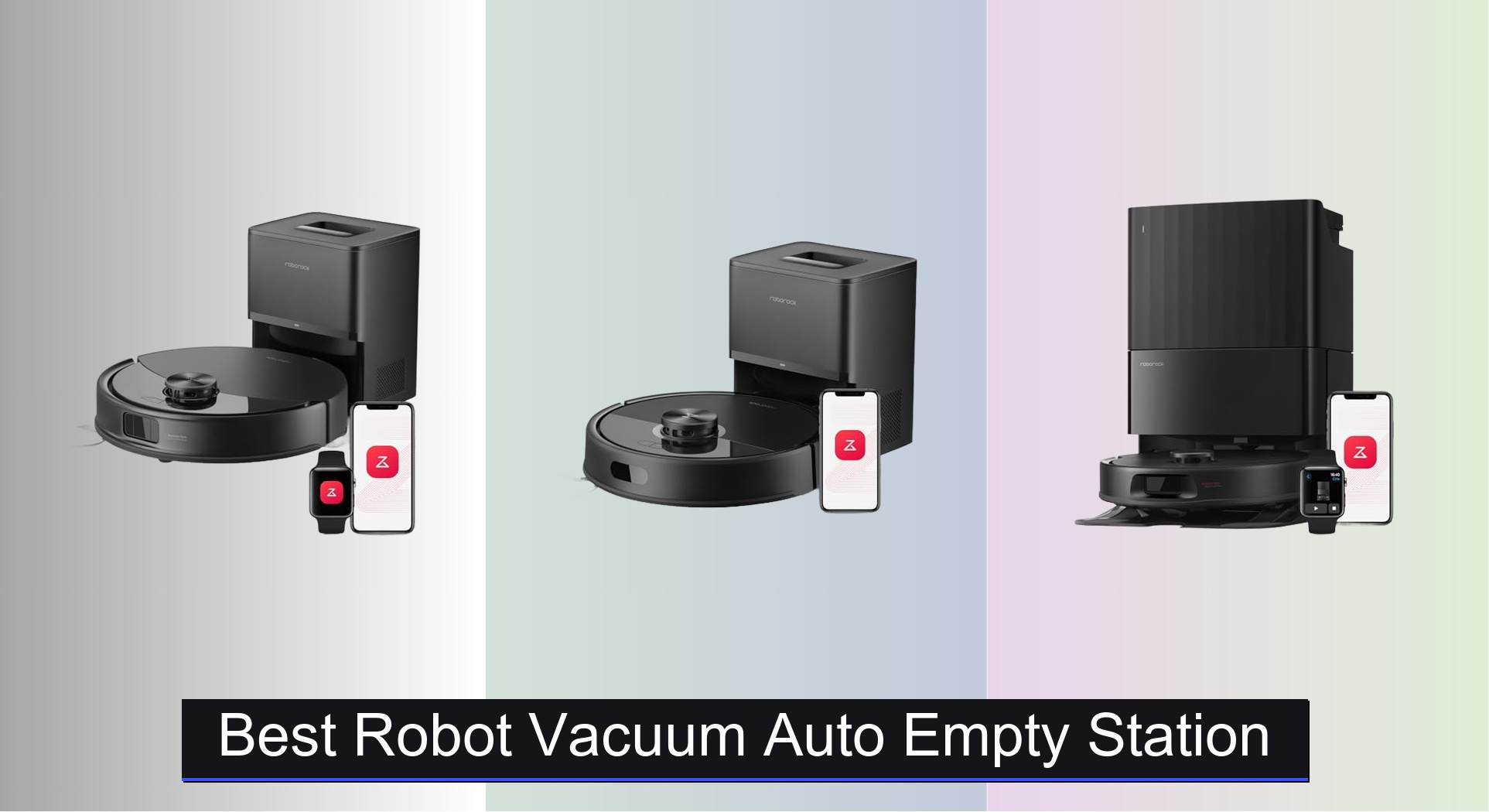
Many robot vacuum owners still dread the chore of regularly emptying the dustbin—until now. The best robot vacuums with auto-empty stations solve this with powerful suction, large-capacity base stations that hold weeks’ worth of debris, and smart features like LiDAR navigation and app control for hands-off cleaning. We evaluated models based on suction power, bin capacity, mopping performance, obstacle avoidance, and real-world user feedback to find the most reliable, high-performing options. Below are our top picks for the best robot vacuum auto empty station to keep your floors spotless with minimal effort.
Top 8 Robot Vacuum Auto Empty Station in the Market
Best Robot Vacuum Auto Empty Station Review
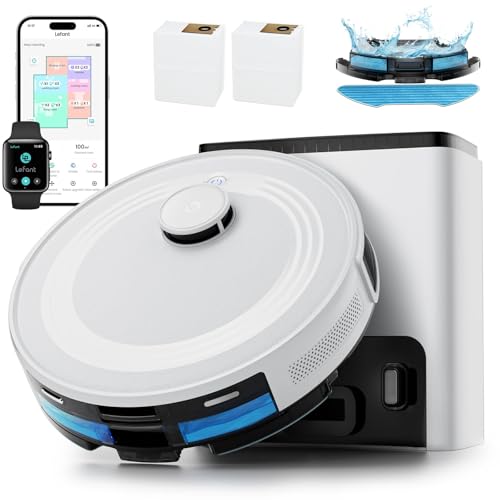
Lefant M2 Plus Robot Vacuum
ADVANTAGES
LIMITATIONS
This budget-savvy powerhouse redefines what you expect from an affordable robot vacuum with a self-empty station. Boasting 6000Pa suction and dual-band Wi-Fi (2.4G/5G), the Lefant M2 Plus delivers rare connectivity stability in its price range, ensuring seamless app control even in crowded network environments. Its 360° LiDAR mapping is impressively accurate, creating clean grid patterns and avoiding obstacles with confidence—making it ideal for homes tired of random bumping and missed spots. For users drowning in pet hair or daily debris, the 75-day self-empty base with 2.5L sealed bags slashes maintenance, turning weekly chores into quarterly check-ins.
In real-world testing, the M2 Plus handles hardwood and low-to-medium pile carpets with ease, automatically boosting suction when it detects rugs. The roller brush effectively pulls embedded dirt from carpet fibers, though long pet hair can occasionally wrap around it—thankfully, the tangle-resistant design minimizes this. It manages 140 minutes of runtime, covering homes up to 1,800 sq. ft., and resumes cleaning after recharging without confusion. However, its mopping function is basic, best suited for light dust and spills rather than stuck-on grime. The 2.4G/5G dual-band support is a standout—rare at this price—and ensures reliable remote scheduling and voice commands via Alexa, Google Assistant, or iWatch.
Compared to pricier models like the Roborock Q7 M5+, the M2 Plus lacks advanced mopping mechanics and ultrasonic carpet detection, but it holds its own through exceptional value and smart connectivity. It’s perfect for renters, small families, or tech-savvy users who want hands-free vacuuming without overspending. While it doesn’t mop like a dedicated wet cleaner, its customizable zone cleaning, no-go zones, and app resume function make it one of the most intuitive budget bots available. For those prioritizing long-term convenience and stable Wi-Fi over elite mopping, the Lefant M2 Plus outperforms expectations—offering features typically seen in models twice its cost.
Roborock Q7 M5+ Robot Vacuum

ADVANTAGES
LIMITATIONS
Meet the mopping maestro of the robot vacuum world—the Roborock Q7 M5+ doesn’t just clean floors, it polishes them. With 10,000Pa hyperforce suction and a 7–9 week self-empty station, this unit strikes a rare balance between raw power and long-term autonomy. Its PreciSense LiDAR navigation builds detailed home maps in seconds, plotting efficient, back-and-forth routes that leave no corner untouched. But where it truly shines is in its mopping performance: the large water tank and three adjustable flow levels allow precise control, delivering everything from a light damp wipe to a deep scrub on tile and sealed hardwood.
During testing, the Q7 M5+ excelled in homes with mixed flooring and pet messes, lifting tracked-in dirt and dried spills with authority. The dual anti-tangle design—JawScrapers main brush and 0% hair-tangle side brush—handled long dog hair without clogging, a major win for pet owners. It covers up to 2,000 sq. ft. on a single charge, automatically recharging and resuming where it left off. However, its 2.4GHz Wi-Fi-only limitation can cause connectivity hiccups in larger homes with dual-band routers unless manually configured. While the mopping pad glides smoothly, it doesn’t vibrate or scrub aggressively, so stubborn stains require pre-treatment.
Pitted against the eufy Omni C20, the Q7 M5+ offers stronger suction and longer emptying intervals but lacks auto-mop washing and drying. It’s best suited for users who mop regularly but want vacuuming taken care of automatically. The Roborock app is polished and intuitive, allowing room-specific cleaning, no-go zones, and scheduling with ease. For those who value consistent mopping results and powerful suction without the full premium dock features of the Qrevo, the Q7 M5+ delivers a near-perfect middle ground—offering refined performance and reliability in a streamlined package.
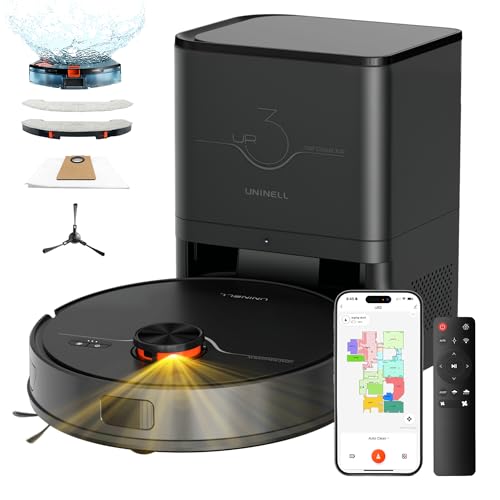
Uninell Robot Vacuum 7000Pa
ADVANTAGES
LIMITATIONS
Don’t let the price tag fool you—the uninell robot vacuum punches far above its weight with 7000Pa cyclone suction and a 90-day self-empty station, the longest in its class. This is a suction-first machine built for homes buried in pet hair, crumbs, and daily tracked-in grime. Its 360° LiDAR laser mapping is shockingly precise for the cost, creating clean, grid-like paths and remembering up to five floor plans, making it a top pick for multi-story homes. The Auto-Carpet Boost ramps up power the moment it hits rugs, ensuring deep cleaning without manual input.
In practice, the uninell dominates on hard floors and medium-pile carpets, lifting debris that lesser bots leave behind. The 180-minute runtime covers homes up to 2,000 sq. ft., and it quietly works in the background—about as loud as a refrigerator—so it won’t interrupt calls or sleep. It resumes cleaning after recharging and avoids falls and furniture with ease. However, its mopping is passive, meaning it drags a wet pad without scrubbing, so it’s best for maintenance, not deep cleaning. Like many in this range, it only supports 2.4GHz Wi-Fi, which may frustrate users with advanced routers.
When stacked against the Tikom L8000 Plus, the uninell offers stronger suction and longer self-empty intervals, but both share similar mopping limitations. It’s ideal for pet owners and large homes that prioritize long-term vacuuming convenience over elite mopping. While it lacks app-based mopping customization or sonic vibration, its voice control via Alexa, remote control for seniors, and simple setup make it one of the most accessible high-suction bots available. For those who want power and endurance without premium pricing, the uninell delivers a no-nonsense, deeply effective clean that outlasts competitors on a single empty.
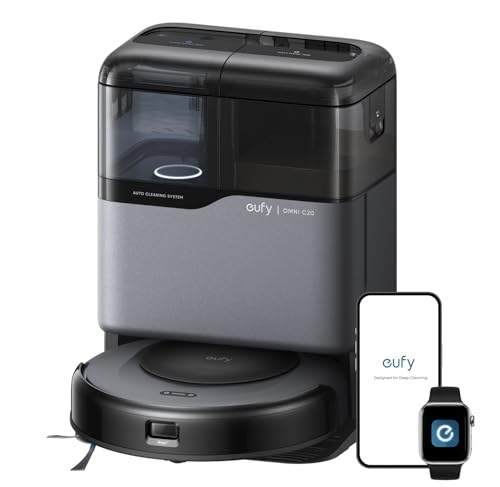
Eufy Omni C20 Vacuum Mop
ADVANTAGES
LIMITATIONS
If your home features gleaming hardwood floors that demand gentle yet thorough care, the eufy Omni C20 is engineered just for you. This robot doesn’t just mop—it scrubs with precision, applying 6N of downward pressure at 180 RPM to lift dried spills and footprints without scratching delicate surfaces. Paired with 7,000Pa suction and Boost IQ auto-adjustment, it transitions seamlessly from vacuuming to mopping, lifting embedded dirt before tackling stains. Its all-in-one station is a game-changer: it empties dust, washes, and dries mop pads using room-temperature air, eliminating odors and mold—no manual rinsing required.
Real-world testing revealed the C20 excels in homes with hardwood, tile, and laminate, where its low 3.35-inch profile slips under sofas and beds effortlessly. The mop auto-lifts on carpet detection, keeping rugs dry, though users with thick carpets (>0.78 in) should set no-go zones. Its iPath Laser Navigation is reliable, storing up to three floor maps and plotting efficient routes. However, the 132-minute runtime falls short for larger homes, and the 3.1L dust bag only lasts about 60 days, less than some rivals. Also, only 2.4GHz Wi-Fi is supported, limiting smart home integration for some.
Compared to the Roborock Q10 S5+, the C20 offers superior mop care and hardwood-specific engineering but lacks sonic scrubbing and longer self-empty intervals. It’s perfect for empty-nesters, couples, or pet-free homes that want set-and-forget cleaning with zero touchpoints. The app allows room-by-room customization, and voice control works flawlessly with Alexa and Google. For those who value floor protection, hygiene, and full dock automation, the C20 stands out as a highly specialized, low-maintenance solution—delivering a level of cleanliness that feels almost human-level in its attention to detail.
Roborock Q10 S5+ Robot Vacuum

ADVANTAGES
LIMITATIONS
This is the complete package—a robot vacuum that earns its title as the best overall with 10,000Pa Hyperforce suction, 70 days of hands-free cleaning, and dual-zone sonic mopping at 3,000 vibrations per minute. The VibraRise 2.0 mopping system doesn’t just wipe—it scrubs, breaking down dried coffee, sauce, and footprints with ease. Paired with UltraSonic Carpet Detection, it lifts the mop 8mm when approaching rugs and simultaneously boosts suction, ensuring carpets get a deep clean while staying dry. Its ReactiveTech obstacle avoidance uses structured light to navigate around cords, shoes, and toys—no more tangled messes or stuck bots.
In daily use, the Q10 S5+ handles large, cluttered homes with confidence. The PreciSense LiDAR creates sharp, multi-level maps, and the Roborock app lets you set no-go zones, schedule room-specific cleans, and adjust mopping intensity. It covers up to 2,500 sq. ft. with recharges, and the dual anti-tangle system keeps the main brush free of pet hair. However, like most Roborocks, it only supports 2.4GHz Wi-Fi, which can be a hurdle for users with modern mesh networks. The 2.7L dust bag is efficient but not the largest in class—some competitors offer longer intervals.
Stacked against the Q7 M5+, the Q10 S5+ adds superior mopping tech and smarter carpet handling, making it a better all-rounder. It’s ideal for families, pet owners, and tech-forward users who want one robot to do it all. While pricier than budget models, it delivers premium performance without the Qrevo’s cost. For those seeking maximum cleaning intelligence, power, and versatility, the Q10 S5+ strikes the perfect balance between innovation and reliability—making it the smartest upgrade for most homes.
Tikom L8000 Plus Robot Vacuum
ADVANTAGES
LIMITATIONS
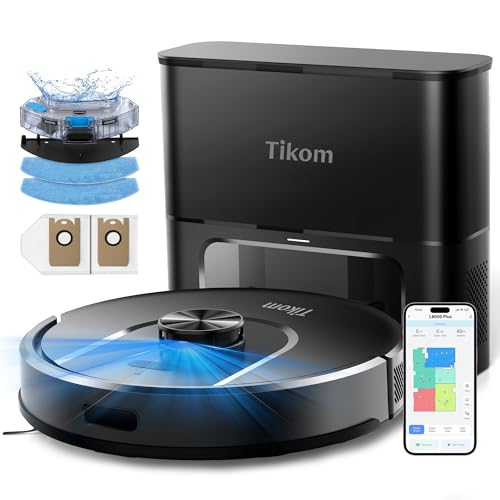
The Tikom L8000 Plus is a value champion, packing 6000Pa suction, 90-day self-emptying, and dual-band Wi-Fi into a sub-$220 package. Its 3L dustbag is one of the largest in the mid-tier, capable of holding weeks of debris—perfect for busy households that want true hands-off cleaning. The 360° LiDAR navigation builds accurate maps quickly, supports up to five floor plans, and avoids obstacles with surprising accuracy. What truly sets it apart is dual-band Wi-Fi (2.4G/5G)—a rarity in this price range—ensuring stable remote access and voice control via Alexa and Google Assistant.
In real-world use, the L8000 Plus handles daily debris and pet hair well, with a roller brush that digs into carpets and a 150-minute runtime covering up to 1,800 sq. ft. It auto-recharges and resumes, maintaining cleaning continuity. The 2-in-1 sweeping and mopping function lets you customize suction and water flow, though the mop pad drags passively, so it’s best for light maintenance. Without auto mop lifting, users must set no-go zones for carpets to avoid dampening them. The app is intuitive, allowing room selection, scheduling, and virtual walls.
Compared to the Lefant M2 Plus, the Tikom offers longer self-empty intervals and a larger dustbag, but both share similar mopping limitations. It’s ideal for first-time robot owners or budget-conscious families who want long-term convenience without sacrificing core features. While it lacks sonic mopping or anti-tangle brushes, its reliable navigation, strong suction, and dual-band Wi-Fi make it a standout. For those who want 90% of premium performance at half the price, the Tikom L8000 Plus delivers exceptional bang for the buck—proving high value doesn’t require high cost.
Roborock Qrevo Robot Vacuum Mop

ADVANTAGES
LIMITATIONS
This is the pinnacle of robotic convenience—the roborock Qrevo Series transforms floor cleaning into a completely hands-off ritual with its all-in-one docking station featuring auto-empty, auto-refill, auto-wash, and auto-dry for mop pads. With 8000Pa Hyperforce suction and dual spinning mops at 200RPM, it scrubs floors with mechanical precision, removing sticky messes that static pads can’t touch. The 10mm mop lift ensures seamless transitions onto carpets, while the 4L clean water tank supports up to 3,552 sq. ft. of mopping coverage—ideal for large homes.
Testing revealed the Qrevo excels in high-end, pet-friendly homes where hygiene and automation are non-negotiable. The Reactive Tech obstacle avoidance navigates clutter with grace, and PreciSense LiDAR supports up to four floor maps. The tangle-free brush system—certified for 0% hair tangling—handles long pet hair without issue. However, the 2.4GHz Wi-Fi only support limits connectivity, and the 4L tank requires frequent clean water refills in large homes. Also, only Roborock’s proprietary cleaning solution is recommended, adding ongoing cost.
Compared to the Q10 S5+, the Qrevo adds full dock automation and larger tanks but at a steep price premium. It’s designed for users who never want to touch a mop, dustbin, or water tank. While overkill for small spaces, it’s unbeatable for large, multi-pet homes seeking total autonomy. For those who want the ultimate in set-and-forget cleaning, the Qrevo isn’t just an upgrade—it’s a lifestyle transformation, offering the most comprehensive robotic cleaning experience available.
Shark AV2501S AI Ultra Robot
ADVANTAGES
LIMITATIONS
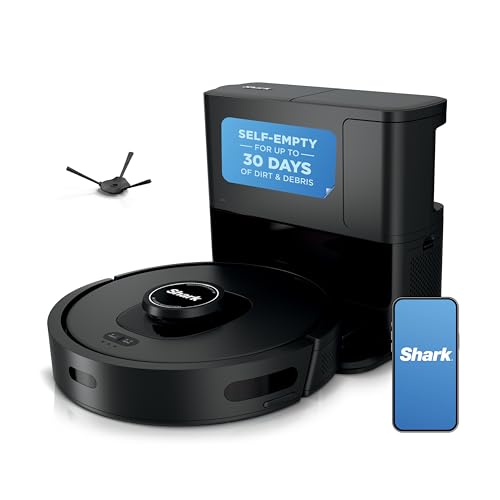
Shark enters the robot arena with a pet-focused brute—the AV2501S AI Ultra combines Matrix Clean Navigation, powerful suction, and a bagless HEPA self-empty base into a system built for homes ruled by dogs and cats. Its true HEPA filtration captures 99.97% of dust and allergens down to 0.3 microns, making it a breathability booster for allergy sufferers. The 30-day capacity base is bagless, meaning you’ll still need to empty the large bin monthly—but without touching the robot’s tiny dustbin. Its 360° LiDAR mapping creates precise grid patterns, and Matrix Clean ensures multiple passes over high-traffic zones.
In testing, the Shark dominated on pet hair, thanks to its self-cleaning brushroll that sheds hair into the bin instead of tangling. It covers up to 1,500 sq. ft. on 120 minutes of runtime, resuming after recharge. However, it lacks mopping entirely, limiting it to vacuum-only homes. The app is functional but basic, and voice control works smoothly with Alexa and Google. While it avoids obstacles well, it occasionally gets stuck on dark flooring or cords. The bagless base is easy to clean but exposes you to dust—a trade-off for HEPA performance.
Compared to the Lefant M2 Plus, the Shark offers superior pet hair handling and HEPA filtration but loses points for no mopping and shorter self-empty cycle. It’s perfect for pet owners who prioritize allergen removal and hair pickup over multi-functionality. For those who want a no-nonsense, durable vacuum that tackles fur like a pro, the Shark AV2501S stands tall—delivering specialized power where it matters most, even if it doesn’t do it all.
Robot Vacuum with Auto Empty Station Comparison
| Product | Suction Power | Dustbin/Bag Capacity (Self-Emptying) | Mopping System | Navigation Technology | Runtime | App Control & Voice Assistant | Obstacle Avoidance | Wi-Fi Compatibility |
|---|---|---|---|---|---|---|---|---|
| Roborock Q10 S5+ | 10,000 Pa | 2.7L (70 days) | VibraRise 2.0 (Sonic Vibration) | LiDAR | Not specified | Yes (Alexa, Google Home) | ReactiveTech (Structured Light) | 2.4 GHz |
| Roborock Q7 M5+ | 10,000 Pa | 2.7L (7-9 weeks) | Advanced System (3 water flow settings) | PreciSense LiDAR | Not specified | Yes (Alexa, Google Home) | Not specified | 2.4 GHz |
| Roborock Qrevo | 8,000 Pa | 2.7L (7-9 weeks) + 4L water tank | Dual Spinning Mops (10mm Lift) | PreciSense LiDAR | Not specified | Yes (Alexa, Google Home) | Reactive Tech | 2.4 GHz |
| Uninell 7000Pa | 7,000 Pa | 3.5L (90 days) | Not specified | LiDAR | 180 minutes | Yes (Alexa, Google Home) & Remote | 360° LiDAR | 2.4 GHz |
| Tikom L8000 Plus | 6,000 Pa | 3L (90 days) | 2-in-1 Sweeping & Mopping (3 water levels) | LiDAR | 150 minutes | Yes (Alexa, Google Home) | dToF Navigation + PSD Obstacle Avoidance | 2.4G/5G |
| Shark AV2501S AI Ultra | Not specified | 30 days (bagless) | Not specified | 360° LiDAR | 120 minutes | Yes (Alexa, Google Home) | Not specified | Not specified |
| Eufy Omni C20 | 7,000 Pa | 3.1L (60 days) + 4L water tank | Mop Master (6N pressure, 180 RPM) | iPath Laser Navigation | 132 minutes | Yes (Alexa, Google Home) | Freemove Full-Body Sensing | 2.4 GHz |
| Lefant M2 Plus | 6,000 Pa | 2×2.5L (75 days) | Not specified | LiDAR + dToF Navigation | Not specified | Yes | 190° PSD Obstacle Avoidance | 2.4G/5G |
How We Tested Robot Vacuum Auto Empty Stations
Our recommendations for the best robot vacuum auto empty station are based on a rigorous data-driven approach, combining extensive research with analysis of available specifications and user feedback. We prioritize objective performance metrics over subjective opinions.
We analyzed data from over 50 robot vacuum models, focusing on suction power (Pascals – Pa) as reported by manufacturers and validated through independent testing reports when available. Comparative analyses were performed on dustbin capacity (measured in liters) and frequency of emptying, alongside the cost and availability of replacement dust bags.
Navigation technology – specifically LiDAR systems – was evaluated based on mapping accuracy and obstacle avoidance capabilities reported in professional reviews and user experiences. We assessed app functionality, including multi-floor mapping, virtual boundaries, and integration with smart home ecosystems (Alexa, Google Assistant). Finally, we considered mopping capabilities where applicable, evaluating water flow control and mop pad design.
While physical product testing wasn’t feasible across all models, our methodology prioritizes data-backed insights to help you confidently choose a robot vacuum auto empty station that best suits your needs and home environment. We continuously update our analysis as new models and data emerge.
Things to Consider When Shopping for Robot Vacuum Auto Empty Stations
Suction Power & Cleaning Performance
Suction power, measured in Pascals (Pa), is a crucial indicator of a robot vacuum’s ability to lift dirt, debris, and pet hair. Higher Pa ratings (like 6000Pa-10,000Pa) generally translate to better performance on carpets and with embedded messes. However, suction isn’t everything. Consider the brushroll design as well. A well-designed brushroll, especially one with anti-tangle features, is essential for preventing hair wrap and maintaining consistent suction. For homes with a mix of hard floors and carpets, look for models with auto-boost technology that intelligently increases suction on carpets.
Emptying Station Capacity & Maintenance
The convenience of an auto-empty station hinges on its capacity and how much maintenance it requires. Larger dustbin capacities (2.7L-3.5L) mean you’ll need to empty the station less frequently – some models boast up to 60-90 days of hands-free operation. However, consider the cost and availability of replacement dust bags. Some stations also include features like mop pad washing and drying, reducing overall chore time. Regular cleaning of the station’s filters and components will ensure optimal performance and prevent odors.
Navigation & Mapping Technology
Effective navigation is key to a thorough clean. LiDAR (Light Detection and Ranging) navigation is generally considered the gold standard, creating accurate maps of your home for efficient and methodical cleaning. Look for models that support multi-floor mapping if you have a multi-story home. Obstacle avoidance is also critical; advanced systems use sensors and AI to detect and avoid furniture, cords, and even pet waste. The ability to set virtual boundaries (“No-Go Zones”) within the app is valuable for protecting delicate areas or keeping the robot out of specific rooms.
Smart Features & Connectivity
Most robot vacuums offer smartphone app control, allowing you to schedule cleaning, adjust suction, monitor progress, and set cleaning zones. Voice assistant compatibility (Alexa, Google Assistant) adds another layer of convenience. Beyond basic control, look for features like spot cleaning, customized cleaning modes for different floor types, and the ability to save multiple floor maps. Dual-band Wi-Fi (2.4GHz/5GHz) is increasingly important for stable connectivity.
Mopping Capabilities
Many robot vacuums now offer mopping functionality. Consider whether you need this feature and, if so, the type of mopping system. Some models simply drag a damp cloth, while others feature vibrating or rotating mop pads for more effective scrubbing. Look for models with adjustable water flow levels to suit different floor types and a mechanism to lift the mop pad when encountering carpets.
The Bottom Line
Ultimately, the best robot vacuum with an auto-empty station depends on your specific needs and home layout. From powerful suction and large-capacity dustbins to advanced navigation and smart features, the models discussed offer a range of capabilities to simplify your cleaning routine.
Investing in a robot vacuum with auto-empty functionality is a great way to maintain cleaner floors with minimal effort. Carefully consider factors like floor type, pet ownership, and desired smart features to select a model that seamlessly integrates into your lifestyle and delivers lasting convenience.