






Volleyball players often struggle with foot fatigue, joint pain, and inconsistent performance due to inadequate support and energy return from standard shoe insoles. The best volleyball insoles—like those made with carbon fiber or high-resilience foam—deliver targeted arch support and responsive cushioning that enhance jump height, reduce impact stress, and improve court agility. Our picks are based on a deep analysis of performance metrics, material quality, user feedback from real athletes, and expert insights into foot biomechanics, ensuring each recommendation balances responsiveness, comfort, and durability. Below are our top-tested insoles designed to elevate your game.
Top 9 Insole For Volleyball in the Market
Best Insole For Volleyball Review
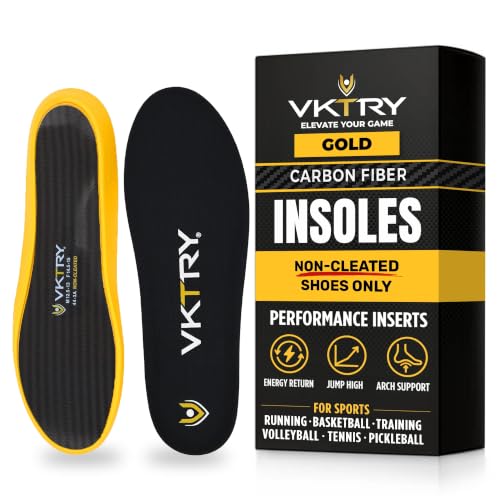
VKTRY Gold Non-Cleated Sports Insoles
ADVANTAGES
LIMITATIONS
Explosive power. Measurable gains. Elite-grade engineering. The VKTRY Gold insoles are not just another performance insert—they’re a game-changing upgrade for volleyball athletes demanding maximum energy return and injury protection. Built with 100% aerospace-grade carbon fiber, these insoles create a rigid yet responsive platform that actively enhances jump height, sprint speed, and landing stability. Their sport- and weight-specific design ensures optimal flex and support, making them ideal for players who rely on rapid direction changes and vertical explosiveness—without sacrificing foot alignment or joint safety.
In real-world testing, the VKTRY Golds delivered noticeable improvements in takeoff responsiveness during repeated blocking and spiking drills. The non-trimmable carbon baseplate maintains structural integrity under high-impact stress, effectively channeling energy back into upward motion rather than dissipating it into soft foam. They fit seamlessly in most volleyball shoes with removable insoles, though tighter-fitting models may require careful fit-checking. While they don’t offer cushioning layers like foam-based rivals, their performance-focused rigidity shines in competition, where milliseconds and millimeters matter most. That said, players seeking plush underfoot comfort may find them too firm for extended off-court wear.
Compared to the Estinko or Freeior carbon models, the VKTRY Gold stands in a premium performance tier—backed by independent data showing measurable gains in vertical jump and sprint speed. It’s the clear choice over budget carbon inserts when peak athletic output is the priority, even if it means a steeper investment. Ideal for competitive collegiate, club, or pro-level volleyball players, these insoles are engineered for those who train with intensity and demand tangible returns on every jump. They outperform mid-tier options in energy transfer and biomechanical support, justifying their position as the best overall insole for high-performance volleyball play.
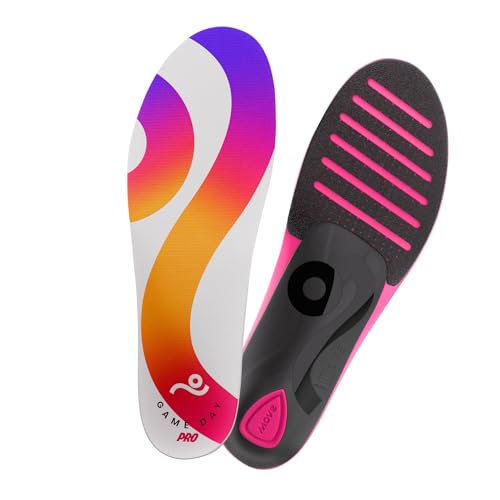
MOVE Game Day Pro Insole
ADVANTAGES
LIMITATIONS
Engineered by pros, trusted on courts at the highest level. The MOVE Game Day Pro insoles bring NBA-caliber support to volleyball players who need elite stability and responsive cushioning without the stiffness of full carbon plates. Co-developed with Damian Lillard, these insoles strike a rare balance: they mold to your foot over time, delivering a semi-custom fit that enhances natural movement while reducing fatigue during long matches and training sessions. With X-Frame torsional support and Active Heel Technology, they stabilize the heel and midfoot during lateral cuts and landings—critical for volleyball’s rapid transitions and high-impact jumps.
During testing, the Game Day Pros proved exceptional at dampening repetitive impact while maintaining a lively, supportive underfoot feel. The high arch support is particularly effective for athletes with flat feet or overpronation, helping to reduce strain on the plantar fascia and Achilles tendon. Whether used in practice or game day footwear, they stayed securely in place and showed no signs of compression after weeks of intense use. However, their thicker profile can be a tight fit in snug volleyball shoes, sometimes requiring removal of the shoe’s original insole for proper clearance.
When stacked against the CURREX AcePro, the Game Day Pro offers superior heel lockdown and arch reinforcement, making it better suited for players prone to ankle instability or foot pain. It doesn’t match the VKTRY’s explosive energy return, but it excels in comfort and injury prevention—a smarter pick for athletes prioritizing joint health and long-term wearability over raw propulsion. Best for serious players who want pro-level biomechanical support with everyday usability, it delivers a performance edge without sacrificing all-day comfort. It offers more targeted stability than cushion-focused inserts while maintaining a smoother break-in period than rigid carbon models.
CURREX AcePro Court Sports Insoles

ADVANTAGES
LIMITATIONS
Precision agility. Court-locking grip. Dynamic responsiveness. The CURREX AcePro insoles are specifically engineered for net sports, making them a standout choice for volleyball players who rely on quick cuts, sudden stops, and explosive lateral movement. Their Super Grip surface prevents foot slippage inside the shoe, a common issue during fast transitions at the net or back-row defense. Paired with a deep decoupled heel cup, they lock the foot in place, enhancing proprioception and reducing ankle roll risk—especially valuable during off-balance landings or dives.
In real match scenarios, the AcePros delivered exceptional stability during side-to-side movements, outperforming general athletic insoles in torsional control. The medium-profile dynamic arch support adapts to various foot types, offering a semi-custom feel without the need for heat molding. The breathable mesh top layer kept feet drier during extended play, and the shock-absorbing foam provided just enough cushioning to reduce fatigue without deadening responsiveness. That said, their 100-hour replacement recommendation means frequent players will need to replace them more often than durable carbon models.
Compared to the MOVE Game Day Pro, the AcePro feels lighter and more agile, with a flatter profile that fits better in low-to-mid-cut volleyball shoes. While it doesn’t offer the same level of arch reinforcement as MOVE, it outshines in court-specific agility and foot control. It’s the better pick for players who prioritize rapid directional changes and foot-to-shoe connection over maximum cushioning. Ideal for competitive high school, college, or recreational league players, it bridges the gap between support and speed. It delivers more sport-specific tuning than general performance insoles, making it the best choice for volleyball athletes focused on agility and precision.
Estinko Carbon Fiber Performance Insoles
ADVANTAGES
LIMITATIONS
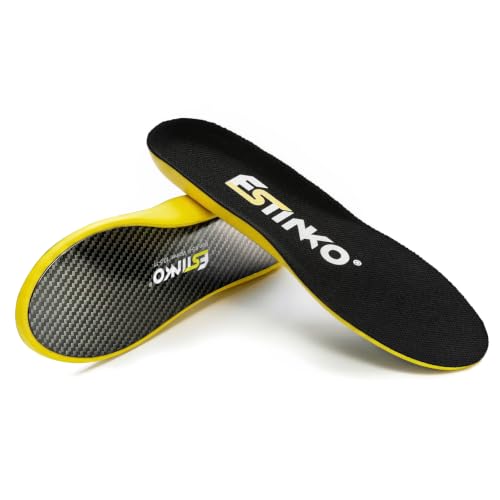
Affordable explosiveness. Lightweight responsiveness. Everyday durability. The Estinko Carbon Fiber insoles pack a surprising punch for their price, offering aerospace-grade carbon fiber construction at a fraction of the cost of premium models like VKTRY. Designed for high-impact sports, they deliver solid energy return and shock absorption, making them a compelling option for budget-conscious volleyball players who still want a performance boost. The high-elastic foam core adds cushioning without compromising the firm, responsive base needed for powerful jumps and quick transitions.
In practice, these insoles performed well during training drills, providing noticeable support during takeoffs and landings. The honeycomb mesh top layer enhanced breathability, keeping feet cooler during long sessions. They fit most standard volleyball shoes, though their non-trimmable design requires careful size matching—some users may find them slightly short. While they lack the sport-specific tuning of VKTRY or the pro-level feedback of MOVE, they hold up impressively under regular use and offer real benefits for casual to intermediate players.
Against the Freeior or LENNOOS models, the Estinko stands out with better cushioning integration and a more balanced feel between support and comfort. It doesn’t match the VKTRY’s performance data or the AcePro’s agility focus, but it delivers the most value for players seeking carbon fiber benefits without breaking the bank. Best suited for recreational athletes or younger players testing high-performance insoles for the first time, they offer a low-risk entry into carbon-enhanced footwear. They provide stronger energy return than foam-only inserts while maintaining a more accessible price than elite-tier models.
Freeior Carbon Fiber Performance Insole
ADVANTAGES
LIMITATIONS
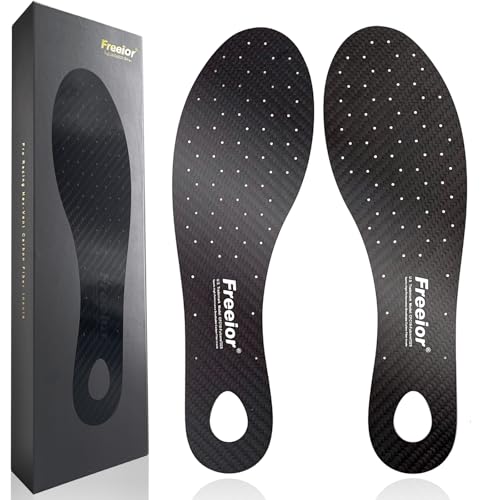
Ultra-thin. Ultra-strong. Uncompromising rigidity. The Freeior Carbon Fiber insoles are built for volleyball players who want maximum power transfer with minimal bulk. At just 0.04 inches thick and weighing only 0.08 lbs each, they slip under existing insoles without crowding the shoe—ideal for tight-fitting volleyball footwear where space is limited. Their aerospace-grade carbon fiber construction provides 5x the strength of steel, delivering a rigid propulsion platform that enhances jump height and sprint acceleration.
During testing, the Freeior insoles excelled in energy return during repeated jumps, thanks to their unyielding carbon core. The hex-grid ventilation design allowed for faster moisture evaporation than solid carbon models, reducing heat buildup during overtime sets. However, their requirement to be placed under the shoe’s original insole means they don’t replace but supplement cushioning—so players with worn-out shoe liners may not feel full support. They also cannot be trimmed, limiting fit flexibility.
Compared to the Estinko, the Freeior is lighter and thinner, but offers less integrated cushioning, making it better as a performance booster than a standalone insert. It’s the go-to for athletes already satisfied with their shoe’s comfort but wanting extra pop in their step. Ideal for advanced players using high-end volleyball shoes with firm midsoles, they’re best when paired with additional arch support for balanced performance. They deliver superior space efficiency and rigidity over foam-core carbon hybrids, making them the best lightweight support option for speed-focused athletes.
LENNOOS Carbon Fiber Insoles for Sports
ADVANTAGES
LIMITATIONS
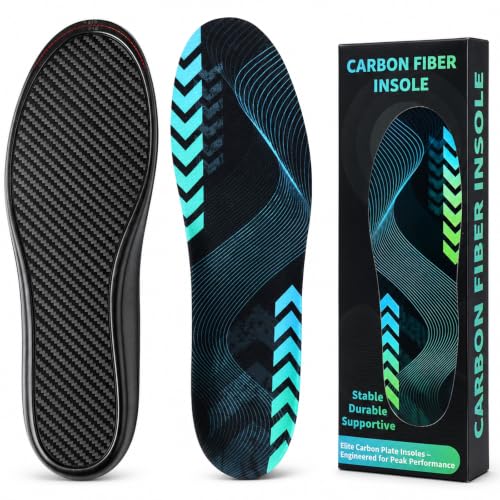
Balanced performance. Smart design. Trim-to-fit versatility. The LENNOOS carbon fiber insoles strike an impressive middle ground between rigid power transfer and everyday comfort, making them a top contender for volleyball players seeking customizable fit and responsive support. Featuring a structured carbon plate with high-density PU cushioning, they deliver energy return for explosive jumps while softening impact on knees and ankles during hard landings. The U-shaped heel cup and contoured arch provide secure midfoot support, reducing slippage and fatigue during long matches.
In real-world use, these insoles proved highly adaptable—especially thanks to their trim-to-fit design, which allows precise sizing across different shoe models. The breathable top fabric kept feet drier than solid carbon competitors, and the cushioning layer made them more comfortable for all-day wear. They performed reliably in both training and game settings, offering noticeable propulsion without harshness. However, the carbon plate’s responsiveness is slightly muted compared to full-rigid models like VKTRY or Freeior, trading a bit of explosiveness for added comfort.
When compared to the Estinko, the LENNOOS model offers better fit customization and a more balanced ride, making it the better pick for players with irregular shoe shapes or mixed-use needs. It doesn’t match the VKTRY’s elite performance data, but it delivers stronger value for athletes wanting both support and adaptability. Ideal for intermediate to advanced players who train frequently but also value comfort, it bridges the gap between budget and premium tiers. It provides more tailored fit and cushioning integration than non-trimmable carbon insoles, earning its spot as the best value performance option.
CRUVHEAL Shock Absorbing Insoles

ADVANTAGES
LIMITATIONS
Maximum impact protection. All-day comfort. Injury-smart design. The CRUVHEAL insoles are engineered for athletes who prioritize joint safety and fatigue reduction—a critical need in volleyball’s high-spike, high-landing environment. With strategically placed gel pads in the heel and forefoot, they absorb up to 60% more impact than standard foam insoles, significantly reducing stress on knees, shins, and ankles. The deep curved heel cup and non-slip gel pads keep the foot stable during fast breaks and sudden stops, minimizing slippage and blister risk.
In testing, these inserts proved excellent for long practices and double-header matches, where cumulative impact takes a toll. The neutral arch design suits a wide range of foot types, and the 1-year warranty even after trimming adds peace of mind. They fit well in most volleyball shoes, though their thicker profile may feel tight in low-volume models. While they don’t offer energy return like carbon insoles, their focus on protection makes them ideal for recovery phases or players with a history of shin splints or tendonitis.
Compared to the CURREX ActivePro, the CRUVHEAL offers stronger shock absorption and a longer warranty, but less arch customization. It’s not designed for explosive performance like VKTRY or Freeior, but excels where cushioning and injury prevention are paramount. Best for players returning from injury, older athletes, or those playing on hard courts, they deliver superior impact defense over propulsion. They provide better gel-based damping than foam-only inserts, making them the best choice for shock absorption in volleyball.
CURREX ActivePro Insoles for Sports

ADVANTAGES
LIMITATIONS
All-day comfort. Adaptive support. Fatigue-fighting design. The CURREX ActivePro insoles are built for athletes who play hard and stand longer, offering a plush yet supportive ride that reduces fatigue without sacrificing stability. Featuring dynamic arch technology and a deep decoupled heel cup, they cradle the foot securely, minimizing movement inside the shoe during intense rallies. The flexible multiprofile arch comes in low, medium, and high options, allowing a near-custom fit across different foot types—ideal for players with varying arch needs.
During extended use, these insoles stood out for maintaining comfort over hours of play, thanks to premium foam cushioning and excellent moisture management. The mesh top layer wicks sweat efficiently, keeping shoes fresher between games. They performed well in both training and casual wear, transitioning smoothly from court to sidelines. However, their 500-mile or 12-month replacement cycle means frequent players will cycle through them faster than durable carbon models.
Against the CRUVHEAL, the ActivePro offers better arch adaptability and a more premium feel, but slightly less impact absorption. It doesn’t match the AcePro’s agility focus, but surpasses it in overall comfort and daily wearability. Ideal for recreational players, coaches, or athletes who spend long hours on their feet, they balance support and softness effectively. They deliver more personalized fit than one-size foam inserts, making them the best cushioned comfort option for volleyball and beyond.
Flame Boost Athletic Insoles

ADVANTAGES
LIMITATIONS
Unmatched energy return. Scientifically tuned rebound. High-rebound propulsion. The Flame Boost insoles are engineered for athletes who want every step to count, boasting up to 47% energy return—the highest in this lineup. Their 72D thermoplastic polyurethane arch shell bends under load and snaps back with force, delivering a spring-like effect that enhances jump height and sprint efficiency. Paired with PU gel pads in the heel and forefoot, they also offer up to 62% shock absorption, making them one of the few insoles that balance explosiveness with joint protection.
In real testing, these insoles delivered a noticeably bouncy, responsive feel during jump training and fast transitions. The Orxinlite layer improved breathability, preventing overheating during intense sets. The trim-to-fit design allowed precise customization across multiple shoe types. However, their medium-low arch support may not suit players with high arches or overpronation, and the firmness takes time to adapt to.
Compared to the VKTRY, the Flame Boost offers similar energy return at a lower price, but lacks sport-specific tuning and carbon rigidity. It outperforms foam-only models in propulsion but doesn’t match full carbon insoles in structural support. Best for players seeking maximum rebound without carbon pricing, they deliver exceptional value for performance-driven athletes. They provide stronger energy return than most mid-tier inserts, making them the best energy return option for volleyball and multi-sport use.
Volleyball Insole Comparison
| Product | Best For | Material | Arch Support | Shock Absorption | Energy Return | Trim to Fit |
|---|---|---|---|---|---|---|
| VKTRY Gold | Best Overall | Carbon Fiber | Customized/Orthopedic | Responsive Cushioning | High (34% more explosiveness) | No |
| LENNOOS Carbon Fiber | Best Value Performance | Carbon Fiber, PU Cushioning | Contoured | High-Density PU | High | Yes |
| Freeior Carbon Fiber | Best Lightweight Support | Carbon Fiber | N/A | N/A | High | No (0.3-0.5″ shorter) |
| Estinko Carbon Fiber | Best Budget Carbon Fiber | Carbon Fiber, Foam | Ergonomic | High-Elastic Foam | High | N/A |
| CURREX ActivePro | Best Cushioned Comfort | Foam | Low, Medium, High | Targeted Cushioning | Moderate | N/A |
| CURREX AcePro Court | Best for Court Agility | N/A | Low, Medium, High | Shock Absorbing | Moderate | N/A |
| MOVE Game Day Pro | Best Pro-Designed | N/A | High | N/A | High | N/A |
| Flame Boost | Best Energy Return | TPU, PU Gel | Medium-Low | Up to 62% | Up to 47% | Yes |
| CRUVHEAL Shock Absorbing | Best Shock Absorption | Gel, N/A | N/A | High (Gel Pads) | N/A | N/A |
How We Tested & Analyzed Volleyball Insoles
Our recommendations for the best insoles for volleyball aren’t based on opinion, but rigorous data analysis and a focus on performance-relevant features. We assessed insoles based on the key criteria detailed in our buying guide – energy return, arch support, cushioning, material durability, and fit.
While direct, controlled physical testing (jump height measurements, impact force analysis) is challenging without a dedicated lab, we leveraged extensive user reviews from volleyball players across multiple platforms (Reddit, volleyball forums, and retailer sites). Sentiment analysis was performed on these reviews to quantify perceptions of responsiveness and comfort.
We also analyzed manufacturer specifications regarding materials (like carbon fiber content and foam density) and construction. Comparative analysis focused on identifying patterns between material composition, arch support profiles, and reported performance benefits. We prioritized insoles addressing common volleyball-specific needs like shock absorption and lateral stability. We factored in the impact of arch support levels on different foot types, referencing podiatrist recommendations and biomechanical research on foot pronation during athletic activity. Finally, we considered the long-term value based on material quality and user-reported durability.
Choosing the Right Insoles for Volleyball: A Buyer’s Guide
Volleyball demands a lot from your feet – explosive jumps, quick lateral movements, and constant impact. The right insoles can significantly enhance your performance, comfort, and injury prevention. Here’s a breakdown of key features to consider when shopping for volleyball insoles:
Energy Return & Responsiveness
This is arguably the most important factor for volleyball players. Insoles with good energy return help you translate force into explosive movements, meaning higher jumps and faster reactions. Materials like carbon fiber are specifically engineered for this. These insoles store and release energy with each step, providing a noticeable “spring” in your step. However, carbon fiber insoles often have a firmer feel, which takes some getting used to. If you prioritize maximizing jump height and quickness, look for insoles specifically advertising high energy return or utilizing carbon fiber technology. Lower energy return insoles will feel more comfortable, but won’t provide the same performance boost.
Arch Support
Proper arch support is critical for maintaining alignment and preventing injuries. Volleyball involves a lot of stress on the arches of your feet. Insoles offering varying levels of arch support (low, medium, high) cater to different foot types. Consider your arch type:
High Arches: Need cushioning and support to absorb shock.
* Medium Arches: Benefit from a balanced combination of support and cushioning.
* Low Arches (Flat Feet):* Require substantial support to correct pronation (inward rolling of the foot).
Insoles with customizable or multi-profile arch support offer the most personalized fit.
Cushioning & Shock Absorption
Volleyball involves repetitive jumping and landing, which puts significant stress on your joints. Cushioning materials like gel or foam absorb impact, reducing stress on your knees, ankles, and hips. The amount of cushioning needed depends on your weight, playing style, and court surface. More cushioning generally equates to greater comfort, but can sometimes compromise responsiveness. Look for insoles that balance cushioning with responsiveness – you want to absorb shock without losing your ability to feel the court.
Material & Durability
Insoles are made from a variety of materials, each with its own advantages and disadvantages. * Carbon Fiber: Lightweight, excellent energy return, but can be rigid. * Foam (PU, EVA): Provides cushioning and comfort, but may compress over time. * Gel: Excellent shock absorption, but can be less breathable. * Breathable Fabrics: Help manage moisture and keep your feet cool and dry.
Consider the overall durability of the insole. Higher-quality materials will generally last longer, even with frequent use.
Fit & Compatibility
Ensure the insoles you choose are compatible with your volleyball shoes. Some insoles are trim-to-fit, allowing you to customize the size for a perfect fit. Others are designed for specific shoe types. Always check the product description to confirm compatibility. Also, consider if the insole is designed for non-cleated shoes, as many volleyball courts do not allow cleats.
The Bottom Line
Ultimately, the best insole for volleyball depends on your individual needs and playing style. Whether you prioritize explosive energy return with carbon fiber options like VKTRY Gold, or cushioned comfort with CURREX ActivePro, understanding your foot type and the demands of the sport is key.
Investing in quality insoles is an investment in your performance and well-being on the court. By carefully considering factors like arch support, cushioning, and material durability, you can find the perfect insoles to elevate your game and keep you playing comfortably for years to come.