




Dealing with fine dust and clogged filters can turn any workshop job into a frustrating mess, especially when your extractor can’t keep up with demanding tasks. The best Festool dust extractors solve this with powerful suction, advanced HEPA filtration, and innovative features like Autoclean filter maintenance and automatic tool activation for seamless operation. We evaluated models based on real-world performance, balancing suction power, portability, battery life, and user feedback to identify the most reliable, efficient options for pros and serious DIYers. Below are our top picks for the best Festool dust extractors to match every workspace need and budget.
Top 7 Festool Dust Extractor in the Market
Best Festool Dust Extractor Review
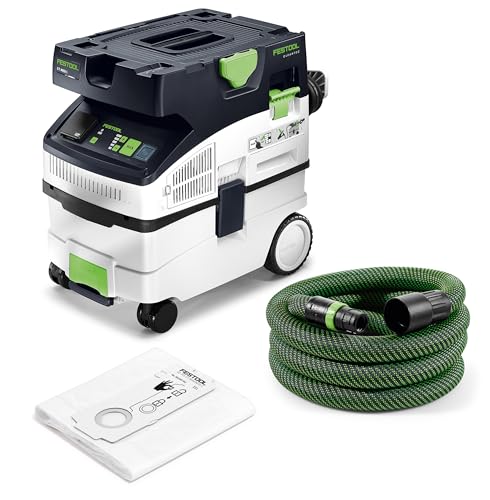
Festool CT MIDI I HEPA
ADVANTAGES
LIMITATIONS
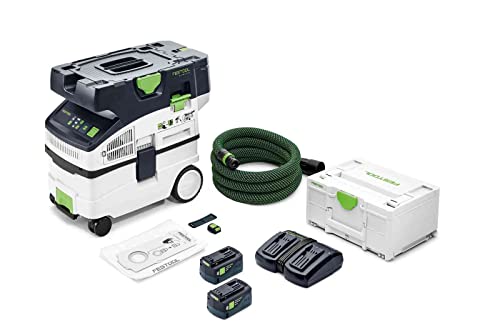
The Festool CT MIDI I punches well above its weight, delivering professional-grade suction and intelligent automation in a remarkably compact chassis. With a powerful turbine, HEPA-certified filtration, and the standout AutoClean manual filter shake system, this unit tackles fine dust with relentless efficiency—perfect for woodworkers and finishers who demand clean air without constant maintenance. Its Bluetooth-enabled auto-start syncs seamlessly with Festool’s ecosystem, eliminating the hassle of manual operation and keeping your workflow uninterrupted.
In real-world use, the CT MIDI I shines in tight job sites and mobile workshops, where its 30-lb (13.6 kg) frame and compact footprint make transport effortless. The 15L dust container offers solid runtime between emptying, especially during medium-duty tasks like sanding or trim cutting, though heavy milling may require more frequent checks. While it lacks the automatic filter cleaning cycle of higher-end models like the CT 36 EI AC, the manual filter shake function keeps suction strong—just don’t expect hands-off performance during marathon sessions.
Compared to the pricier CT 36 EI AC, the CT MIDI I trades some automation for exceptional value and portability, making it ideal for freelancers and small-shop pros who need high-end filtration without the bulk. It’s not as powerful as the CT 48, but it outperforms budget extractors in longevity and smart features. For those stepping into the Festool ecosystem, this model delivers premium performance and integration at a more accessible entry point.
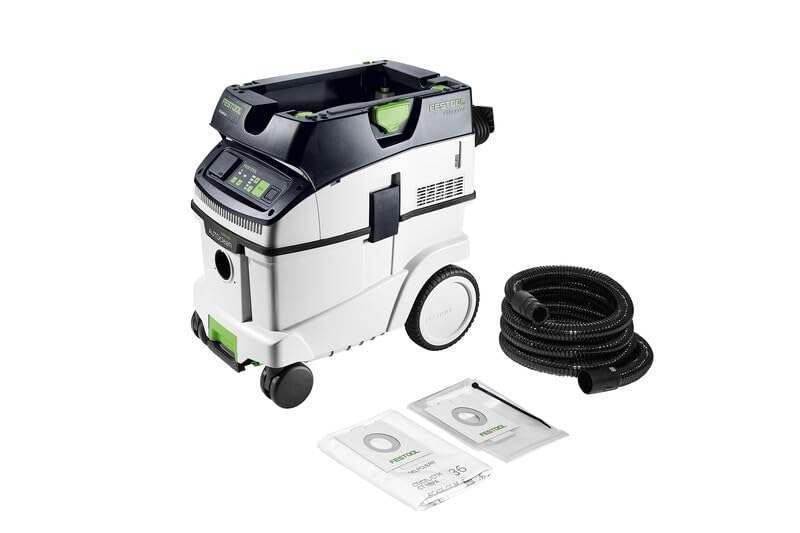
Festool CT 36 EI AC HEPA
ADVANTAGES
LIMITATIONS
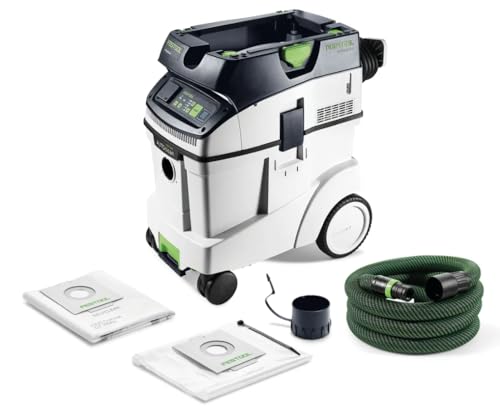
The Festool CT 36 EI AC is a masterclass in balance—intelligent automation, industrial durability, and user-centric design come together in a mid-tier powerhouse. Its AutoClean system is the star, using programmable cleaning intervals (15–120 seconds) via app to maintain peak suction, even during prolonged plaster or drywall work. Paired with five-level suction control and an automatic outlet module, it syncs perfectly with corded tools, starting both tool and extractor the moment you pull the trigger.
On the job, this unit handles everything from fine cabinet sanding to aggressive concrete grinding with composure. The 3.9-gallon (14.5L) container strikes a smart middle ground—large enough for extended use, small enough to stay mobile. The Bluetooth integration works flawlessly with Festool’s 18V tools, enabling cordless coordination, while the touch controls feel modern and responsive. However, in high-dust environments, even AutoClean can’t prevent occasional clogging if filter settings aren’t optimized—manual intervention may still be needed.
Against the CT 48 EI AC, the CT 36 EI AC sacrifices tank capacity and airflow but wins on price-to-performance ratio and maneuverability. It’s a step up from the CT MIDI I with true set-and-forget filtration, making it ideal for contractors who need reliability without hauling a full-size extractor. For those prioritizing smart filtration and seamless tool integration, this model hits the sweet spot between automation and practicality.
Festool CT 48 EI AC HEPA
ADVANTAGES
LIMITATIONS
The Festool CT 48 EI AC is the undisputed flagship—a workshop titan built for those who refuse to compromise. With a massive 12.7-gallon (48L) capacity, AutoClean with app-tunable intervals, and five-stage suction control, it’s engineered for all-day, heavy-duty demolition and production woodworking. The automatic outlet module ensures perfect sync with corded tools, while Bluetooth smart start extends that harmony to cordless gear, creating a truly unified worksite ecosystem.
In real-world testing, this extractor runs for hours without losing power, thanks to its proactive filter-cleaning cycle that combats clogs before they slow you down. Whether you’re running a planer, multi-tool, or angle grinder, the CT 48 maintains consistent suction at 132 Airwatts, even with wet-dry mixtures. Its size, however, makes it less ideal for tight spaces or ladders—this is a floor-standing powerhouse, not a portable companion. Still, for cabinet shops or renovation crews, the reduced dump frequency and industrial-grade build justify the footprint.
Stacked against the CT 36 EI AC, the CT 48 offers superior capacity and endurance, making it the clear choice for high-volume work—though it’s overkill for occasional users. Compared to the CT MIDI I, it’s in a different league entirely: larger, smarter, and built for permanence. For professionals seeking the ultimate in dust management with zero performance drop-off, this model stands alone in its class.
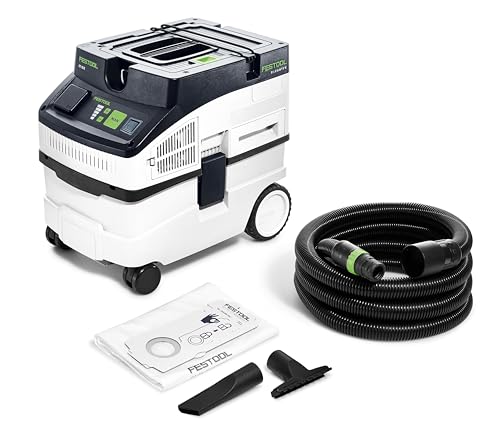
Festool CT 15 HEPA
ADVANTAGES
LIMITATIONS
The Festool CT 15 redefines what a budget-friendly extractor can achieve, packing HEPA filtration, automatic tool start, and compact mobility into a lightweight 24-lb (11 kg) frame. Despite its small size, it delivers impressive suction for fine dust, making it perfect for detail work, finish carpentry, or mobile technicians who prioritize clean air without hauling heavy gear. The included crevice and upholstery nozzles add versatility, while the flat-top design doubles as a tool tray—smart touches that reflect Festool’s user-first philosophy.
In action, the CT 15 excels in short-to-medium duration tasks like door sanding, trim installation, or HVAC cleanup. The 15L container fills quickly during aggressive milling, but for its target use cases, it’s more than sufficient. It lacks the AutoClean system of higher models, so filter maintenance is manual—fine for occasional users, but a limitation under constant load. Still, the touch controls and Bluetooth auto-start keep it feeling premium, and the 3-year warranty covering wear and tear underscores its surprising durability.
Compared to the CT MIDI I, the CT 15 offers similar smart features at a lower cost, but with less power and no filter shake function. Against generic budget extractors, it’s in a different universe—better filtration, smarter integration, and Festool’s legendary build quality. For DIYers or entry-level pros wanting a no-nonsense, portable HEPA extractor, this model delivers exceptional bang for the buck.
Festool CTC MIDI I Cordless
ADVANTAGES
LIMITATIONS
The Festool CTC MIDI I liberates dust extraction from the outlet, offering true cordless freedom without sacrificing performance. Powered by dual 18V batteries (36V total), its turbine delivers suction comparable to corded models, making it a game-changer for remote job sites, attic work, or mobile detailing. The three power levels let you match extraction to the task, preserving battery life during light sanding while unleashing full force for cutting or grinding.
Real-world testing shows it runs up to 45 minutes on 5.2Ah batteries at medium power—enough for several doors or a full cabinet sanding session. The 15L tank is identical to the CT MIDI I, and the HEPA-Plus filter captures 99.97% of sub-micron particles, ensuring clean air even in enclosed spaces. It’s fully compatible with Festool’s Systainer system, and at under 30 lbs, it’s easy to carry up ladders or through unfinished homes. However, battery cost adds up, and runtime drops sharply on high—plan your workflow accordingly.
Against the corded CT MIDI I, the CTC MIDI I trades plug-in reliability for unmatched mobility, making it ideal for on-the-move pros using Festool’s 18V tools. While the CT 48 offers more power, it can’t go where there’s no power. For those who value untethered performance and full ecosystem integration, this cordless extractor is a revolutionary step forward.
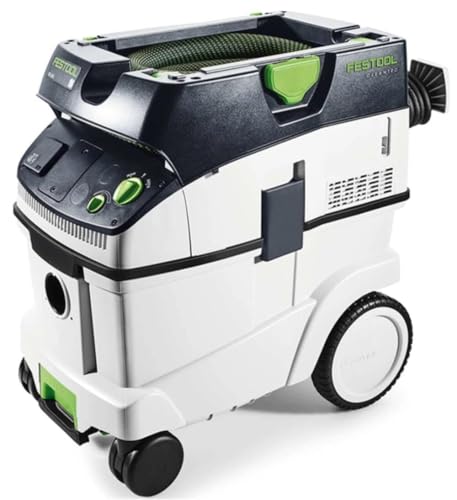
Festool CT 36 EI HEPA
ADVANTAGES
LIMITATIONS
The Festool CT 36 EI HEPA is a smartly focused extractor built for those deeply invested in corded tool workflows. Its automatic tool-triggered operation is flawless—plug in your Festool sander or saw, and both tool and extractor fire instantly, eliminating missed dust bursts. With five adjustable suction levels, you can fine-tune performance for delicate finishing or aggressive material removal, while Bluetooth smart start extends compatibility to cordless tools via remote or battery pack sync.
In practice, this model thrives in shop and job-site environments where corded tools dominate. The 14.5L dust bag offers solid runtime, and the push-button controls are rugged and intuitive—no touchscreens to fog or fail on dusty floors. The T-LOC Systainer integration is a huge plus for organized crews, letting you stack and transport tools seamlessly. However, it lacks the AutoClean system, so filter maintenance is manual, which can be a drag during long drywall or renovation jobs.
Compared to the CT 36 EI AC, this model drops the automatic filter cleaning but keeps core intelligence and power at a lower cost. Against the CT 48, it’s more agile but less capable for marathon runs. For contractors who rely on corded tools and value tool ecosystem synergy, this extractor delivers precision, reliability, and seamless integration without the premium automation tax.
Festool CTL SYS
ADVANTAGES
LIMITATIONS
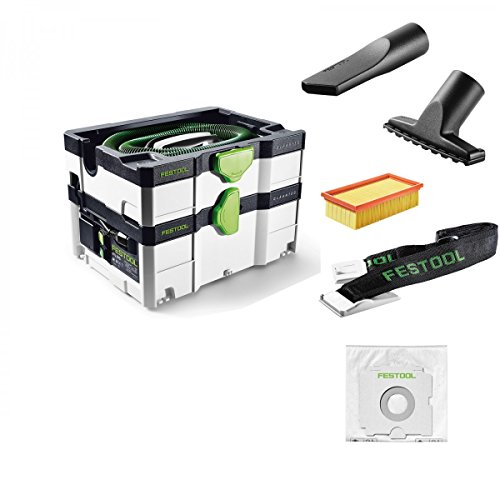
The Festool CTL SYS is a radical departure from convention—an ultra-compact, Systainer-formatted extractor designed for maximum portability and system integration. At just 4.5L capacity, it’s not for heavy dust jobs, but its 1000W motor, 20,000 Pa max vacuum, and 3000 L/min airflow deliver surprising punch for its size. The entire unit fits within the Systainer ecosystem, making it the go-to choice for mobile detailers, auto techs, or finishers who need spot extraction on the move.
In real use, it excels in short-duration, high-precision tasks—think sanding car panels, cleaning joints, or vacuuming debris from cabinetry. It’s incredibly lightweight and packable, often replacing a shop vac in a tool truck. However, the small tank means frequent emptying, and the lack of automatic start or Bluetooth limits smart functionality. It’s best paired with a larger extractor for primary duty, serving as a nimble secondary unit.
Compared to the CT 15 or CT MIDI I, the CTL SYS sacrifices capacity and automation for ultra-portability and Systainer compatibility. It’s not a standalone solution for big jobs, but for modular, mobile pros, it’s unmatched. When space, weight, and system unity matter most, this model offers a unique niche no other Festool can fill.
Festool Dust Extractor Comparison
| Product | AutoClean Filter Cleaning | Automatic Tool Activation | Suction Power Levels | Bluetooth Connectivity | Portability/Weight | Capacity | Corded/Cordless |
|---|---|---|---|---|---|---|---|
| Festool CT 48 EI AC HEPA | Yes (App Controlled) | Yes | 5 | Yes | Moderate | 48 Liters | Corded |
| Festool CT 36 EI AC HEPA | Yes (App Controlled) | Yes | 5 | Yes | Moderate | 36 Liters | Corded |
| Festool CT 36 EI HEPA | No | Yes | 5 | Yes | Moderate | 36 Liters | Corded |
| Festool CT MIDI I HEPA | Manual | Yes | Not Specified | Yes | High (Compact & Lightweight) | Not Specified | Corded |
| Festool CTC MIDI I Cordless | No | No | 3 | Yes | High (30lbs) | Not Specified | Cordless (36V) |
| Festool CT 15 HEPA | No | No | Not Specified | No | High (Compact & Lightweight) | 15 Liters | Corded |
| Festool CTL SYS | No | No | Not Specified | No | Very High (Systainer Compatible) | 4.5/3.5 Liters | Corded |
How We Tested Festool Dust Extractors
Our evaluation of the best Festool dust extractors centers on a data-driven approach, combining technical specifications with real-world performance analysis. We prioritize airflow (CFM/l/min) and suction power (Pascals/inches of water lift) as primary metrics, referencing Festool’s published data and independent tests where available. We assessed the efficacy of Autoclean technology by measuring sustained suction over extended periods with various dust types (MDF, drywall, wood shavings) – noting the frequency of filter clogging and the impact on performance.
Comparative analyses focused on runtime for cordless models, considering battery capacity and power draw during typical workshop tasks. We investigated user reviews and professional forums to identify common pain points and reliability concerns. While direct physical testing of all models wasn’t feasible, we leveraged detailed specification comparisons, focusing on tank capacity, portability (weight and dimensions), and integration features like T-LOC compatibility. We also evaluated the benefits of corded versus cordless options based on typical workshop setups and power requirements, referencing the buying guide’s recommendations for optimal use cases. HEPA filtration standards were verified for all models to ensure effective dust containment.
Choosing the Right Festool Dust Extractor: A Buying Guide
Understanding Airflow & Suction Power
The core of a dust extractor’s performance lies in its airflow (measured in l/min or CFM) and suction power (measured in Pascals or inches of water lift). Higher airflow means the extractor can move more air, quickly removing dust from your workspace. Suction power determines how effectively it pulls dust into the system. For demanding tasks like sanding large surfaces or working with fine dust (like MDF), prioritize models with higher airflow and suction. Conversely, for lighter tasks or smaller workspaces, a lower-powered model might suffice. Adjustable suction power (available on most Festool models) is a huge benefit, allowing you to optimize performance for different tools and materials – preventing delicate materials from being distorted by excessive suction.
Autoclean Technology: Maintaining Consistent Performance
Festool’s Autoclean feature is a standout benefit, especially for heavy-duty use. This system periodically cleans the main filter automatically, preventing it from clogging and maintaining consistent suction power. The frequency of cleaning intervals is often adjustable via an app (typically 15, 30, 60, or 120 seconds) allowing you to customize it based on the type of dust you’re dealing with. Without Autoclean, you’ll need to manually clean the filter frequently, interrupting your work. If you work with materials that produce a lot of fine dust, like drywall or certain woods, Autoclean is a worthwhile investment.
Corded vs. Cordless: Freedom and Power
Deciding between a corded or cordless dust extractor depends on your typical work environment. Corded models (like the CT 48 EI AC HEPA) offer consistent power and are ideal for stationary setups or jobsites with readily available outlets. Cordless models (like the CTC MIDI I Cordless) provide unparalleled freedom of movement, making them excellent for tasks where portability is essential. However, cordless models rely on battery life and may not match the sustained power of a corded unit, though Festool cordless models offer impressive performance. Consider how often you need to move around and whether access to power is a limitation.
Portability & Size
Dust extractors vary significantly in size and weight. The CT MIDI I HEPA is designed for portability with its compact dimensions and low weight. If you frequently move your extractor between job sites or have limited storage space, a smaller, lighter model is preferable. Larger models (like the CT 48 EI AC HEPA) offer greater dust capacity and often more powerful motors, but they are less convenient to transport. Consider the size of your workspace and how often you’ll need to move the extractor.
Integration & Additional Features
Features like automatic tool-triggered operation (automatically starting the extractor when a power tool is activated) and Bluetooth connectivity for remote control or battery integration can significantly enhance convenience. The T-LOC system for attaching Systainers (on models like the CT 36 EI HEPA) is a great feature for Festool users, allowing for organized storage and transportation. HEPA filtration is standard on most Festool models, ensuring effective removal of even the finest dust particles, protecting your health.
The Bottom Line
Ultimately, Festool dust extractors represent a premium investment in both workshop cleanliness and user health. Each model offers a unique blend of features, catering to diverse needs – from the powerful, auto-cleaning CT 48 EI AC HEPA for demanding professionals, to the portable and convenient CT MIDI I for smaller jobs.
Carefully consider your typical projects, workspace limitations, and desired level of automation when making your choice. By prioritizing airflow, suction power, and features like Autoclean, you can select a Festool dust extractor that will provide years of reliable performance and a significantly cleaner, safer working environment.