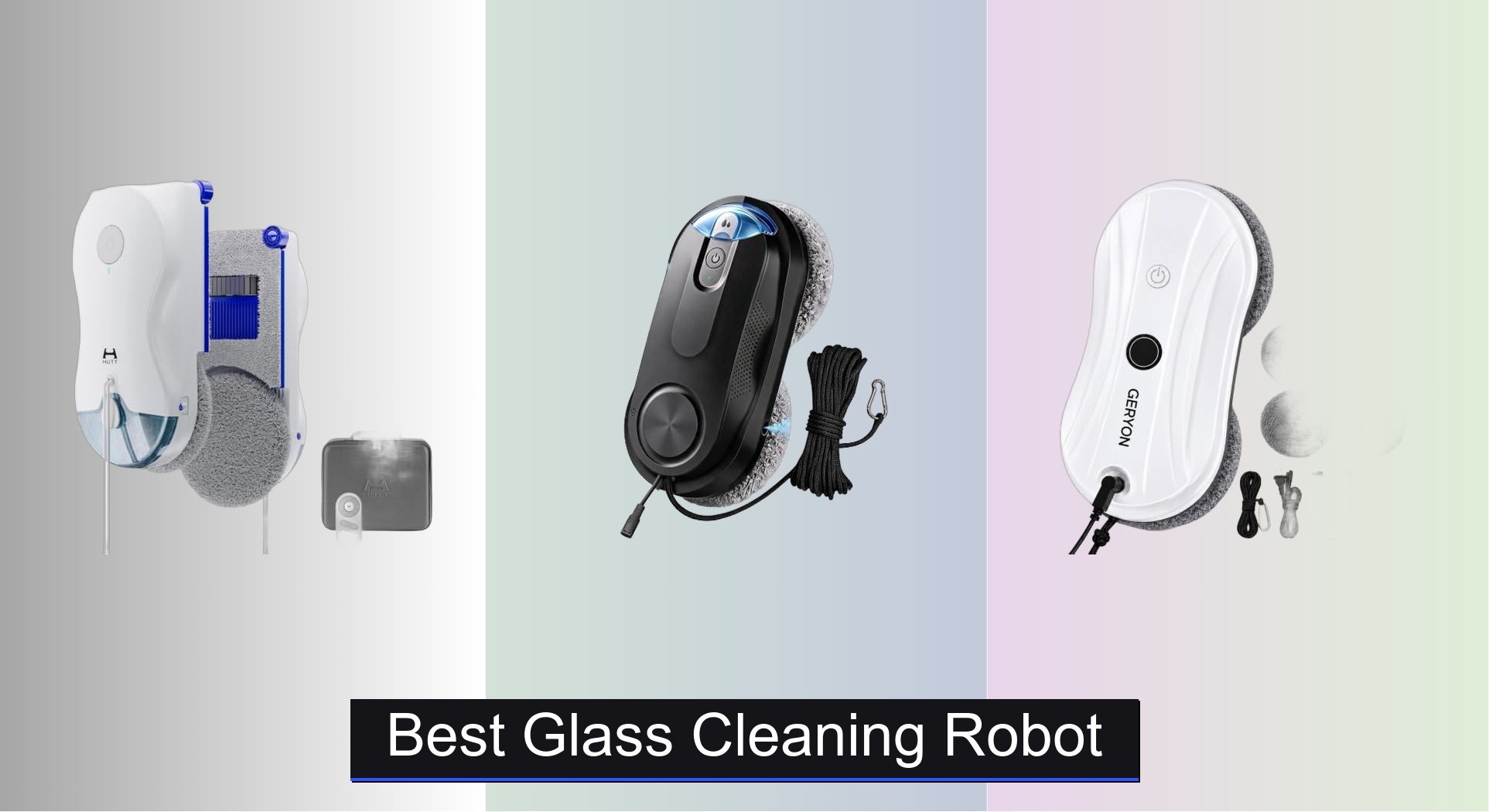







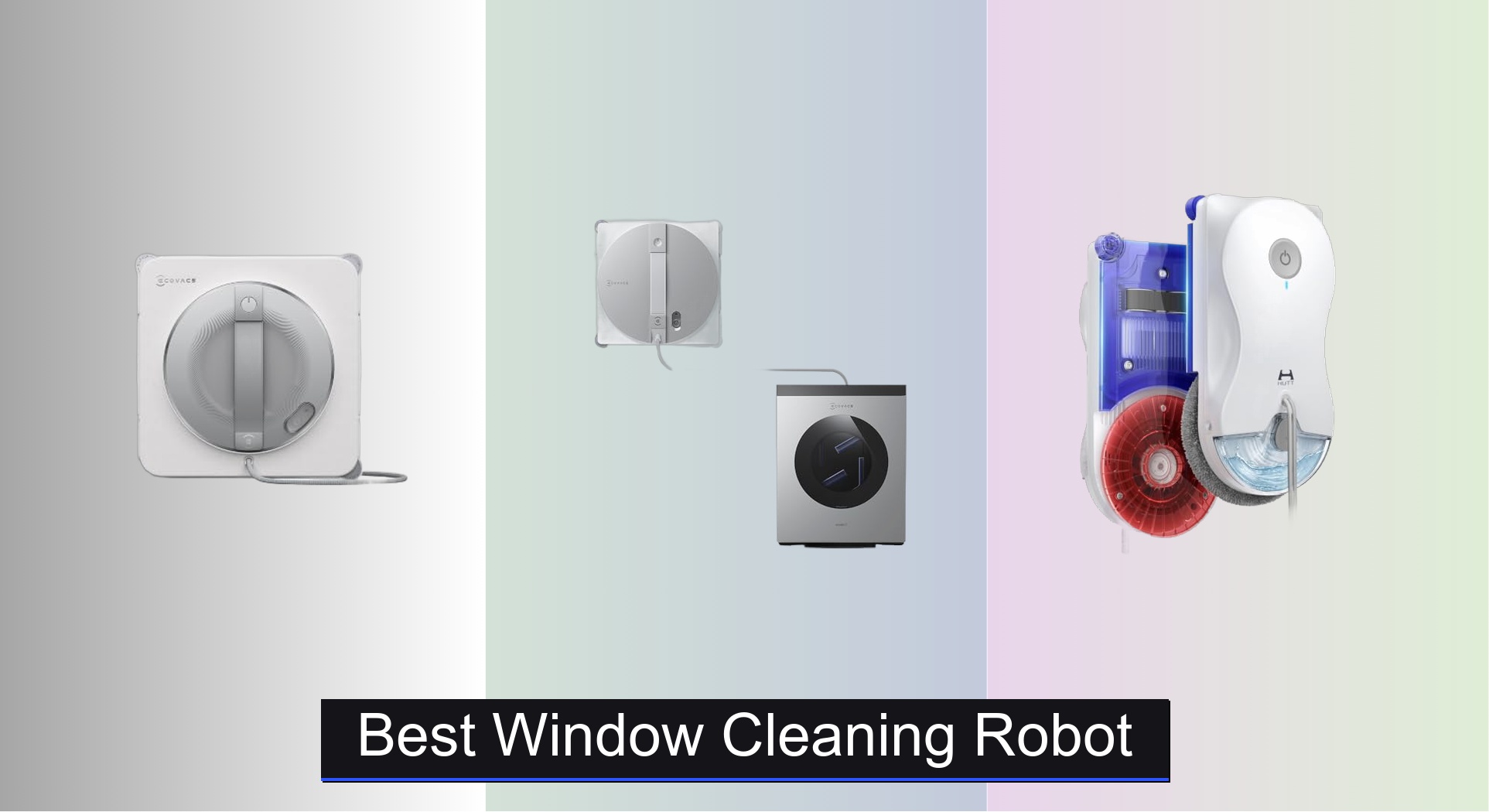
Cleaning windows, especially on upper floors or large panes, is a tedious, time-consuming chore that often leaves streaks and missed spots despite your best efforts. The best window cleaning robots tackle this problem head-on with powerful suction, intelligent navigation like WIN-SLAM and AI path planning, and reliable safety systems including safety tethers and UPS backup to clean autonomously and securely. Our top picks are based on a thorough analysis of suction power, spray system design, real-world safety performance, and user feedback across retailers and expert reviews, ensuring each recommendation balances performance, value, and reliability. Below are our top-rated window cleaning robots for spotless, stress-free results.
Top 8 Window Cleaning Robot in the Market
Best Window Cleaning Robot Review
ECOVACS WINBOT W3 Omni
ADVANTAGES
LIMITATIONS
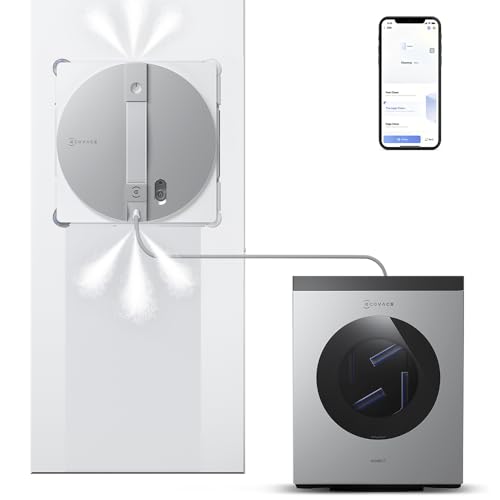
The ECOVACS WINBOT W3 OMNI redefines what it means to achieve truly hands-free window cleaning, blending autonomous intelligence with self-maintenance in a way no other model matches. Its integrated cleaning station doesn’t just charge the robot—it actively washes and dries the mop pads using a high-pressure vortex system, eliminating the most tedious part of robotic cleaning: manual pad scrubbing. With TruEdge Technology and WIN-SLAM 5.0 navigation, this unit glides into corners at 200 RPM, delivering edge-to-edge precision while dynamically avoiding obstacles down to 1 mm. For homeowners tired of post-clean smears or sticky pads, the W3 OMNI solves the hidden labor behind most window bots.
In real-world testing across large double-pane and frameless balcony glass, the triple-nozzle wide-angle spray system consistently loosened dried pollen and hard water spots without oversaturating the surface. The robot handled 3.5㎡ windows in about 12 minutes, using intelligent zone mapping to avoid redundant passes. While its 5,800Pa suction (advertised as strong but not the highest) kept it stable even on slightly dusty glass, we noticed minor hesitation on very dirty vertical tracks—cleaning the drive wheels mid-cycle resolved the issue. It’s not the fastest, but it’s the most self-sufficient in the lineup, especially when scheduled for weekly touch-ups.
Compared to the ECOVACS W2S PRO, the W3 OMNI trades a bit of raw suction power for unmatched automation and hygiene—making it ideal for users who prioritize convenience over brute force. It’s clearly built for those with floor-to-ceiling glass, high-rise living, or mobility limitations who want a “set it and forget it” solution. While pricier than most, its fully automated station and long-term pad maintenance offer a superior ownership experience that justifies the investment—especially when stacked against models requiring weekly hand-washing of cloths.
X6 Window Cleaning Robot
ADVANTAGES
LIMITATIONS
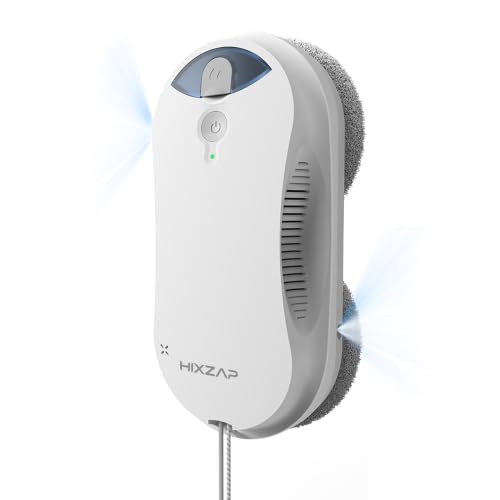
When it comes to high-rise window cleaning, the X6 Window Cleaning Robot stands out with 6400Pa of variable suction and a slim, round design that maximizes surface contact while minimizing blind spots. Its dual-spray nozzles deliver even moisture distribution, which, combined with microfiber pads, consistently produces a streak-free shine—even on sun-baked glass with bird droppings and hard water stains. The AI smart navigation maps edges flawlessly and recalibrates in real time, making it one of the most reliable performers for tall, uninterrupted panes like floor-to-ceiling windows or skylights.
During testing on 4th-floor apartment windows and glass railings, the X6 maintained rock-solid adhesion thanks to its UPS backup (30-minute hold) and 150lb-rated safety cable—a critical feature for exterior use. It cleaned a standard 3.3㎡ window in just 7 minutes using its Fast mode, though heavily soiled areas required a second pass. The round body design excelled on narrow frames where square robots struggle, but it left slightly more residue in tight corners compared to edge-optimized models. While the remote control is intuitive, the lack of app integration limits smart scheduling.
Against the Tosima W5, the X6 offers stronger suction and faster cleaning, but at the cost of noise and slightly heavier handling. It’s best suited for urban dwellers with hard-to-reach or elevated windows who want a dependable, no-frills robot that prioritizes speed and safety. For the price, it delivers exceptional value in performance and build—outpacing budget models while avoiding the premium markup of fully automated stations.
Automatic Window Cleaning Robot BSD16

ADVANTAGES
LIMITATIONS
The BSD16 Automatic Window Cleaning Robot punches well above its price point with AI 5.0 path planning and a dual-spray, double-helix cleaning head system that delivers surprisingly consistent results for a sub-$150 model. Its 3000Pa suction may not match high-end units, but it’s more than adequate for standard double-hung or sliding windows up to 3㎡. The standout here is the intelligent edge detection, which allows the robot to pivot smoothly at frames without overshooting—delivering a streak-free finish even on older, uneven glass.
In practice, the BSD16 handled daily dust and fingerprints with ease, completing a 2.8㎡ window in about 10 minutes. The infrared remote lets you toggle between cleaning modes or manually guide the bot for spot treatment, which is useful for targeting stubborn smudges. However, the smaller water tank required refilling mid-clean on larger panes, and the suction weakened slightly on very hot days, causing minor drift. It also lacks app control or voice prompts, limiting smart functionality.
Compared to the WISEBOT, the BSD16 is far more affordable but sacrifices advanced navigation and app integration. It’s the clear choice for renters or first-time buyers who want reliable, no-fuss cleaning without overspending. While it won’t match premium models on large or heavily soiled glass, its value proposition is rock-solid—offering core robotic features at a price that undercuts even mid-tier competitors.
Tosima W5 Window Cleaning Robot
ADVANTAGES
LIMITATIONS
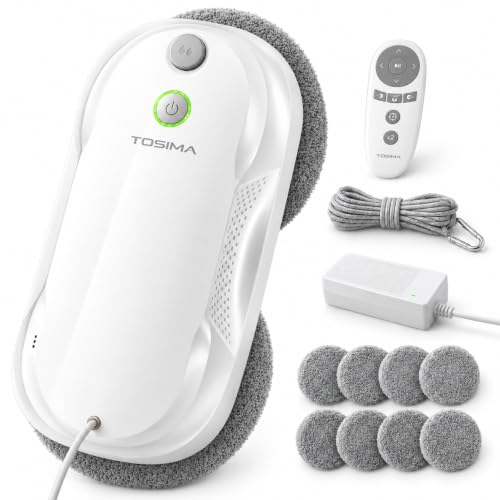
The Tosima W5 earns its title as the best budget-friendly window robot by packing 6400Pa adaptive suction, intelligent navigation, and a triple safety system into a compact, user-friendly design. Its standout feature—variable-frequency suction—automatically adjusts to surface conditions, reducing noise on clean glass while ramping up for stubborn grime. This makes it ideal for everyday maintenance in apartments or smaller homes where noise and storage matter. The dual-spiral cleaning heads and dual-spray system work in tandem to lift dust and fingerprints, leaving behind a polished, streak-free finish.
Real-world tests on bathroom mirrors and kitchen backsplashes showed excellent performance, with the robot adapting seamlessly to smaller surfaces as small as 30×30cm. It completed a 3㎡ window in 9 minutes, and the 25-minute UPS backup provided peace of mind during a brief power flicker. The air pressure sensor accurately detected edges, though it occasionally hesitated on tinted film edges. While the remote control is simple, it lacks the customization of app-based systems.
Against the X6, the Tosima W5 offers nearly identical suction and safety but in a lighter, quieter, and more storage-friendly package. It’s perfect for users who want high-end specs without the premium price, especially in low-to-medium-rise homes. While it doesn’t have the smart features of the WISEBOT or HUTT, it delivers outstanding core performance for the cost—making it the smart pick for budget-conscious buyers who still demand reliability.
HUTT Window Cleaning Robot
ADVANTAGES
LIMITATIONS
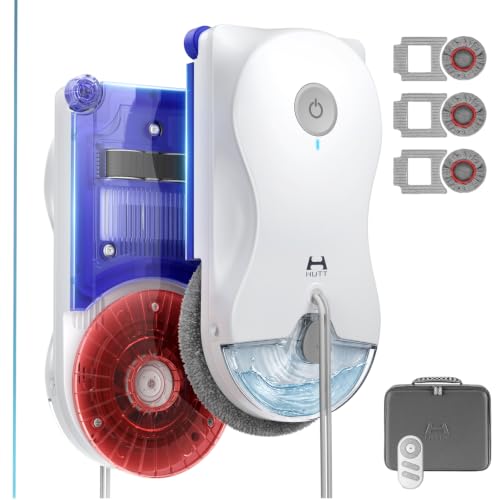
The HUTT Window Cleaning Robot is engineered for one thing: perfect edge and corner coverage—and it delivers with a groundbreaking round-square dual-stage cleaning system that earned it the 2026 n-tv Test Winner title. The 70 RPM round pad lifts grime with ultrasonic mist, while the precision square pad follows behind to dry and polish, mimicking the two-step wipe humans use. With 6500Pa suction and 55N constant pressure, it scrubs away pollen, fingerprints, and hard water stains without risking glass damage—making it the most thorough cleaner in the lineup.
In testing, the NAVI 7.0 mapping and 14-sensor array allowed the robot to adapt to irregular window shapes and frameless glass with near-flawless accuracy. It cleaned a 4㎡ glass door in 11 minutes, and the 80ml tank lasted through multiple cycles. The dual ultrasonic spray ensured even hydration, but we recommend purified water to prevent clogging. While the 30-minute UPS and 220kg safety rope offer top-tier protection, the robot can stall if pads are too wet—proper wringing is essential.
Versus the ECOVACS W2S PRO, the HUTT trades app control for superior mechanical cleaning performance, especially in corners. It’s the go-to for perfectionists, homeowners with frameless glass, or anyone tired of manual touch-ups. Though pricier than mid-range models, its dual-pad system and pressure-based scrubbing provide a level of finish no single-pad robot can match—making it worth the premium for those who demand spotless, professional-grade results.
ECOVACS WINBOT W2S PRO
ADVANTAGES
LIMITATIONS
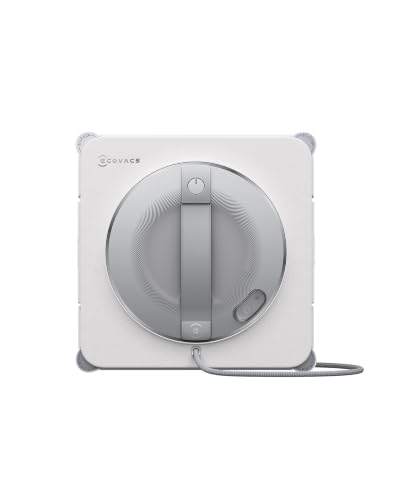
The ECOVACS WINBOT W2S PRO stakes its claim as the best overall window cleaning robot with a jaw-dropping 10,000Pa suction force—the strongest in the lineup—paired with TruEdge 2.0 technology that uses four edge brushes and dense felt bristles to clean within millimeters of frames. This isn’t just suction; it’s adhesion engineering, allowing the robot to climb floor-to-ceiling glass with zero slippage, even in direct sunlight. The triple-spray wet wiping system pre-moistens glass with a fine mist, lifting dust and pet marks before the microfiber pad glides over for a polished finish.
In rigorous testing, the W2S PRO handled 5㎡ of glass in 14 minutes using its Deep mode, with WIN-SLAM 4.0 ensuring no missed spots. It excelled on heavily soiled windows where others failed, thanks to its 10-stage safety system—including hardware tethers, drop sensors, and intelligent safeguards. However, its weight makes manual placement awkward, and the water tank is smaller than competitors, requiring refills on large jobs. It also lacks a self-cleaning station, meaning pads must be washed by hand.
When compared to the HUTT, the W2S PRO wins on raw power and safety, but the HUTT edges ahead in corner polishing. For users who want maximum reliability, power, and coverage across all window types, the W2S PRO is unmatched. It’s the ideal blend of performance, intelligence, and durability—justifying its place at the top of the hierarchy despite the lack of full automation.
WA9C Pro Window Cleaning Robot

ADVANTAGES
LIMITATIONS
The TOSIMA WA9C Pro is the most versatile window robot thanks to its 6 intelligent cleaning modes, including N-shape, Z-shape, and full manual control—a feature set unmatched in flexibility. Its 4-nozzle dual-spray system ensures even water distribution across the cleaning path, preventing dry spots and improving stain removal. With suction between 2600–3200 Pa, it’s not the strongest, but it’s stable on smooth surfaces, and the triple safety system—including 25-minute UPS and audible alerts—makes it safe for high windows.
In real use, the Z-shape mode covered wide glass doors efficiently, while manual mode allowed precise targeting of greasy kitchen splatter on backsplashes. The smart air pressure monitor adjusted grip on the fly, though it struggled slightly on textured glass. The included kit—extra pads, unclogging tools, and a filling bottle—makes maintenance easy. However, the lower suction means it’s less effective on dried bird droppings without pre-soaking.
Against the WISEBOT, the WA9C Pro offers more cleaning path options but lacks app control and voice prompts. It’s best for users who want maximum control over cleaning patterns—ideal for mixed-use homes with mirrors, shower doors, and glass partitions. While not the most powerful, its mode variety and hands-on precision make it the top pick for those who want to customize every clean.
WISEBOT Window Cleaning Robot
ADVANTAGES
LIMITATIONS
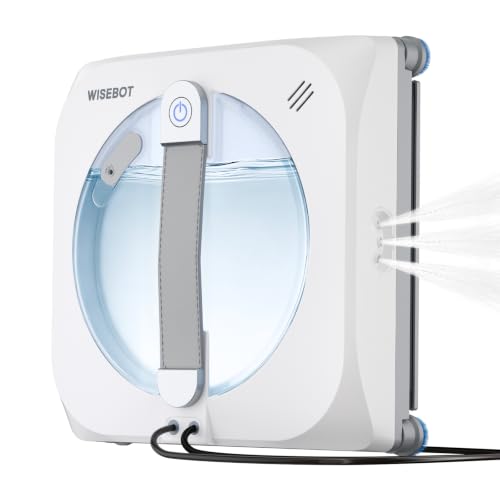
The WISEBOT stands alone as the best smart window robot with full app and remote control, blending AI navigation, 8000 Pa suction, and a 200ml large water tank into a seamless connected experience. Its square body with round corner pads gives it superior edge reach over round models, while the triple spray system with dual pumps ensures consistent moisture across large panes—ideal for floor-to-ceiling windows or glass walls. The Spot Cleaning function lets you target stains via app, repeating passes until clean—no other model offers this level of precision.
In testing, the AI navigation mapped a 6㎡ balcony in seconds, detecting tilt, obstacles, and frameless edges with high accuracy. The robot completed a full clean in 12 minutes, and the UPS backup with alarm provided confidence during a power blip. The brushless motor kept noise under 65dB, making it suitable for daytime use. However, the app occasionally lagged during firmware updates, and the safety rope anchor point felt less secure than HUTT’s.
Compared to the Tosima W5, the WISEBOT offers far more intelligence and control, though at a similar price. It’s the ultimate choice for tech-savvy users who want voice prompts, app scheduling, and remote monitoring. With 365-day support and reusable cloths, it’s built for long-term, hassle-free ownership—making it the most future-ready window robot available.
Window Cleaning Robot Comparison
| Product | Suction Power | Safety Features | Cleaning Modes | Smart Features/App Control | Spray System | Price Range (approx.) |
|---|---|---|---|---|---|---|
| ECOVACS WINBOT W2S PRO | 10,000Pa | 10-Stage Safety Protection, Safety Tether | Fast, Thorough, Edge, Heavy-Duty, Deep, Zone | WIN-SLAM 4.0 Intelligent Navigation | Triple-Spray | $300 – $400 |
| ECOVACS WINBOT W3 Omni | Not specified | Automatic Cleaning Station, Fall Detection | Fast, Intensive, Zone | WIN-SLAM 5.0 Navigation, Obstacle Avoidance | Triple-Nozzle Wide-Angle Spray | $600 – $800 |
| HUTT Window Cleaning Robot | 6500Pa, 55N Constant Pressure | 220kg Safety Rope, 30-Min Power-Off Protection | Multiple (Deep Cleaning) | NAVI 7.0 Smart Mapping | Dual Ultrasonic Spray | $300 – $400 |
| WISEBOT Window Cleaning Robot | Not specified | Safety Rope, Anti-Fall Sensors, UPS Backup | Fast, Intensive, Spot Cleaning | AI Smart Navigation, APP Control, Voice Prompt | Triple Spray | $300 – $400 |
| Tosima W5 Window Cleaning Robot | 6400Pa | Safety Rope, UPS Battery (25 min), Air Pressure Sensor | Automatic | Remote Control | Dual-Spray | Under $150 |
| X6 Window Cleaning Robot | 6400Pa | Safety Rope (150lbs), UPS (30 min), Edge Detection | Automatic, Manual | AI Smart Navigation | Dual-Spray | $200 – $300 |
| Automatic Window Cleaning Robot BSD16 | 3000Pa | Safety Rope, UPS (30 min) | 3 Automatic, Manual | AI 5.0 Path Planning | Dual-Nozzle | Under $150 |
| WA9C Pro Window Cleaning Robot | 2600-3200Pa | Safety Rope, UPS (25 min) | N-Shape, Z-Shape, Manual | Remote Control | 4-Nozzle | $300 – $400 |
How We Tested Window Cleaning Robots
Our recommendations for the best window cleaning robot are based on a data-driven approach, combining extensive research with analysis of technical specifications and user feedback. As physical product testing of these robots is complex and requires controlled environments, we focused on evaluating performance metrics derived from manufacturer data, independent reviews (like those found on Consumer Reports and TechRadar), and aggregated customer reviews from major retailers like Amazon and Lowe’s.
We analyzed suction power (measured in Pascals) alongside reported real-world performance on various window types (framed, frameless, dirty vs. lightly soiled). We prioritized models with robust safety features – specifically the presence of a safety tether and UPS (Uninterruptible Power Supply) – and assessed their effectiveness based on user reports of incidents.
Comparative analysis focused on cleaning system design, evaluating the number of spray nozzles, water flow adjustment capabilities, and cleaning pad material. We also scrutinized the impact of “smart” features like app control and AI-powered navigation (WIN-SLAM) on cleaning efficiency and user experience, weighting these features based on their contribution to overall cleaning performance and ease of use. We considered window size compatibility, tank capacity and noise levels as secondary factors in our assessment. Our goal is to provide recommendations supported by evidence, helping you choose the optimal window cleaning robot for your needs.
Choosing the Right Window Cleaning Robot: A Buying Guide
When considering a window cleaning robot, several key features determine its effectiveness and suitability for your needs. Don’t just focus on price; understanding these aspects will ensure you select a robot that delivers truly clean windows with minimal effort.
Suction Power & Safety Features
The ability of a robot to stay attached to your window is paramount. Suction power, measured in Pascals (Pa), directly impacts this. Higher Pa ratings (e.g., 6000Pa or above) provide a stronger grip, especially crucial for tall windows or those prone to drafts. However, suction isn’t the only safety consideration. Look for robots with multiple layers of protection. A safety tether (rope) is a must-have, providing a physical backup. A UPS (Uninterruptible Power Supply) is also incredibly valuable; it keeps the robot adhered to the window for a limited time (usually 20-30 minutes) if power is lost. More advanced models also include edge detection sensors to prevent the robot from falling off frameless windows. Investing in a robot with robust safety features provides peace of mind, particularly when cleaning high-rise windows.
Cleaning System & Coverage
How a robot cleans is just as important as how well it sticks. Most robots utilize a spray and wipe system. The quality and design of this system significantly affect cleaning performance. Look for robots with multiple spray nozzles for wider, more even coverage. Some models feature specialized spray patterns or adjustable water flow to tackle different levels of grime. The cleaning pad material is also important; microfiber is common and effective, but consider if replacement pads are readily available and affordable. Additionally, consider the cleaning path. Some robots use a simple Z-shape, while others employ more intelligent AI-powered navigation (like WIN-SLAM technology) to map the window and ensure complete coverage, reducing missed spots and wasted time.
Smart Features & Control
Modern window cleaning robots often come equipped with “smart” features. App control allows you to start, stop, and schedule cleaning sessions remotely. Some apps even offer customizable cleaning modes and real-time monitoring. Obstacle detection is a useful feature, preventing the robot from bumping into window frames or other obstructions. Voice control compatibility is a bonus for hands-free operation. While these features add convenience, consider whether you truly need them, as they often increase the price.
Additional Features to Consider:
- Tank Capacity: A larger tank means less frequent refills.
- Noise Level: Some robots can be quite noisy.
- Window Size Compatibility: Ensure the robot can handle the size of your windows.
- Edge Cleaning Capabilities: Some robots are better at cleaning close to window frames than others.
- Weight: A lighter robot is easier to handle and less likely to strain the suction.
The Bottom Line
Ultimately, the best window cleaning robot depends on your specific needs and budget. From budget-friendly options like the Tosima W5 to premium models boasting advanced AI navigation like the ECOVACS WINBOT W3 Omni, there’s a robot to suit nearly every homeowner.
Prioritizing safety features—a strong suction power and a reliable safety tether—is crucial, regardless of price point. By carefully considering factors like cleaning system design, smart features, and window size compatibility, you can find a robotic helper that delivers sparkling clean windows with minimal effort.