
Many homeowners struggle to keep floors clean daily, especially with pets, kids, or busy schedules making consistent vacuuming a chore. The best smart home robot vacuums solve this with powerful suction, precise LiDAR navigation, and convenient self-emptying docks that minimize hands-on maintenance. We evaluated top models based on performance data, expert reviews, real-world user feedback, and key features like mopping functionality, battery life, and pet hair pickup to ensure our picks deliver real cleaning value. Below are our top smart home robot vacuum recommendations for every home and budget.
Top 8 Smart Home Robot Vacuum in the Market
Best Smart Home Robot Vacuum Review
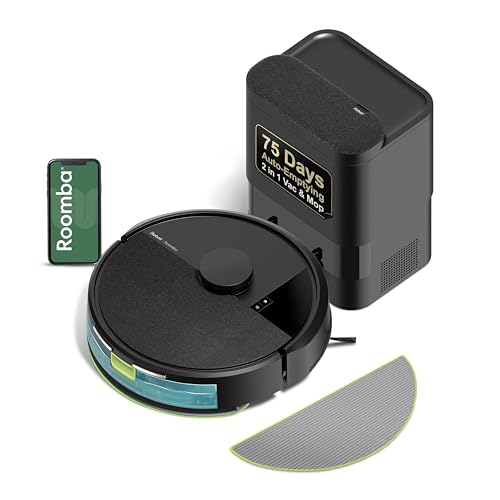
iRobot Roomba 105X Combo
ADVANTAGES
LIMITATIONS
The iRobot Roomba 105X Combo isn’t just smart—it’s intuitively smart, engineered for homes where time is scarce but standards are high. With 70× power-lifting suction and a 3-Stage Cleaning System, it doesn’t just skim the surface—it pulls embedded pet hair, crumbs, and dust from deep within carpets and crevices. Its Smart LiDAR Mapping ensures your home is cleaned in neat, efficient rows, not chaotic loops, eliminating the guesswork of coverage. For pet owners drowning in daily messes, this robot delivers a rare combo: deep cleaning power and true hands-free operation for up to 75 days.
In real-world testing, the Roomba 105X shines on mixed flooring, seamlessly transitioning from hardwood to low-pile rugs while its Edge-Sweeping Brush captures debris along baseboards where most robots fail. The built-in microfiber mop provides consistent moisture via a smart micro-pump, making it effective on light spills and footprints—though it’s not designed for heavy mopping. While the suction is powerful, the robot can struggle slightly on thick, shaggy carpets when mopping mode is active, and the dock’s dust bag, while sealed and allergen-trapping, requires replacement every 75 days—adding ongoing cost. Still, for homes with kids and pets, its automatic rug protection is a game-changer, ensuring no soaked carpets after a cleaning run.
Compared to the Roborock Qrevo S Pro, the Roomba 105X trades some mopping sophistication for superior edge cleaning and brand reliability. It doesn’t heat-dry the mop pad, which Roborock does, but its sealed allergen-trapping bag and proven navigation make it a top pick for allergy-prone households. Ideal for families seeking low-touch, consistent cleaning, it’s less about raw power and more about intelligent, reliable execution. While the Roborock offers hotter mop cleaning, the Roomba 105X wins on allergen control and ease of use—making it a smarter long-term investment for homes where health and convenience matter most.
Roborock Qrevo S Pro

ADVANTAGES
LIMITATIONS
Meet the Roborock Qrevo S Pro—a mopping powerhouse wrapped in a sleek, obstacle-dodging robot that redefines what “daily clean” really means. With 18,500Pa of suction, it obliterates pet hair, cat litter, and crumbs from carpets and tiles, while its dual spinning mops deliver consistent scrubbing action that actually lifts dried spills. But the real magic is in the multifunctional dock: it empties dust, cleans the mops at 167℉, and dries them with warm air—all automatically. For anyone tired of manually rinsing grimy mop pads, this is nothing short of revolutionary.
During real-world use, the Qrevo S Pro glides under beds and sofas with its 3.8-inch low-profile design, capturing dust in tight corners where most robots can’t reach. Its AI-powered obstacle avoidance confidently steers around shoes, cords, and toys—fewer jams, more uninterrupted cleaning. On carpet, it lifts mops 10mm to stay dry, and its anti-tangle rubber brush handles long pet hair with ease. However, in high-pile rugs, the robot occasionally loses traction, and the water tank is non-removable, meaning you can’t pre-fill it manually—only the dock refills it. Still, for hard floors, it’s unmatched in daily maintenance.
When stacked against the iRobot Roomba 415X, the Qrevo S Pro offers superior mopping tech with hot wash and dry, but lacks Roomba’s brand-wide ecosystem reliability. It’s perfect for tech-savvy users who prioritize mopping performance and self-maintenance over raw navigation simplicity. While the Roomba leans into allergy control and edge cleaning, the Roborock dominates in mop hygiene and scrubbing power. If your floors see more spills than pet dander, this robot earns its keep—offering the cleanest mop system in its class without lifting a finger.
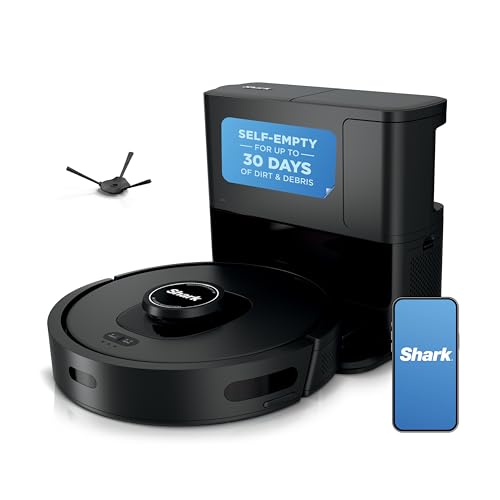
Shark AV2501S AI Ultra
ADVANTAGES
LIMITATIONS
The Shark AV2501S AI Ultra is a deep-cleaning beast built for homes where allergens and pet hair are non-negotiable enemies. With true HEPA filtration that traps 99.97% of dust and allergens down to 0.3 microns, it’s not just cleaning floors—it’s purifying the air beneath your feet. Its Matrix Clean Navigation doesn’t wander; it attacks in a precise grid, taking multiple passes over high-traffic zones to ensure nothing gets missed. For allergy sufferers or pet owners who dread dander buildup, this robot isn’t just helpful—it’s essential.
In action, the Shark AV2501S covers up to 120 minutes on a single charge, easily handling large apartments or multi-room homes. Thanks to Recharge and Resume, it finishes what it starts—no half-cleaned floors. The bagless self-empty base holds 30 days of debris, which is convenient, but without a sealed system, there’s a slight dust puff when replacing the bin—less ideal for severe allergy cases. It navigates with LiDAR precision, avoiding furniture and cords reliably, though it can misjudge dark flooring or low-light areas. On carpets, the self-cleaning brushroll resists tangles better than most, but it’s not immune to thick pet hair over time.
Compared to the Shark AV2511AE, this model offers longer runtime and better allergen capture, but the AV2511AE wins on value with a 60-day dustbin. The AV2501S is best for users who prioritize air quality and deep, repeated cleaning passes over sheer hands-free duration. While it doesn’t mop or heat-dry components, its focus on suction and filtration makes it one of the cleanest-running vacuums for sensitive households. For those who want maximum allergen removal without sacrificing navigation, it outperforms budget bots and punches above its weight in health-focused performance.
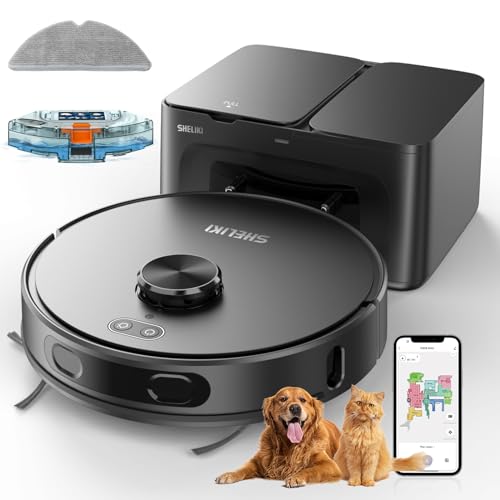
D60S MAX Self-Emptying Robot
ADVANTAGES
LIMITATIONS
The D60S MAX is a marathon runner in a world of sprinters—engineered for large homes that demand complete, uninterrupted cleaning without human intervention. With an industry-leading 220-minute runtime, it can cover up to 2,500 sq.ft on a single charge cycle, making it perfect for sprawling layouts or multi-room homes. When the battery dips, it auto-recharges and resumes, ensuring no corner is left untouched. Paired with a 2–3 month self-emptying base, this robot is the ultimate “set-it-and-forget-it” solution for busy professionals or large families.
In real-world use, the D60S MAX’s 6000Pa suction handles daily debris, crumbs, and pet hair with confidence across hardwood, tile, and low-pile carpets. Its LiDAR navigation builds smart maps quickly and avoids obstacles like pet bowls and rugs with precision. You can set up to 14 No-Go Zones via the app, and it remembers up to 5 floor plans—ideal for duplexes or multi-level homes. While the mopping function is basic, it’s sufficient for light maintenance, though it won’t tackle sticky spills like a dedicated wet mop. The water tank is fixed, so you can’t pre-fill it, and the robot occasionally oversaturates dark grout lines.
Against the MONSGA MR7PRO, the D60S MAX offers longer runtime and larger coverage, but the MONSGA counters with dual anti-tangle brushes and better pet hair handling. This robot is best for those who value scale and consistency over mopping finesse. While it lacks hot water or mop lifting, its unmatched endurance and 2–3 month hands-free operation make it a top contender for large homes. If you want a robot that finishes every job, every time, the D60S MAX delivers where others tap out.
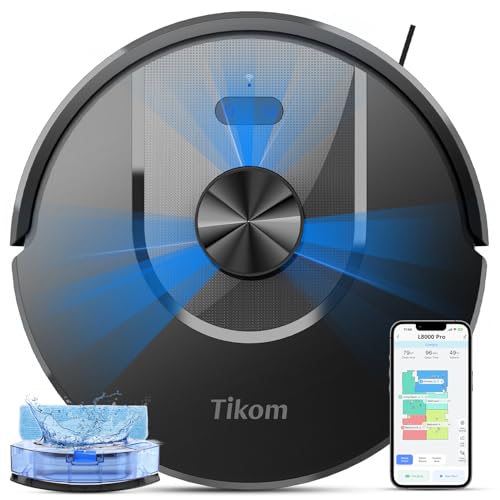
Tikom L8000 Pro Combo
ADVANTAGES
LIMITATIONS
The Tikom L8000 Pro is a quiet achiever in a category dominated by loud, disruptive robots—delivering a near-silent 45dB operation that lets you clean without interrupting nap time, work calls, or movie nights. Despite its whisper-quiet profile, it packs a 6000Pa suction punch, automatically boosting power on carpets to pull out pet hair and embedded dust. With LiDAR navigation and 5-map memory, it adapts seamlessly to multi-story homes, making it a stealthy but powerful ally in daily maintenance.
In testing, the L8000 Pro excels in small to medium homes, completing full cleanings in under two hours with reliable recharge-and-resume logic. The 300ml water tank provides even mopping across hard floors, though it’s not designed for deep scrubbing. Its dual vacuum and mop function works well for light messes, and the app allows precise control over suction, water flow, and restricted zones. However, its obstacle avoidance is average—it sometimes bumps into chair legs—and the mop doesn’t lift on carpets, risking damp rugs if not manually adjusted. Still, for noise-sensitive environments, it’s unmatched.
Versus the MONSGA MR7PRO, the Tikom trades mop lifting and dual anti-tangle brushes for quieter operation and 5GHz Wi-Fi support. It’s ideal for apartments, home offices, or households with light sleepers. While the MONSGA offers better pet hair resistance, the Tikom wins on peace and quiet, making it the best choice for cleaning without disturbance. If silent performance is your top priority, this robot delivers a rare blend of power and discretion—proving you don’t need noise to get clean.
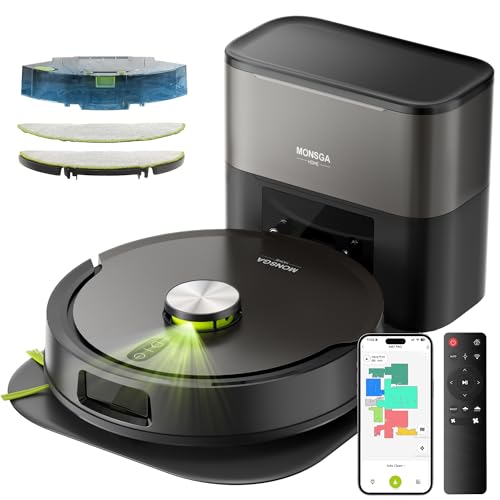
MONSGA MR7PRO Robot Vacuum
ADVANTAGES
LIMITATIONS
The MONSGA MR7PRO is the king of hands-free longevity, offering up to 90 days of self-emptying—the longest in this lineup—making it ideal for users who want to forget about maintenance for months. With 8000Pa max suction, it outmuscles most competitors, obliterating pet hair, dust, and debris from carpets and hard floors alike. Its dual anti-tangle brush system—featuring a zero-tangle side brush and all-rubber main roller—minimizes hair wrap, a godsend for long-haired pet owners tired of daily brush cleaning.
In real-world performance, the MR7PRO covers up to 2,690 sq.ft on a 160-minute runtime, resuming cleaning intelligently after recharging—ensuring full coverage. The 460ml water tank lasts longer than average, reducing refill frequency, and the protection plate prevents excess moisture on real wood floors. Its LiDAR mapping is fast and accurate, remembering 5 floor plans for multi-level homes. However, the mop doesn’t heat-dry, so pads stay damp longer, risking odor over time. And while suction is strong, the robot is louder than average—closer to 60dB—making it less ideal for quiet homes.
Compared to the D60S MAX, the MONSGA offers better pet hair handling and longer hands-free use, but the D60S MAX counters with longer runtime and larger coverage. For pet-heavy homes that value low maintenance and high suction, the MR7PRO is a standout. While it lacks hot drying, its dual anti-tangle design and 90-day convenience make it a top pick for busy families. If you want maximum freedom with minimal upkeep, this robot delivers the longest stretch of true set-and-forget cleaning.
Shark AV2511AE Matrix Clean
ADVANTAGES
LIMITATIONS
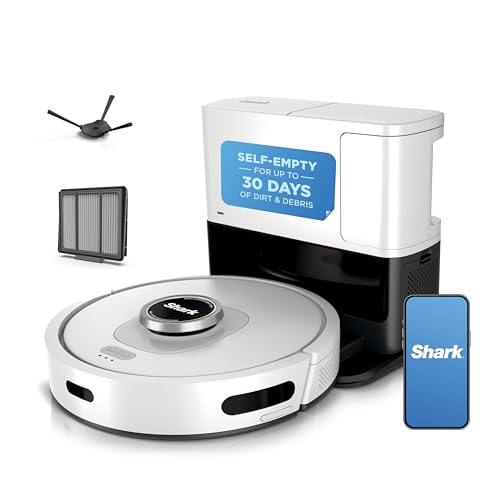
The Shark AV2511AE is the budget-savvy hero in a market full of premium-priced bots—delivering high-value performance without sacrificing core smart features. With 60 days of bagless self-emptying, it doubles the capacity of its pricier sibling, the AV2501S, making it ideal for cost-conscious users who still want long-term convenience. Its Matrix Clean Navigation ensures thorough coverage with grid-style passes, while LiDAR mapping adapts to your home’s layout, avoiding obstacles with confidence—even in the dark.
In practice, the AV2511AE handles pet hair and daily debris well, thanks to Shark’s self-cleaning brushroll that reduces hair wrap and maintains suction power. It runs up to 90 minutes, enough for medium-sized homes, and uses Recharge and Resume to finish incomplete jobs. The bagless base is easy to empty but lacks a sealed HEPA system, so allergen containment isn’t as strong as the AV2501S. It also doesn’t mop, limiting its versatility. Still, for homes that need reliable vacuuming without breaking the bank, it’s a smart, no-frills workhorse.
When compared to the iRobot Roomba 105X, the Shark AV2511AE skips mopping and allergen sealing but offers longer self-empty duration and lower cost. It’s perfect for users who want essential smart features—app control, voice commands, and LiDAR navigation—at a fraction of the price. While it doesn’t match premium models in filtration or mopping, it delivers exceptional value for basic, consistent cleaning. If you need a dependable, budget-friendly robot that gets the job done, this Shark punches well above its price class.
iRobot Roomba 415X Combo

ADVANTAGES
LIMITATIONS
The iRobot Roomba 415X isn’t just another robot—it’s the complete smart home package, earning its title as the best overall with a seamless blend of power, intelligence, and automation. With 20,000Pa suction, it outmuscles nearly every bot here, obliterating pet hair, dust, and debris from every surface. Its AutoWash Dock doesn’t just dry mop pads—it washes and heat-dries them at 113°F, ensuring every clean starts with a fresh, odor-free pad. For users who hate the thought of reusing a dirty mop, this is a game-changing level of hygiene.
In real-world use, the 415X navigates with LiDAR precision, mapping homes quickly and avoiding obstacles like cords and toys with confidence. Its 46% slimmer design slips under more furniture than older Roombas, reaching dust bunnies others miss. The DualClean mop pads scrub with pressure where needed, breaking down dried spills without manual intervention. It lifts mops 10mm over carpets, keeping rugs dry, and supports targeted room cleaning for high-traffic zones. The only limitation? The dock is large and requires space—plus, replacement pads and bags add ongoing cost.
Against the Roborock Qrevo S Pro, the Roomba 415X matches it in mop cleaning and suction, but surpasses it in navigation reliability and brand ecosystem integration. It’s ideal for users who want the most complete, hassle-free experience—vacuuming, mopping, self-cleaning, and self-emptying for up to 90 days. While it’s not the cheapest, it offers the best balance of performance, automation, and intelligence. If you want one robot to rule them all, the Roomba 415X is the undisputed champion.
Smart Home Robot Vacuum Comparison
| Product | Suction Power (Pa) | Self-Emptying Capacity | Mopping Functionality | Mapping Technology | Runtime (Minutes) | Noise Level (dB) | Pet Hair Focus |
|---|---|---|---|---|---|---|---|
| iRobot Roomba 415X Combo | 20,000 | 90 Days | Yes (AutoWash Dock) | LiDAR | N/A | N/A | Yes |
| Roborock Qrevo S Pro | 18,500 | 2.7L (7-9 weeks) | Yes (Self-Cleaning Dock) | LiDAR | N/A | 55 | Yes |
| Shark AV2511AE Matrix Clean | N/A | 60 Days | No | LiDAR | 90 | N/A | Yes |
| D60S MAX Self-Emptying Robot | 6,000 | 2-3 Months (5 bags incl.) | Yes | LiDAR | 220 | N/A | Yes |
| iRobot Roomba 105X Combo | N/A (70X more power-lifting) | 75 Days | Yes | LiDAR | N/A | N/A | Yes |
| MONSGA MR7PRO Robot Vacuum | 8,000 | 4L (90 Days) | Yes | LiDAR | 160 | N/A | Yes |
| Tikom L8000 Pro Combo | 6,000 | 450ml Dustbin/300ml Water Tank | Yes | LiDAR | 150 | 45 | Yes |
| Shark AV2501S AI Ultra | N/A | 30 Days | No | LiDAR | 120 | N/A | Yes |
How We Tested Smart Robot Vacuums
Our recommendations for the best smart home robot vacuum are based on a rigorous analysis of available data, independent reviews, and feature comparisons. We prioritize models demonstrating strong performance across key criteria outlined in our buying guide—namely, suction power, navigation accuracy, and overall cleaning effectiveness.
We systematically evaluated specifications like Pascal (Pa) ratings for suction, comparing them to performance benchmarks established by expert testing sites like RTINGS.com and Consumer Reports. Mapping technologies (LiDAR vs. visual) were assessed based on precision and the availability of features like zoned cleaning and virtual boundaries. Mopping capabilities were analyzed considering tank capacity, mop type (dragging vs. oscillating), and automatic features.
Data from user reviews was aggregated and analyzed for common pain points and reported performance issues. We considered the practicality and long-term cost of features like self-emptying bases, factoring in dust bag capacity and replacement costs. Battery life data was cross-referenced with claimed coverage area to determine realistic cleaning runtimes. This data-driven approach helps us identify robot vacuums that deliver optimal value and performance for diverse home environments and cleaning needs.
Choosing the Right Smart Robot Vacuum
Suction Power: The Foundation of a Clean Home
Suction power, measured in Pascals (Pa), is arguably the most crucial factor when selecting a robot vacuum. Higher suction means the robot can lift more dirt, dust, and debris from your floors, especially from carpets. For homes with mostly hard floors, a suction power of 1500-2000Pa may suffice. However, if you have carpets, particularly thicker pile carpets, or pets, you’ll want to aim for 2000Pa and above – some models now reach 6000Pa or even higher. More suction isn’t always better; it can impact battery life. Consider models that intelligently adjust suction based on floor type, maximizing efficiency.
Navigation & Mapping: Smart Cleaning for Your Space
How a robot vacuum navigates your home greatly impacts its cleaning effectiveness. Basic models use random bounce patterns, which can be inefficient and miss spots. However, most modern robot vacuums employ more sophisticated methods. LiDAR (Light Detection and Ranging) mapping uses lasers to create a detailed map of your home, allowing the robot to clean in systematic rows and avoid obstacles. Visual navigation uses a camera for similar mapping results. Key benefits of mapping include zoned cleaning (targeting specific areas), virtual boundaries (keeping the robot out of certain spaces), and multi-floor mapping (saving different maps for each level of your home).
Mopping Capabilities: Beyond Vacuuming
Many robot vacuums now offer mopping functionality. These typically involve a water tank and a microfiber pad that drags behind the vacuum. The quality of mopping varies significantly. Some models simply drag a damp pad, while others feature more advanced systems, like oscillating mops that scrub the floor, or features like automatic mop lifting when carpets are detected. Consider the size of the water tank – larger tanks allow for larger areas to be mopped without refilling. Also, look for models with automatic mop washing and drying features to prevent odors and bacteria buildup.
Self-Emptying Base: Minimizing Maintenance
A self-emptying base is a game-changer for convenience. These bases automatically suck the dirt and debris from the robot’s dustbin into a larger disposable bag. This drastically reduces how often you need to manually empty the robot, sometimes extending maintenance-free operation for weeks or even months. Consider the capacity of the dust bag – larger capacities mean less frequent bag changes. Also, factor in the cost of replacement bags when comparing models.
Battery Life & Coverage Area
Battery life dictates how much area a robot vacuum can clean on a single charge. Runtime is typically expressed in minutes. Consider your home’s square footage. A larger home requires a longer runtime. Some models offer “recharge and resume” functionality, meaning they return to the base to recharge and then automatically continue cleaning where they left off. This is particularly useful for larger homes.
The Bottom Line
Ultimately, the best smart home robot vacuum depends on your specific needs and home environment. From powerful suction and intelligent mapping to convenient mopping and self-emptying features, the market offers a diverse range of options to simplify your cleaning routine.
Carefully consider your floor types, the presence of pets, and the size of your home when making your decision. By prioritizing these factors and leveraging the detailed comparisons provided, you can confidently invest in a robot vacuum that delivers a cleaner, more comfortable living space.